
Breakfasted, packed, a right turn out of the camping ground saw us onto a very busy highway before shortly picking up the cycle paths and roads that would lead us past the entrance doors of that very busy airport – as well as those of Barcelona’s University hospital – equally busy it seemed; a sobering reminder both of our good fortune not to be unwell and also to offer a silent prayer of thanks to whatever forces hold us so gently).
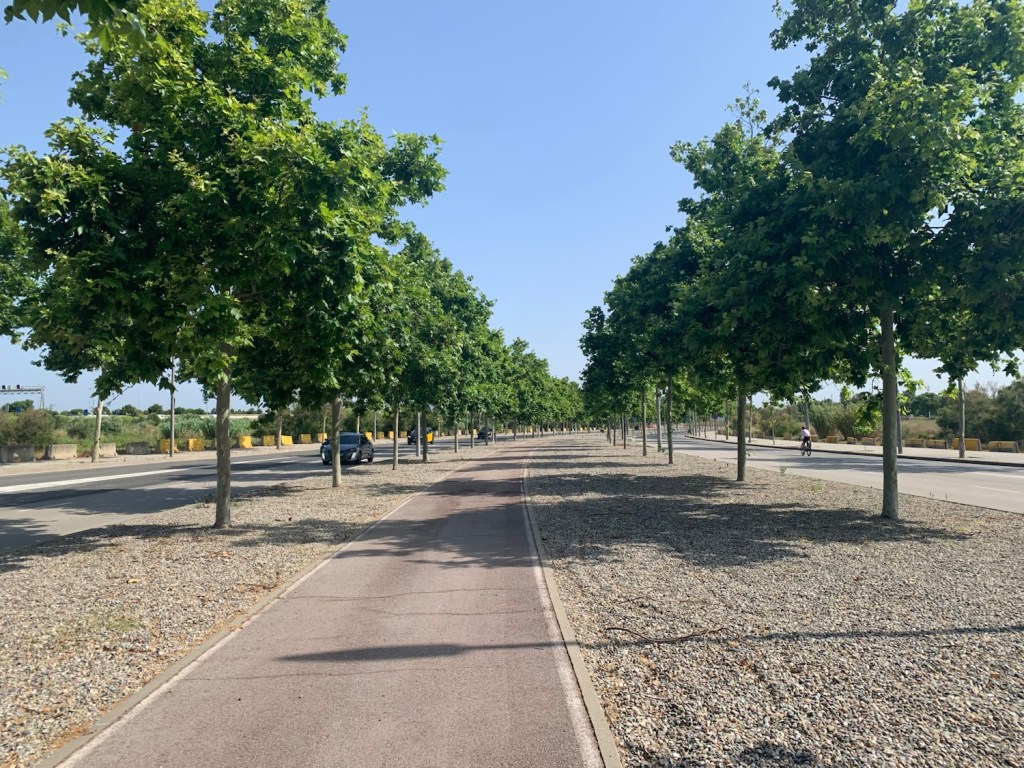
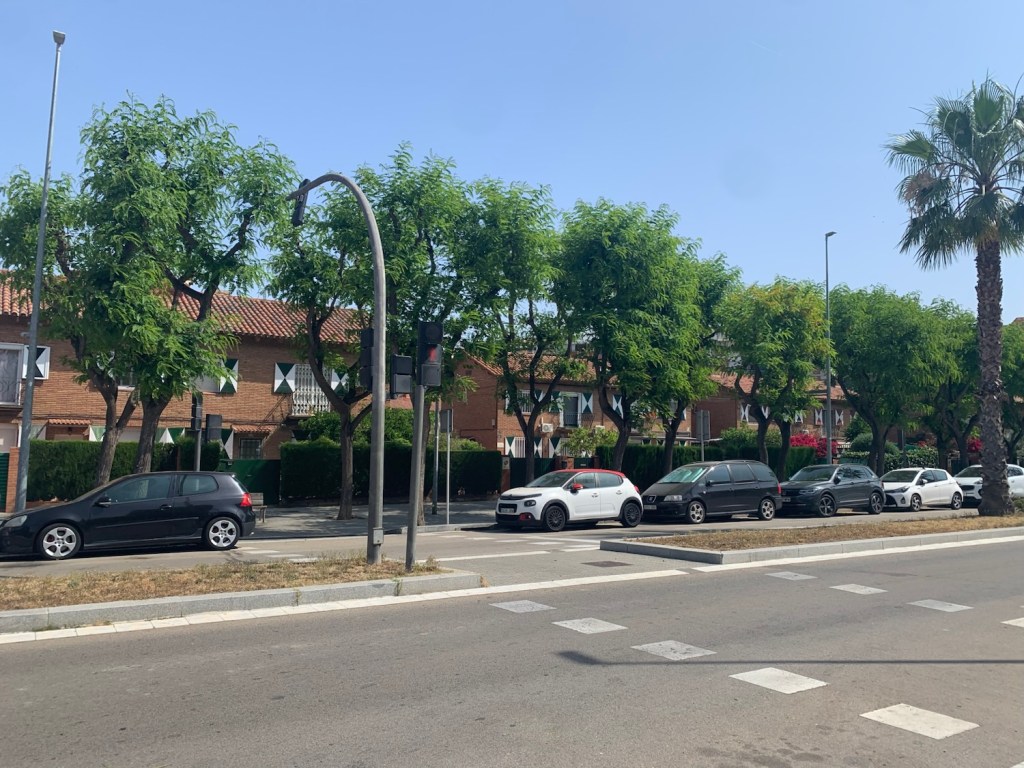

On to the centre of Barcelona!
We had been looking forward to seeing this most evocative of cities, Jeanette for the first time and a return visit for me to Catalonia’s capital, our final city in Spain before heading into France.
Cycling in the city was great, Barcelona felt so bike-friendly; a brief detour onto the pavement earned us a friendly rebuke from a motorcycle cop and fair enough too. Navigating to our apartment was straightforward and we were soon unpacked and ready to explore.
Barcelona is known as “Gaudí’s City” for good reason – his buildings are just such a delight and it’s clear to even our uneducated eyes how his thinking changed over time.
Our first Gaudí experience was Park Güell, which started its life as a housing development with plans to have 60 homes on triangular plots, set amongst a beautiful Gaudi designed park with amazing views back over the city.
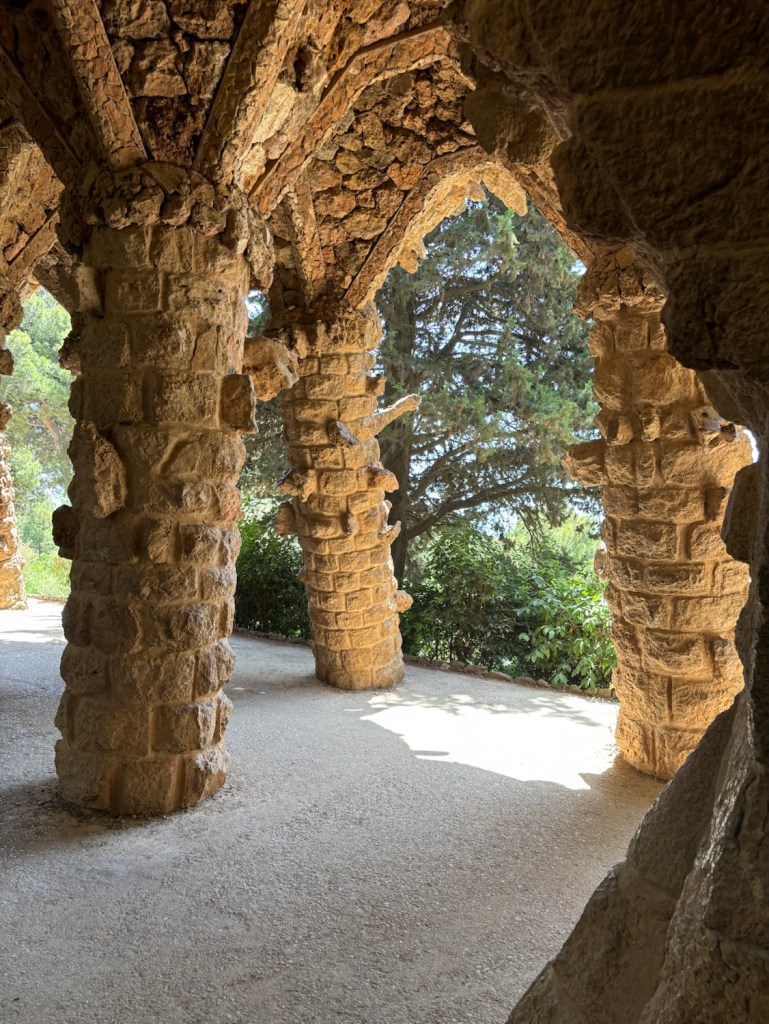
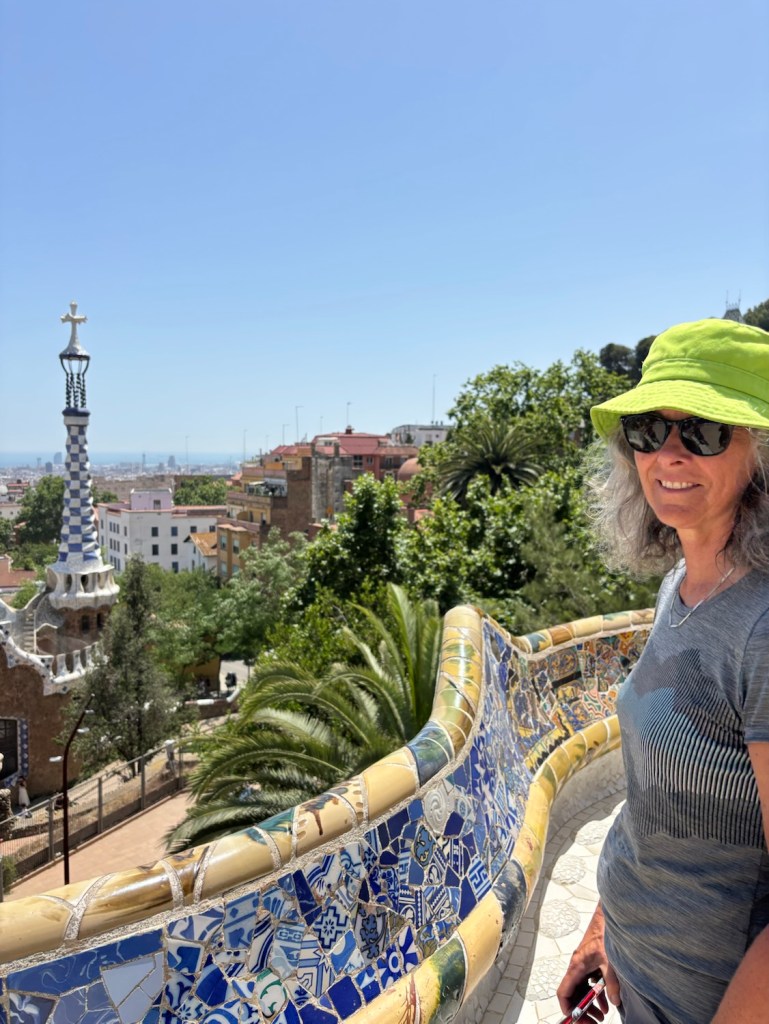
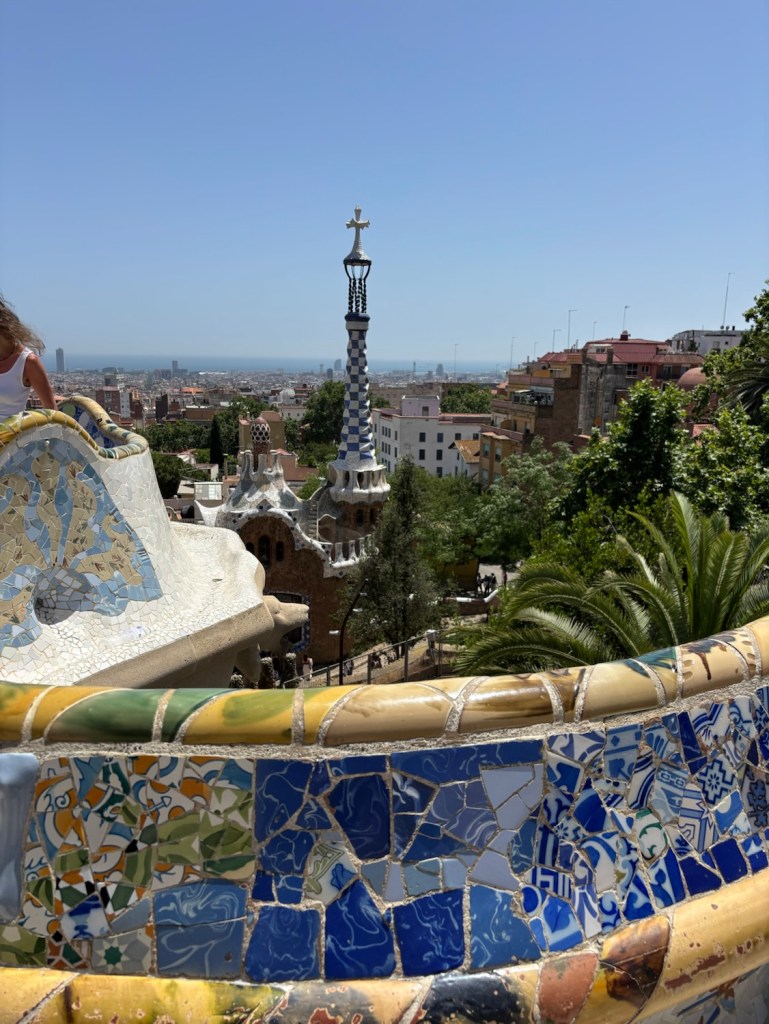
The park has his design written all over it.
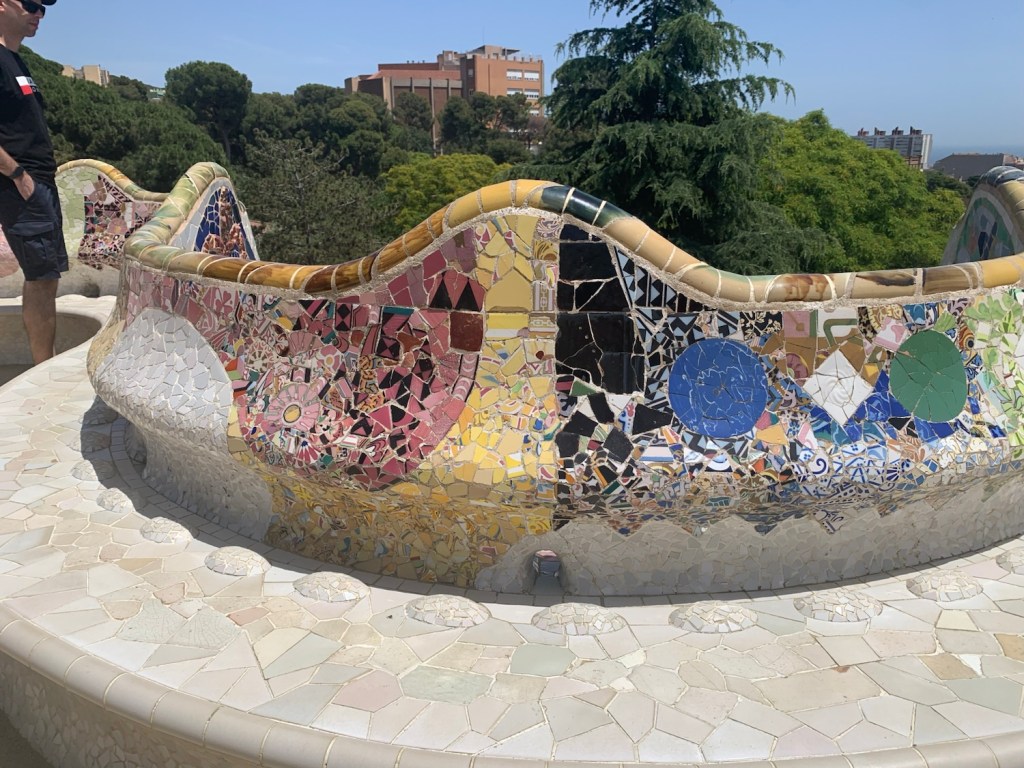

The ground we are standing on is the start of the water catchment for the development’s water reservoir.

The water seeps through the porous surface and down inside the columns
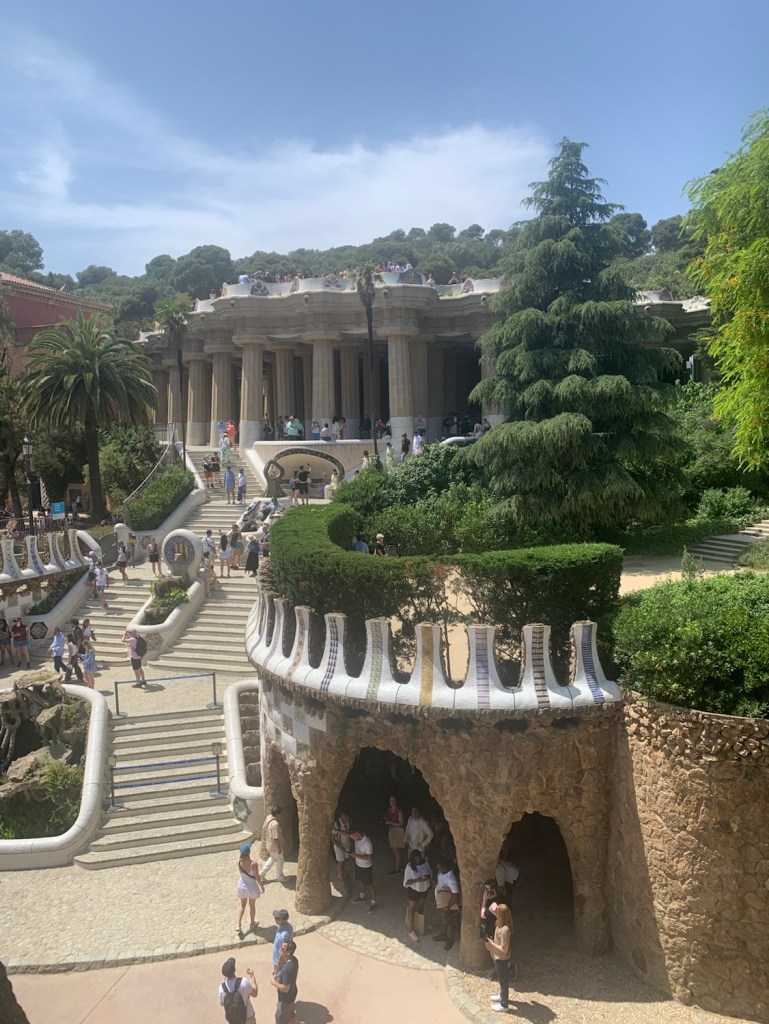
And into the reservoir underground (behind the stairs in the photo), intended to supply the housing development with its water needs. Absolutely amazing!
Only 2 homes were ever built in the park, of which Gaudí did live in one, although not designed by him.
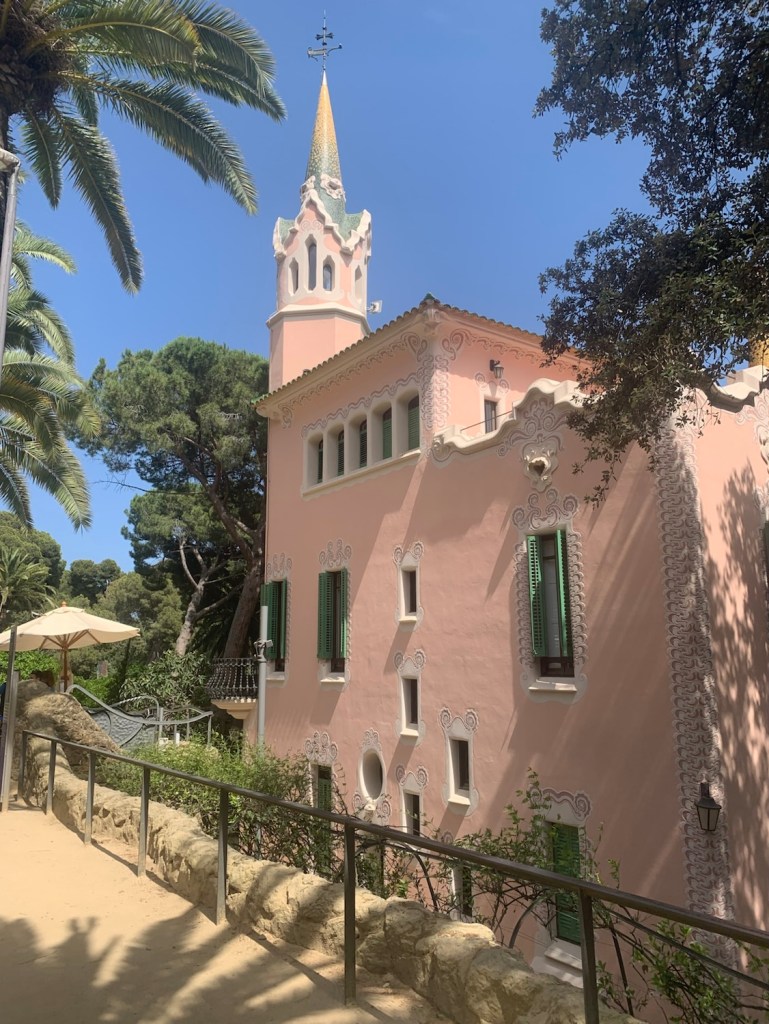
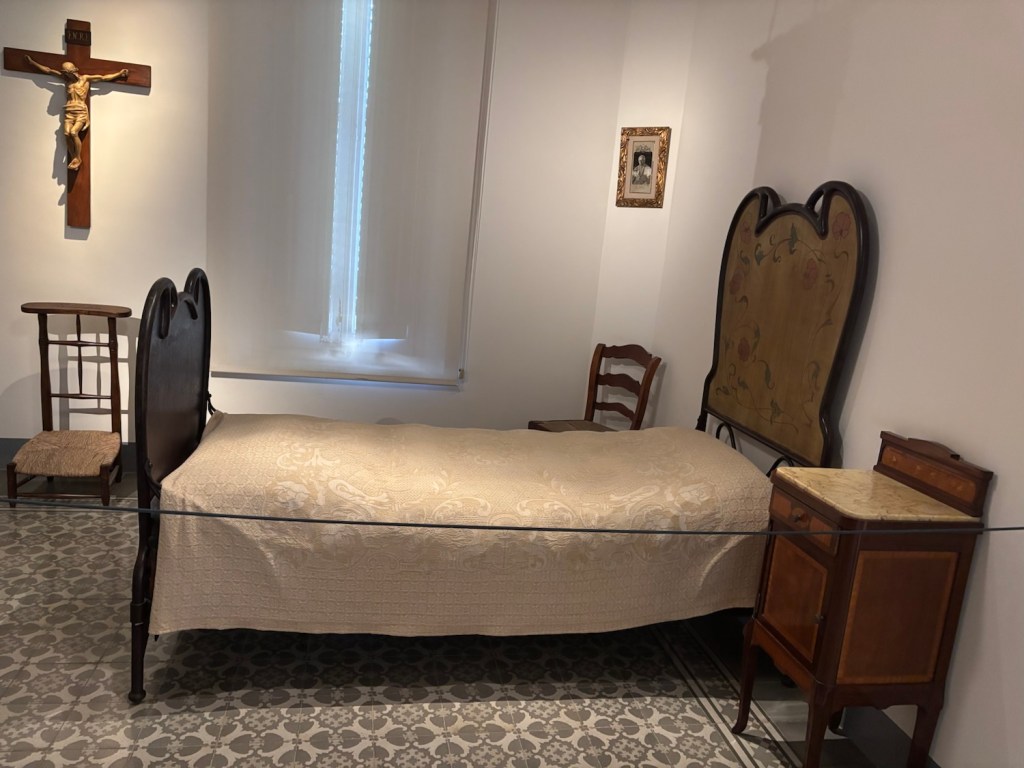
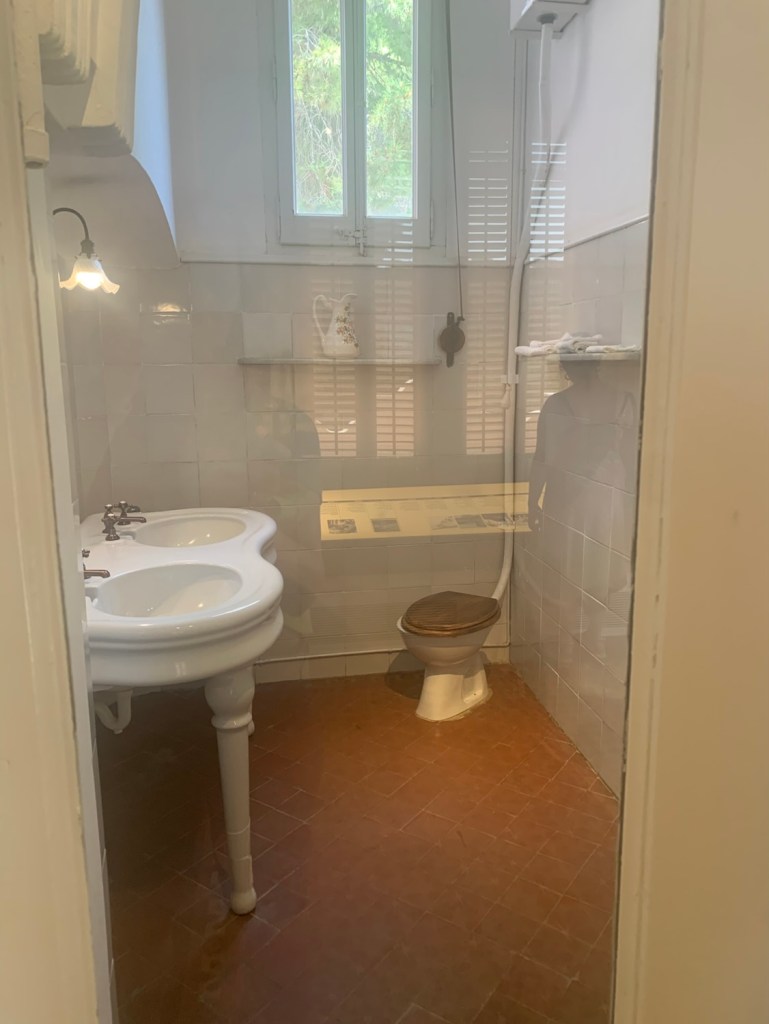
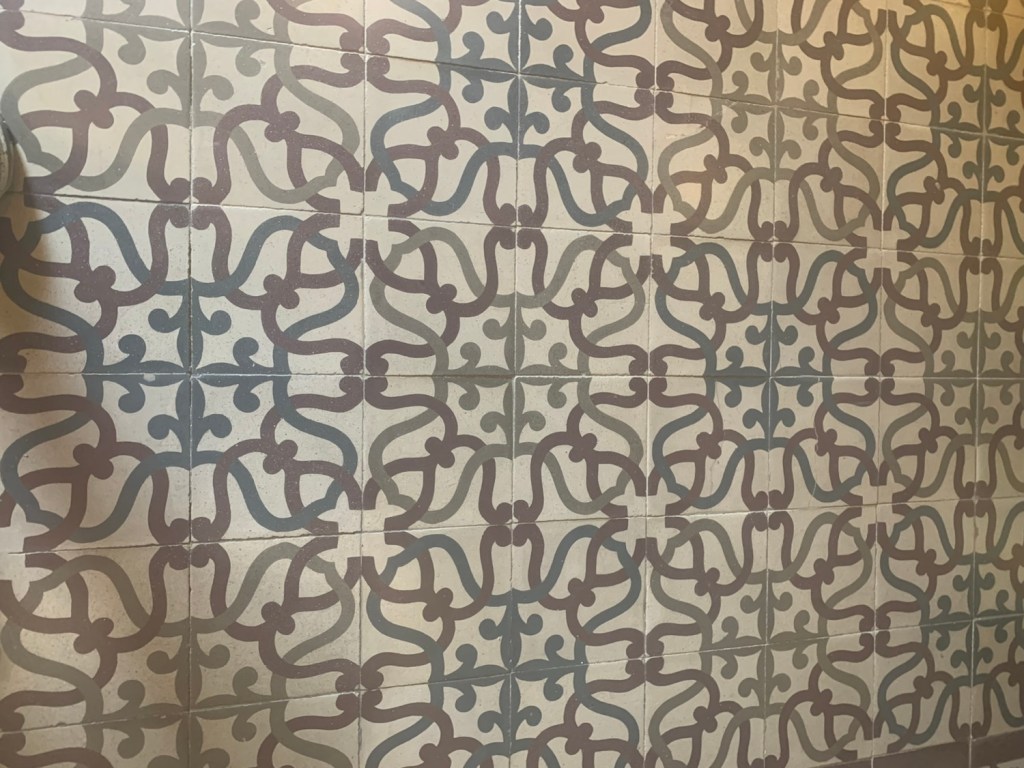
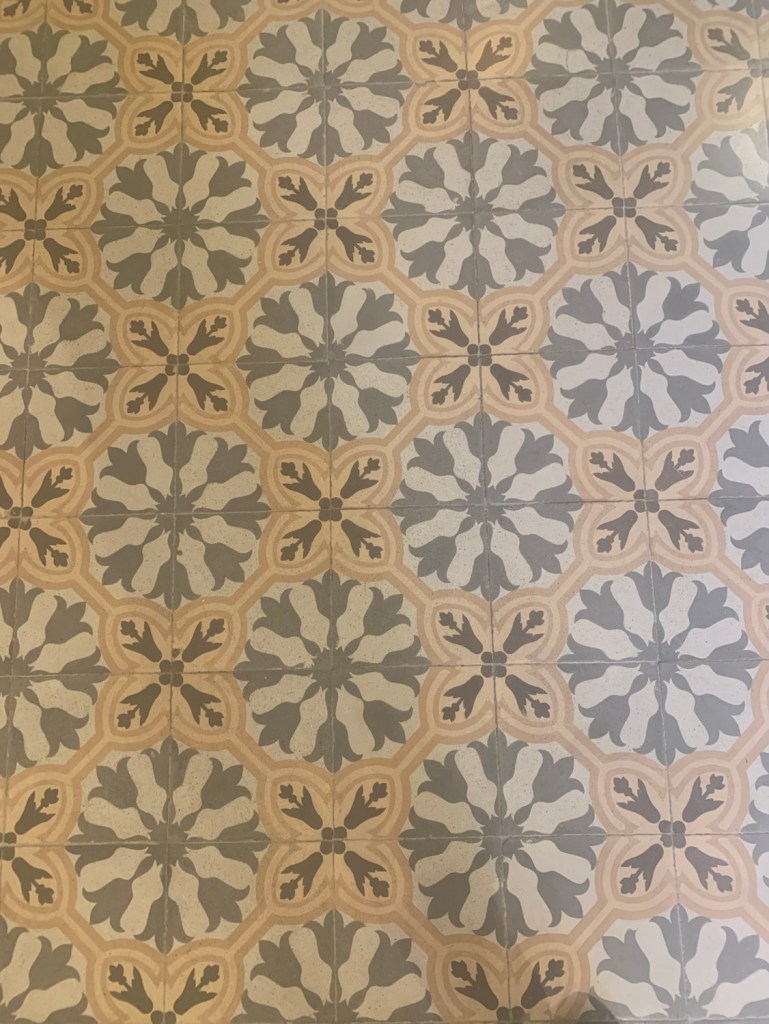
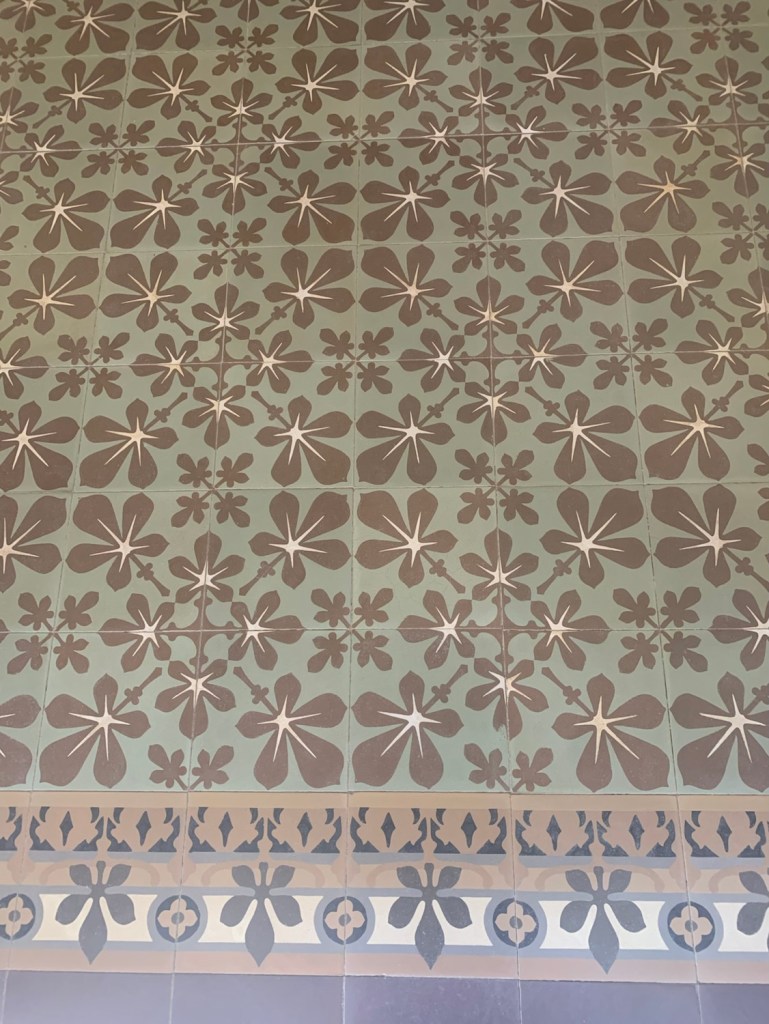
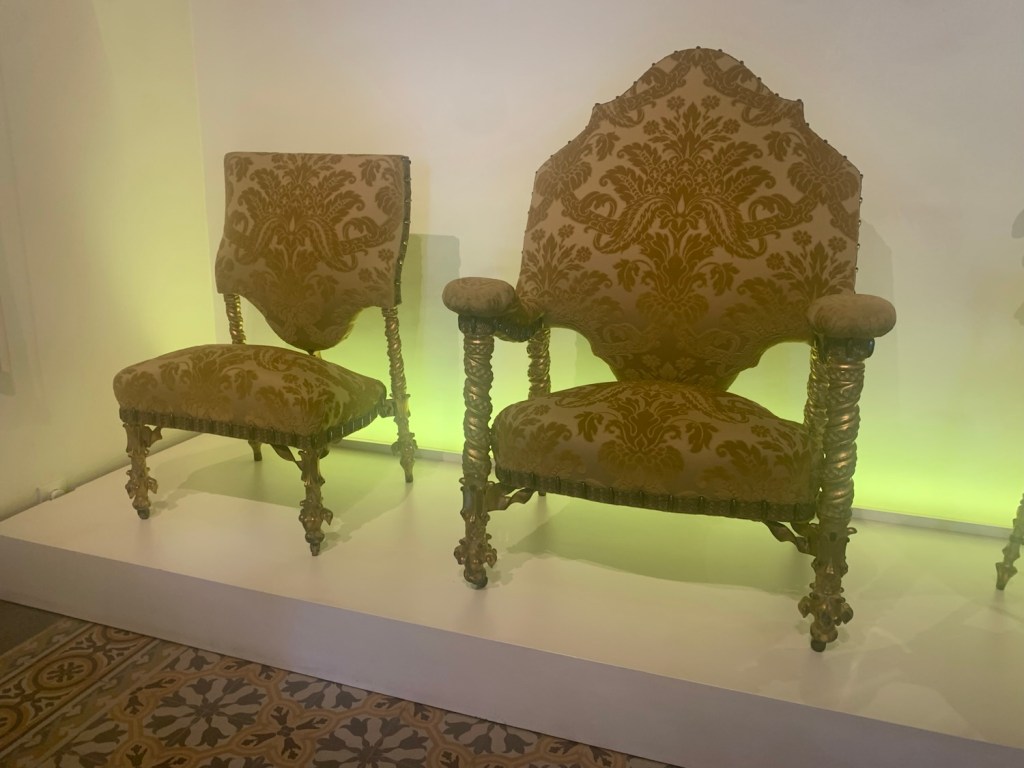
And also showcases some of Gaudí’s furniture designs.
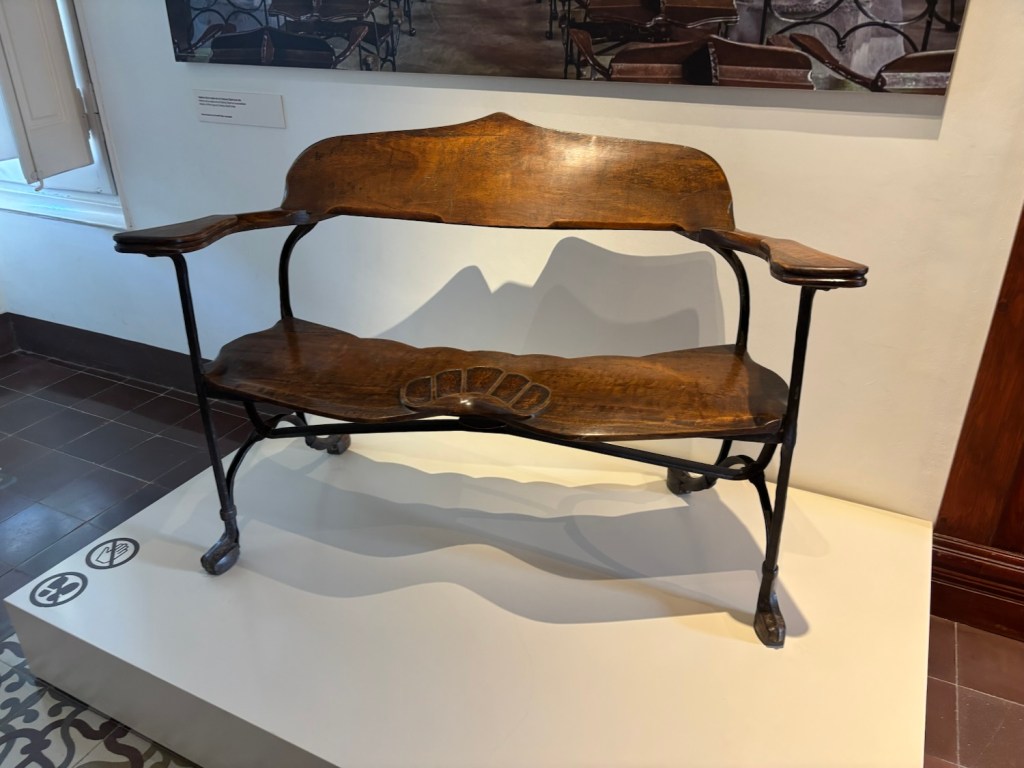
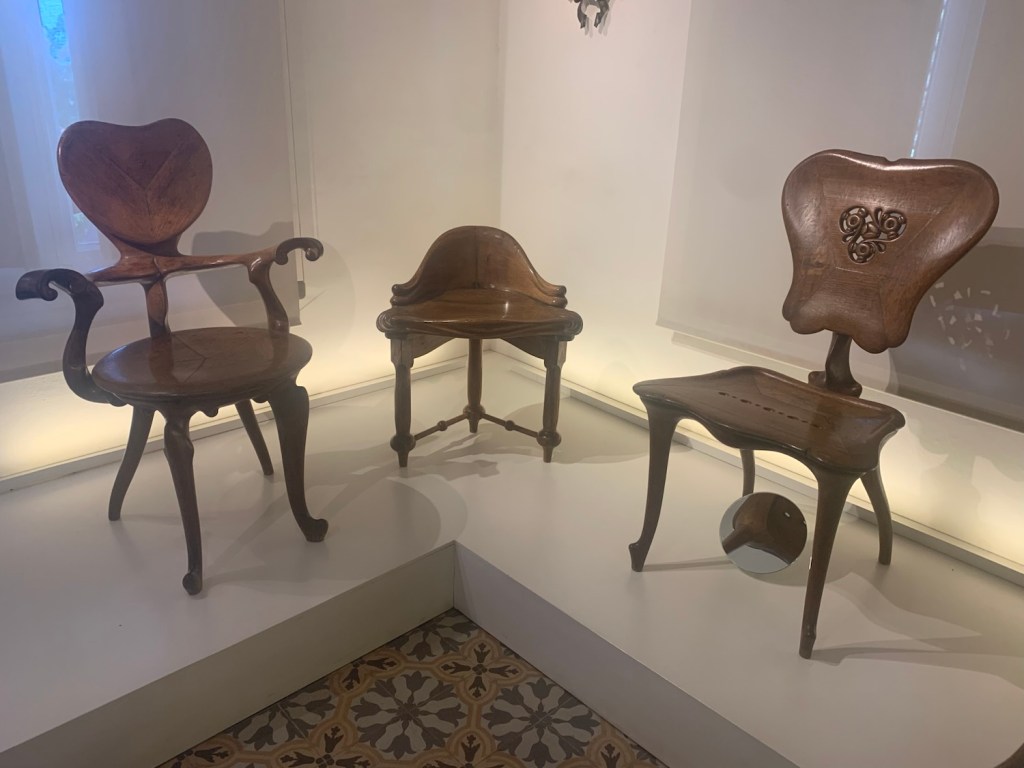
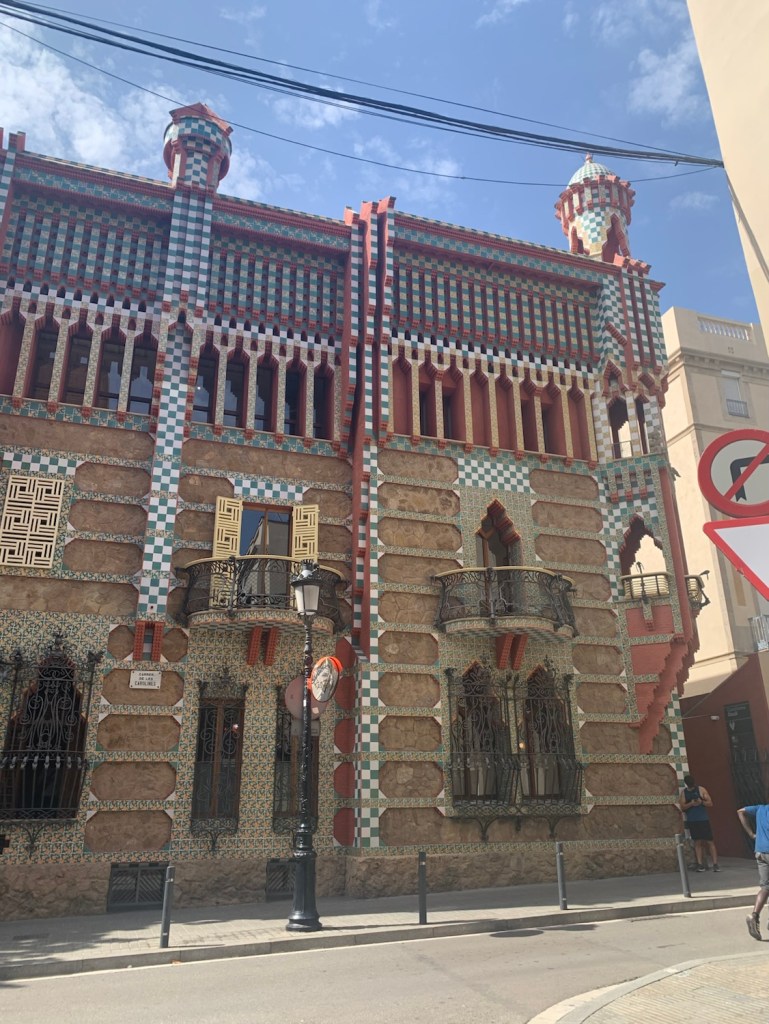
Back in town, we passed by our first Gaudí designed building, La Vila de Gràcia, admiring from the outside.
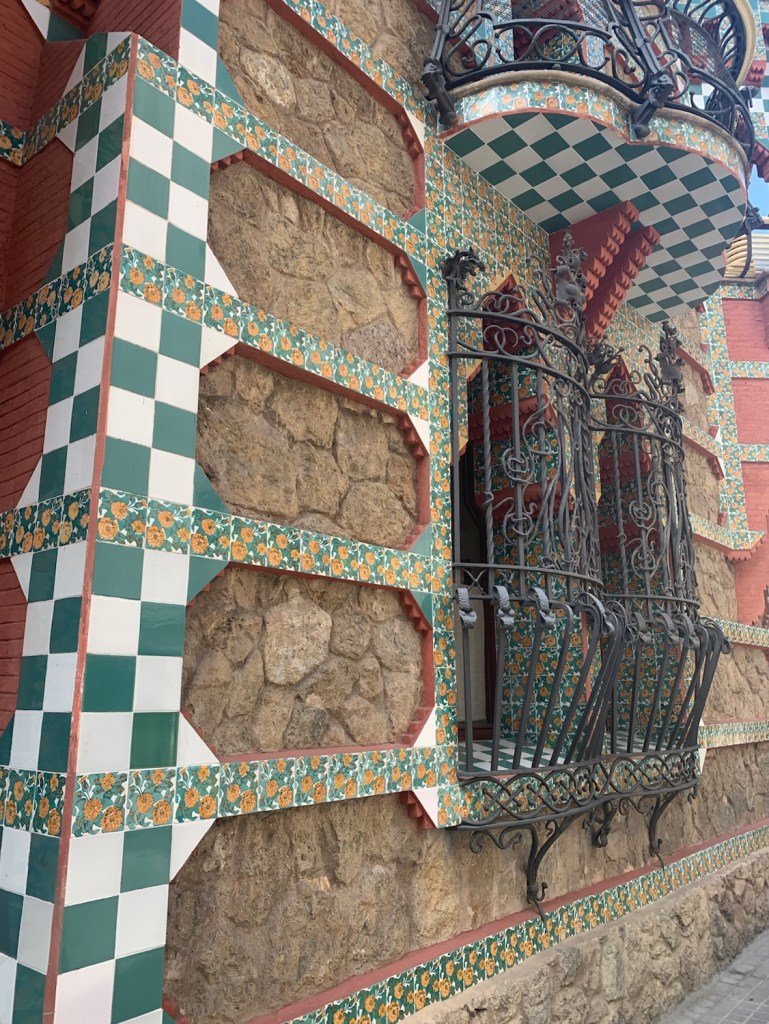
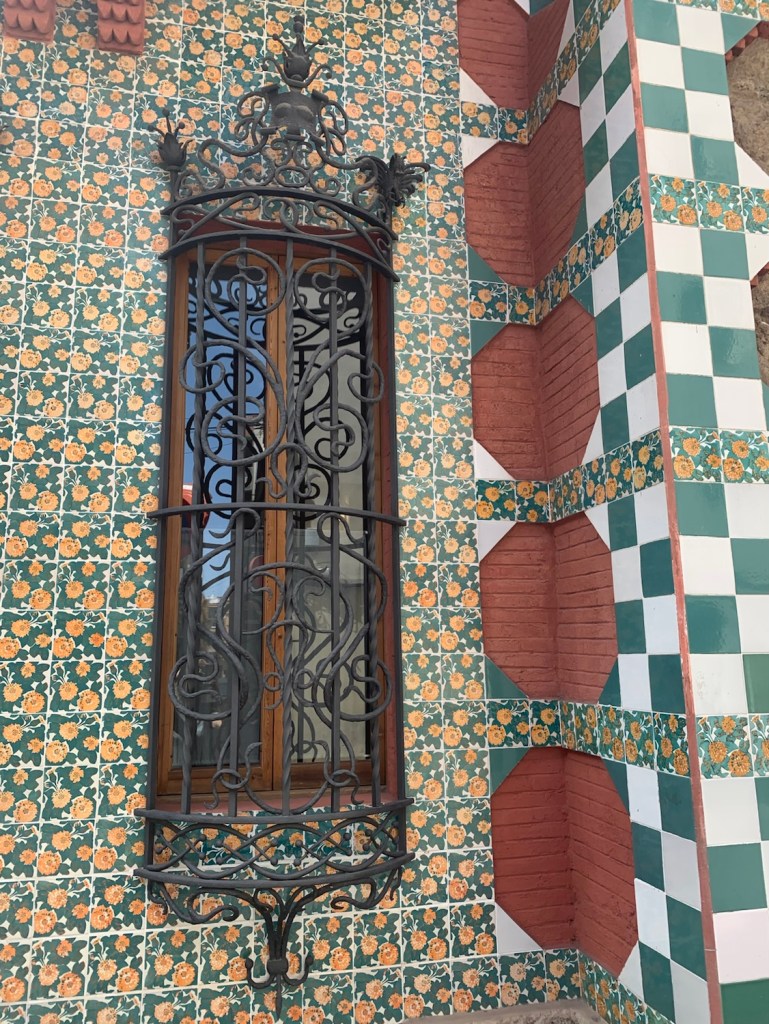
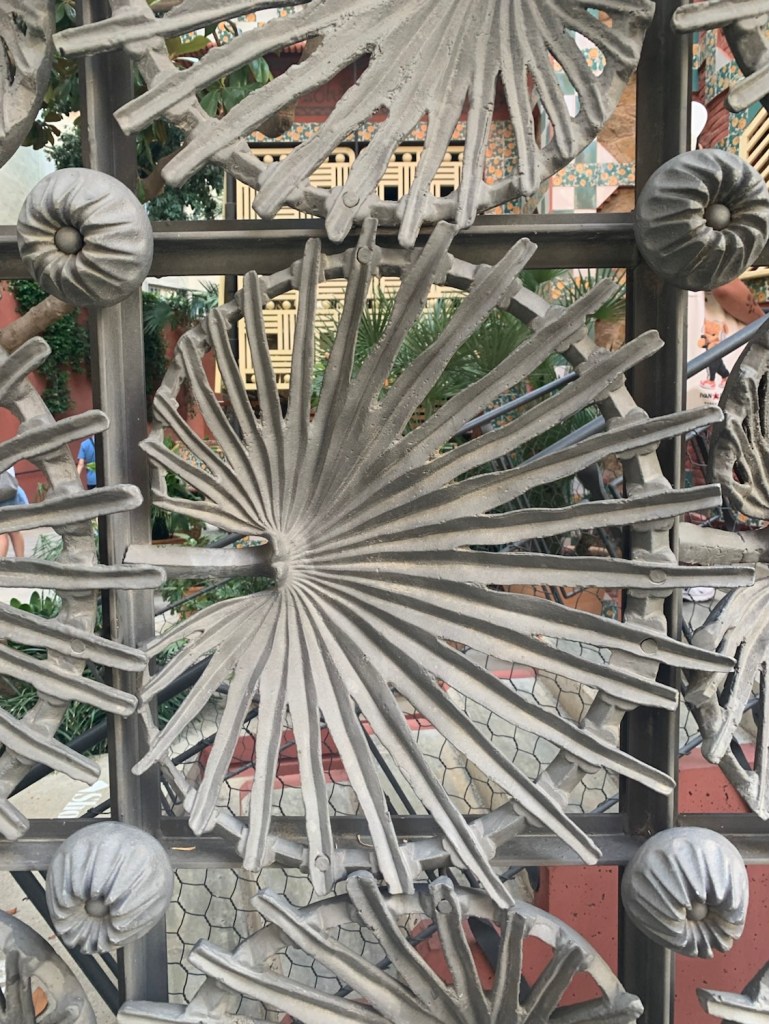
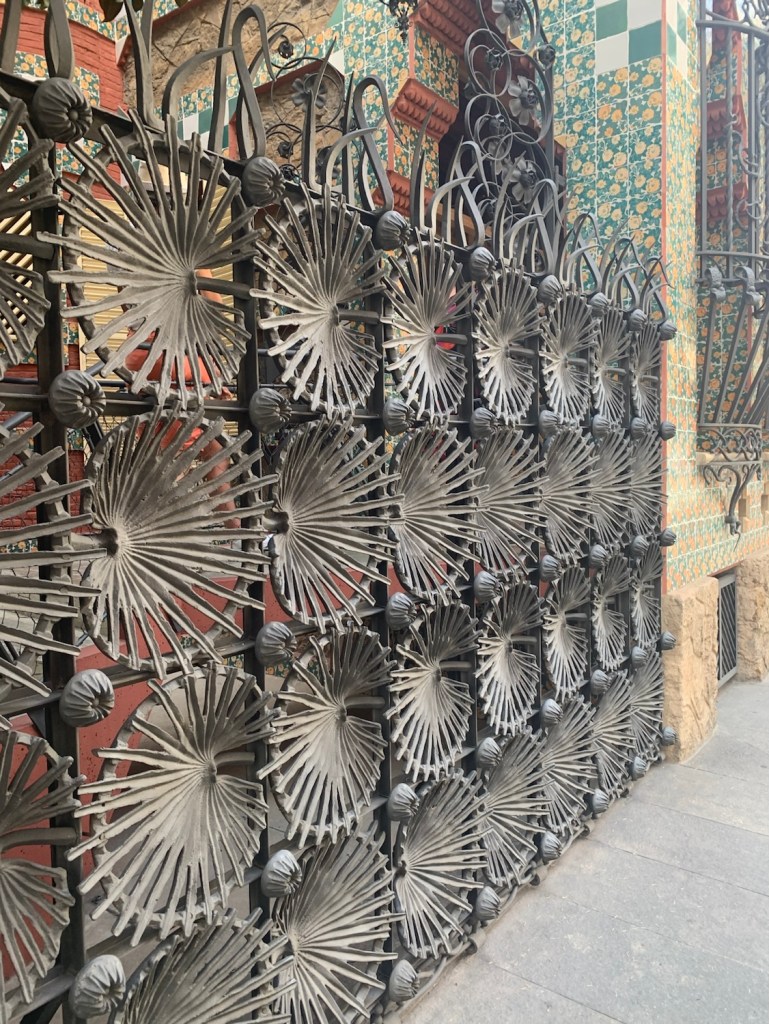
Just such exquisite details.
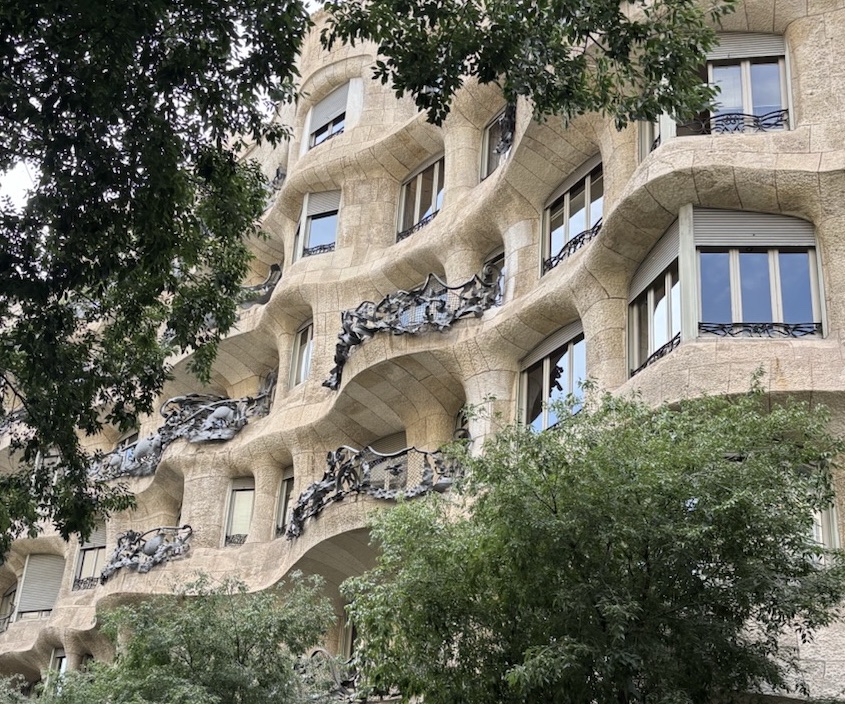
Then onto La Pedrera, another Gaudí building – an apartment building this time, to again have look from the outside – it had been a hot and tiring day in our first over 30°C day, 31°C today.
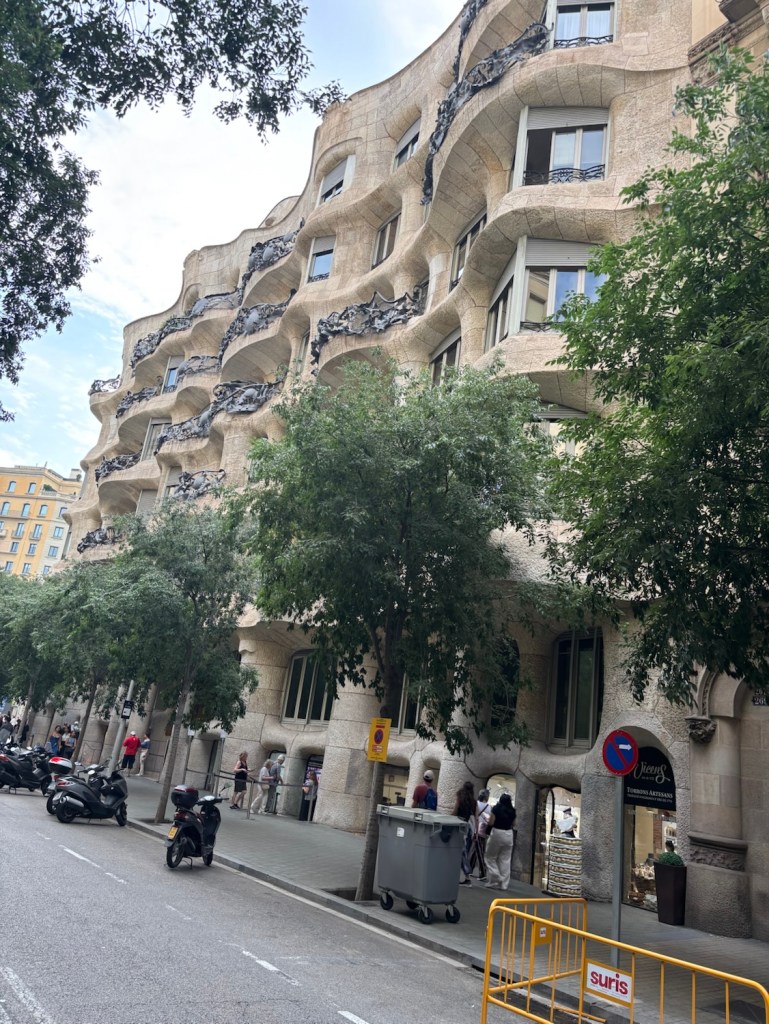
Except the outside of building was so intriguing we were keen to have a look inside.
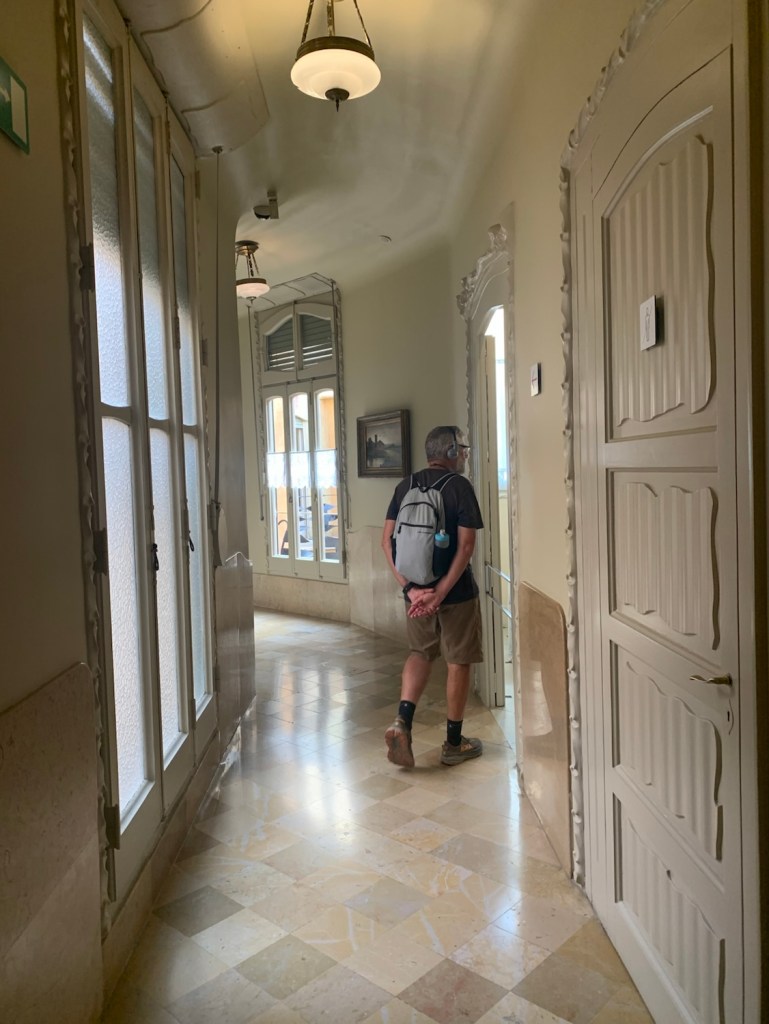
The apartments were all designed in a circle, one per floor with a large central atrium to let in the light.
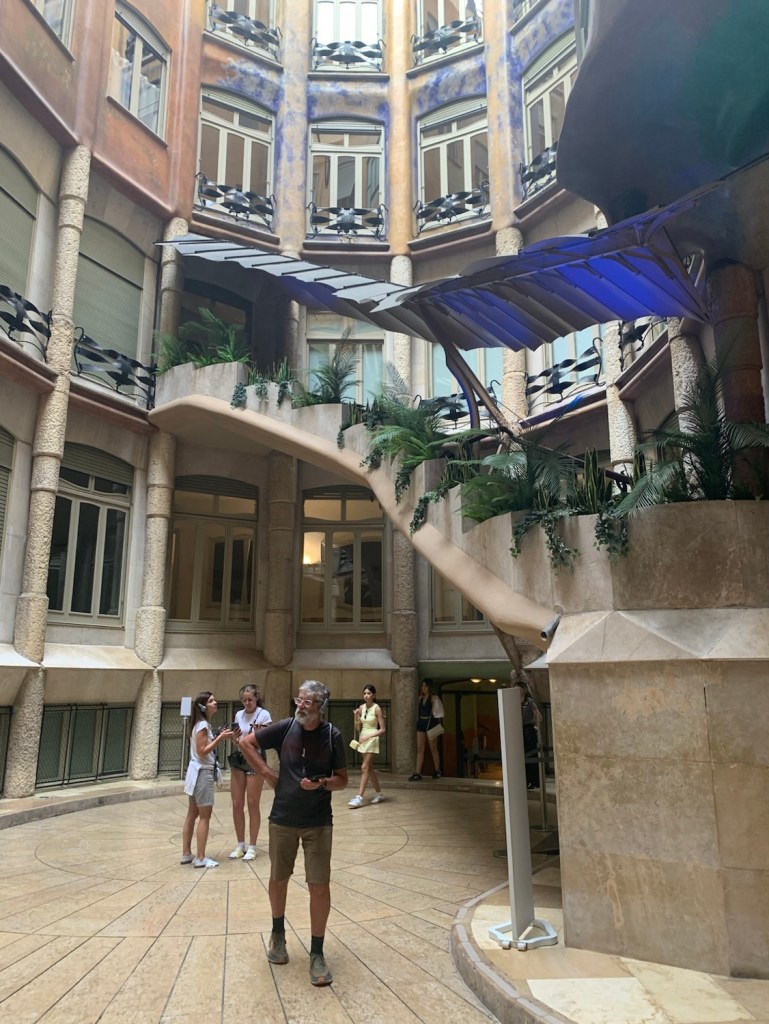
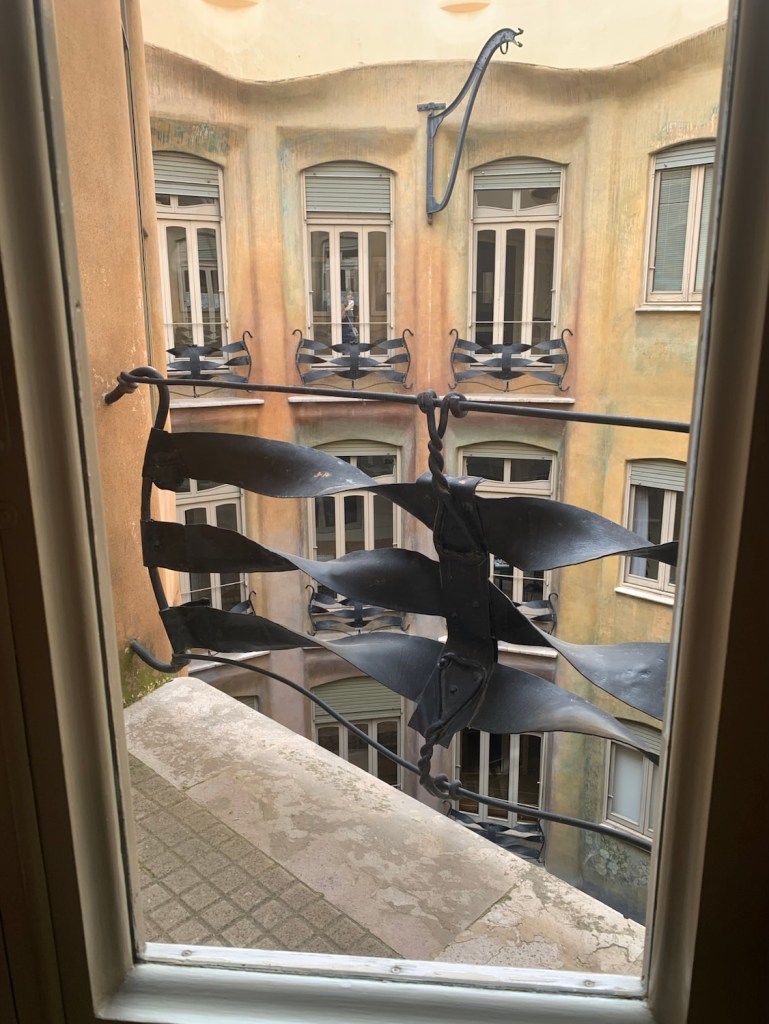

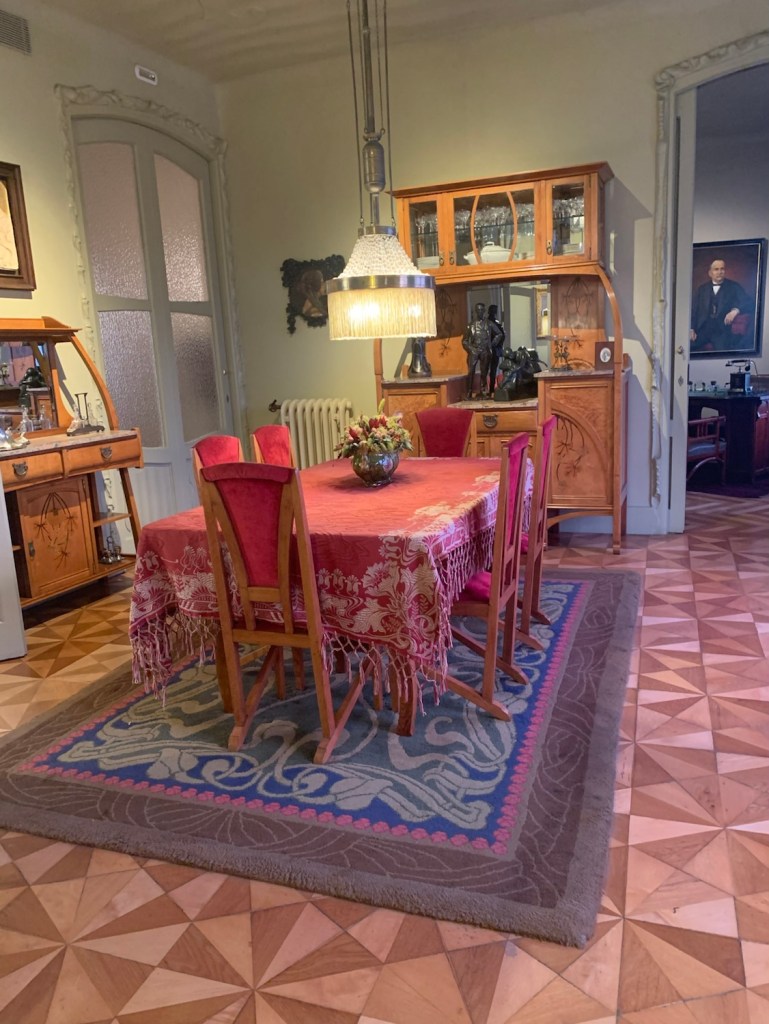
One of the apartments were open for viewing.
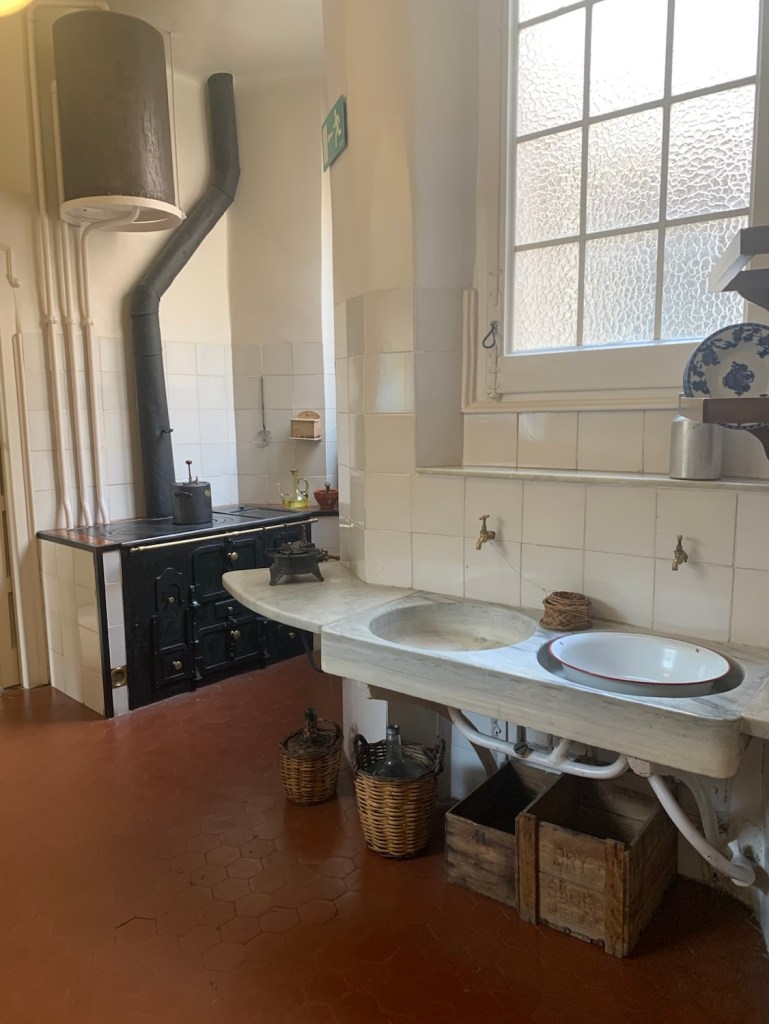
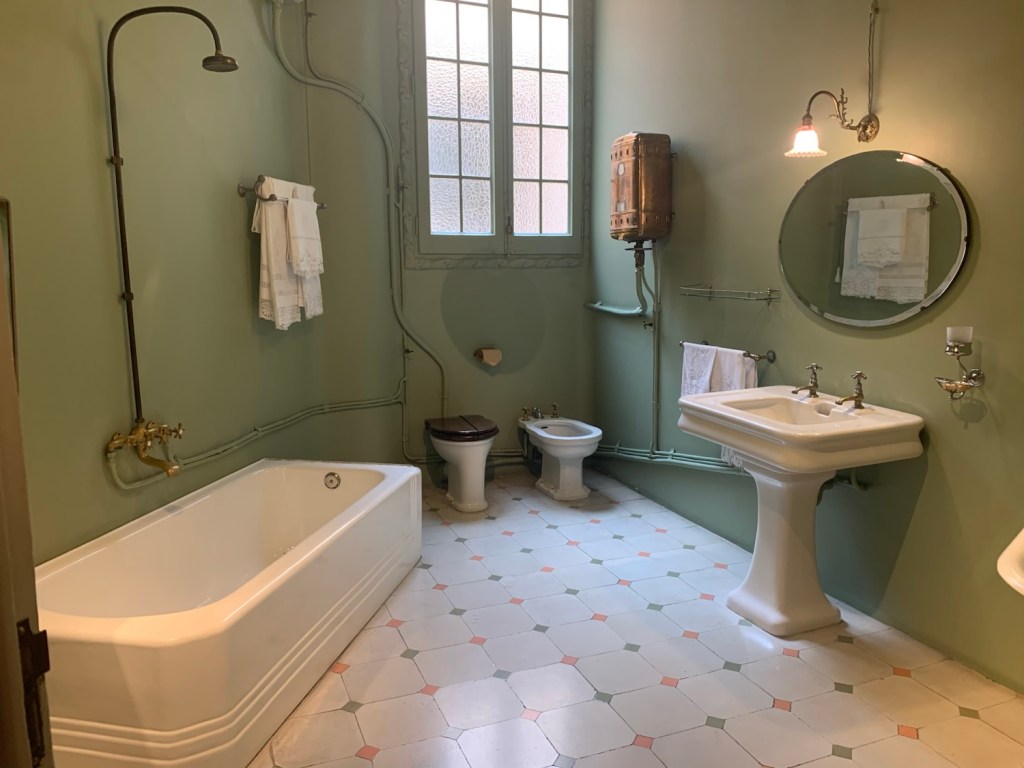
And then up to the attic, with each rafter individually and uniquely created to provide a stunning roof top area.
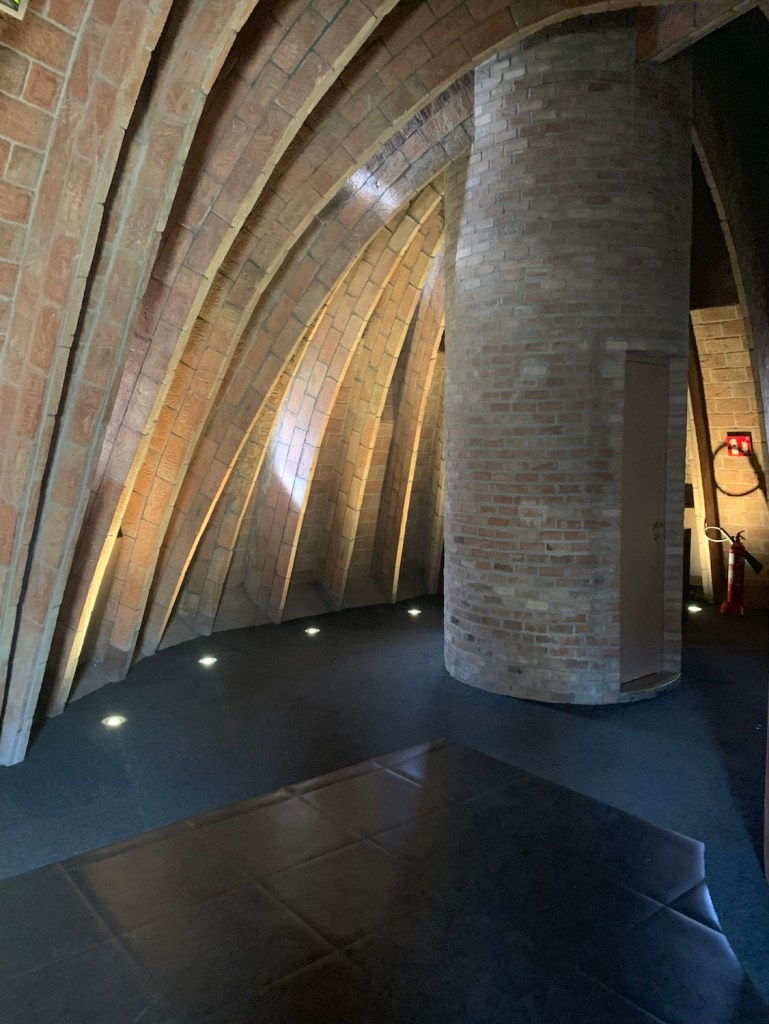
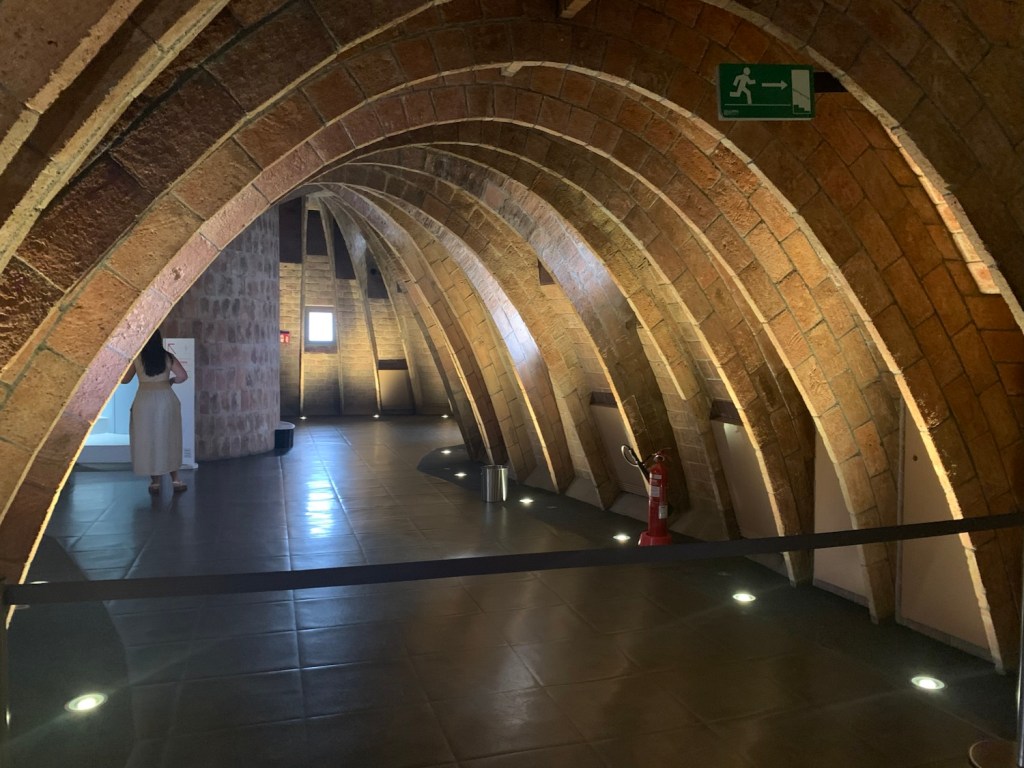
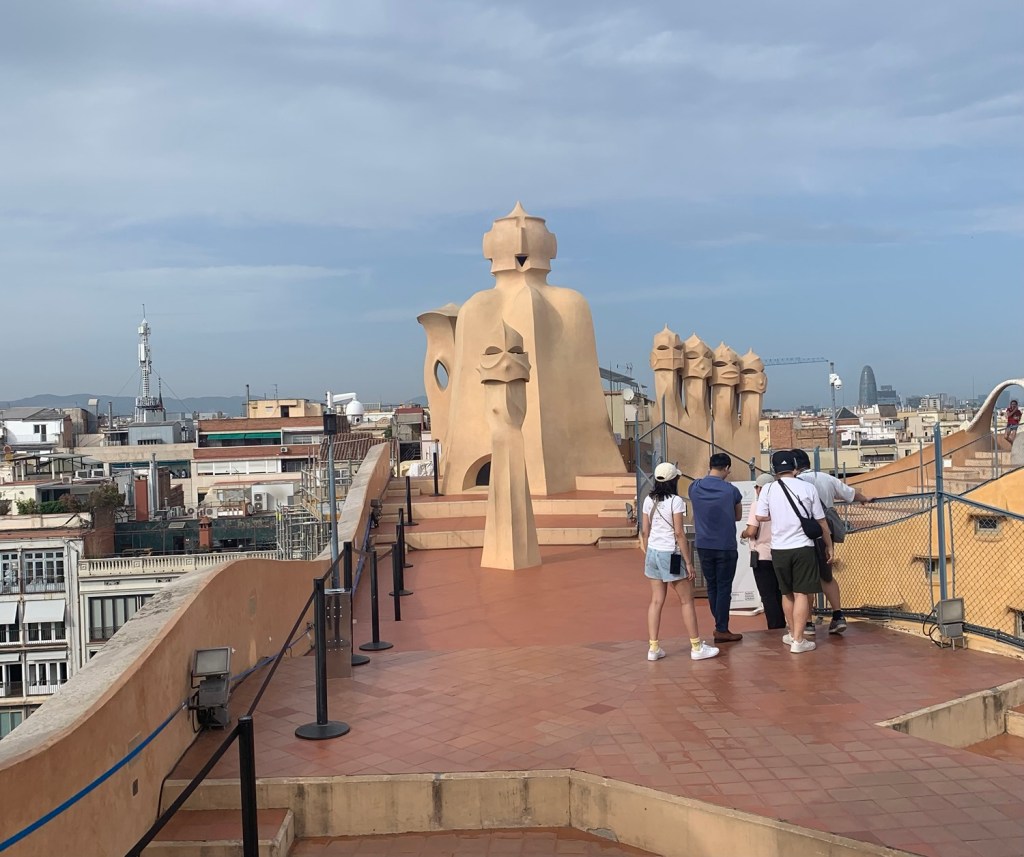
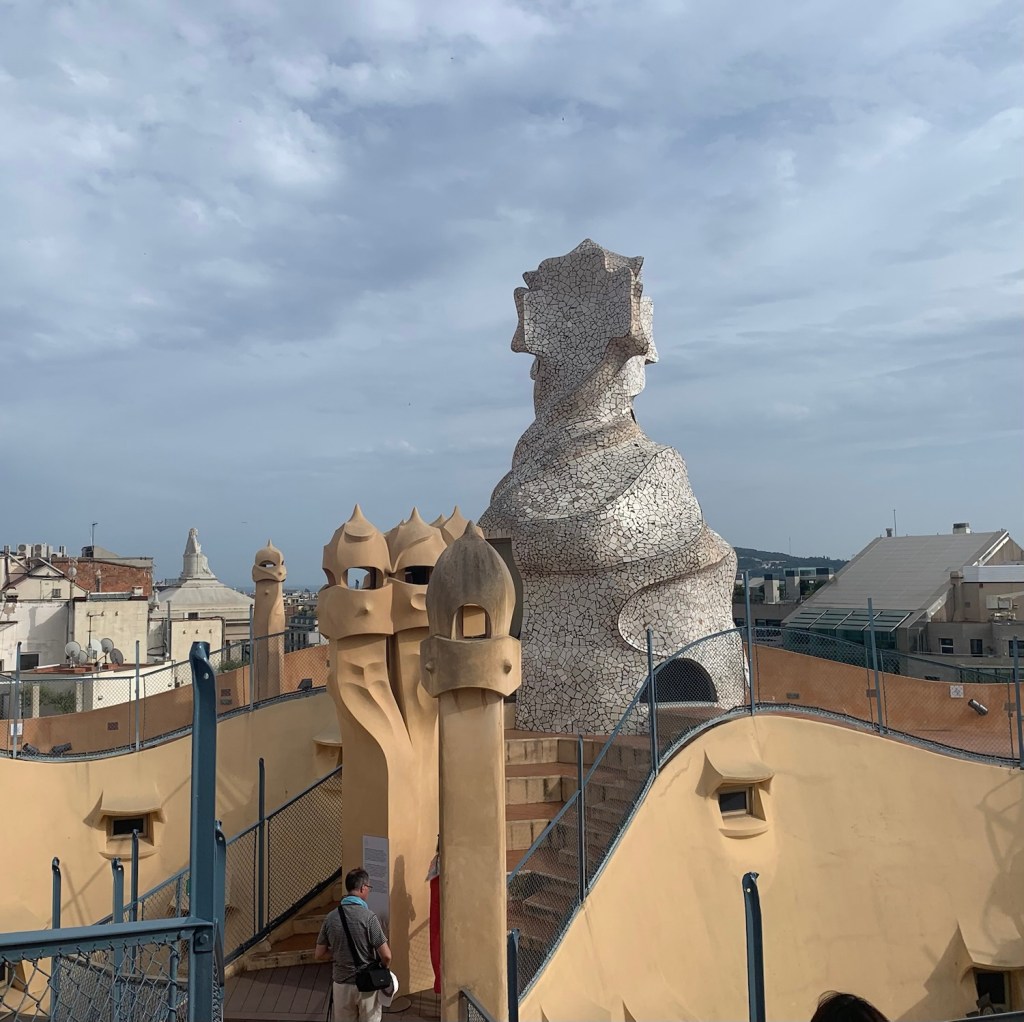
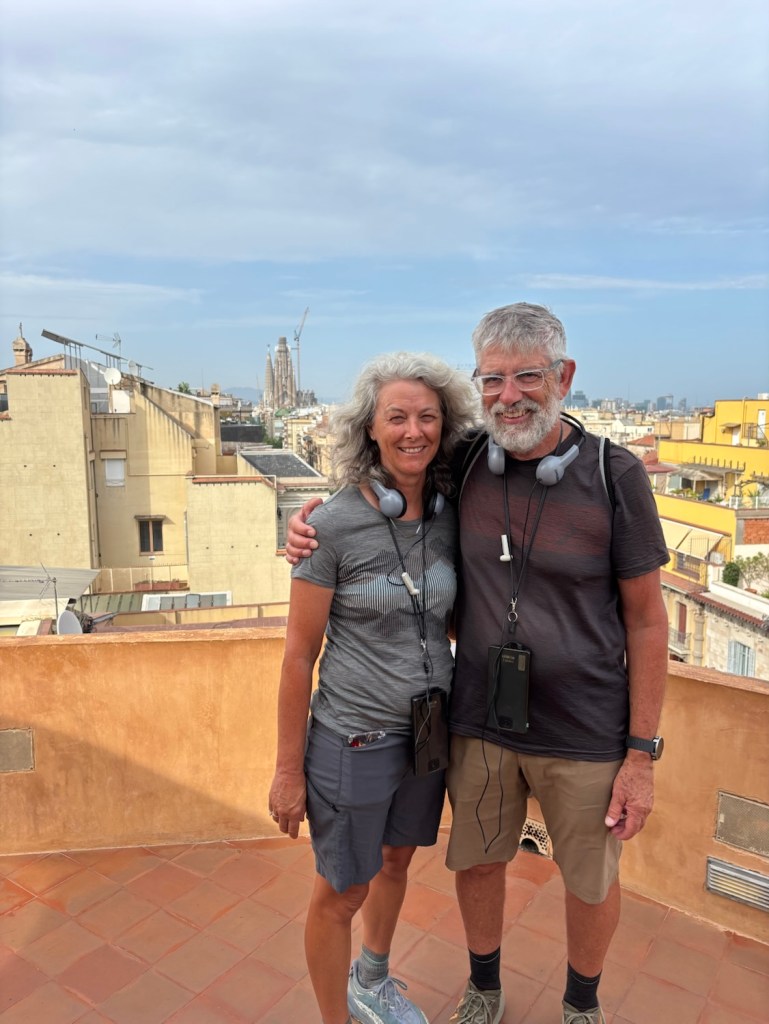
The freedom Gaudí had with his designing, both from within himself and from his employer, has given way to such stunning design.
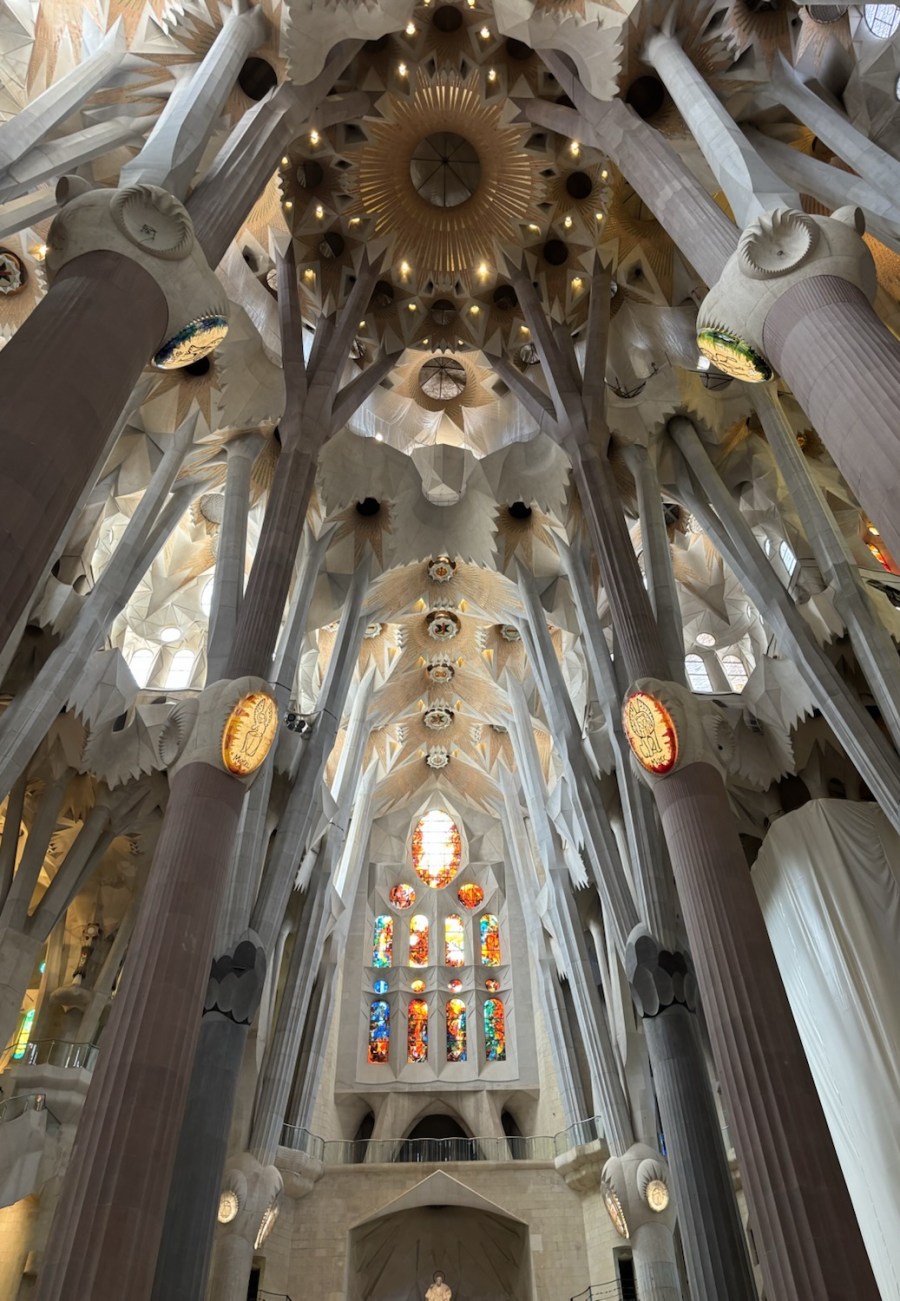
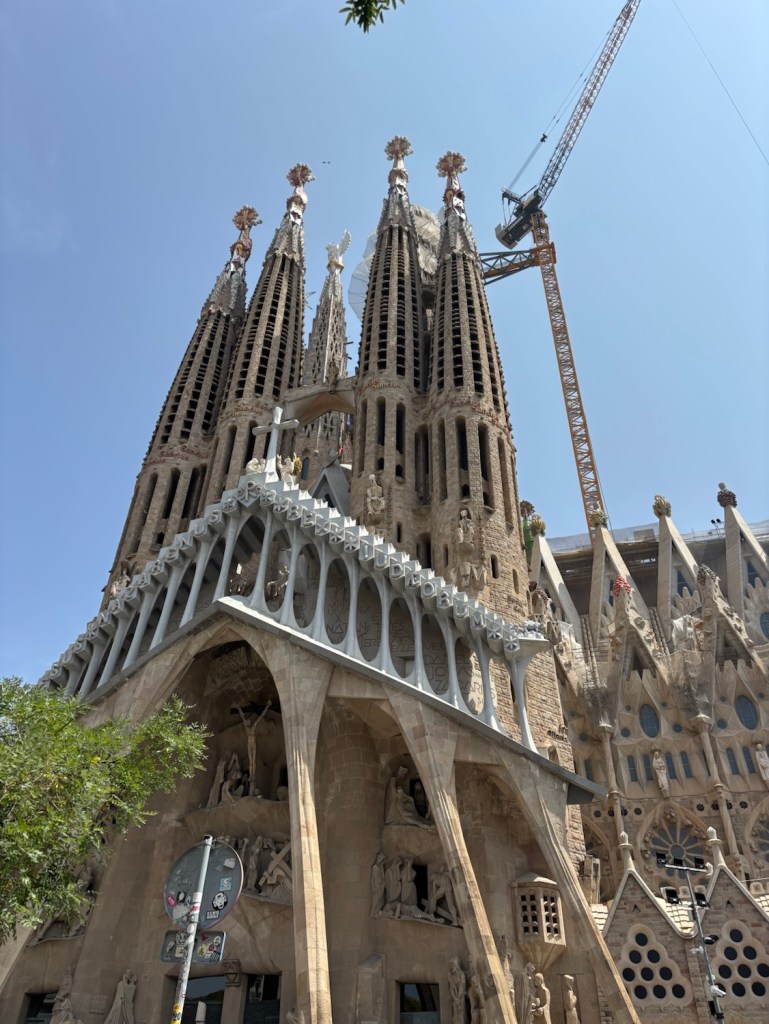
The next day took our Gaudí experience to another level as we spent a delightful afternoon at La Sagrada Família with its jaw-dropping scale and unique design.
Construction of a more traditional Gothic Basilica began in 1882 but in 1883 when the then current architect resigned Gaudí took over the project, combining the work to date into his curvilinear art nouveau vision.
Gaudí became so involved in the project that in 1925 he started residing in the Sagrada Familia workshop.
Knowing he would never to see the completion of this project, due to its size and complexity, he compiled detailed models and information of how the each part was to progress after his death.
Although he would not have predicted that his death would come so early.
In 1926 during his daily walk to church for prayers and confession, he was struck by a tram and due to his unkempt appearance, he was presumed to be a beggar and left unconscious on the street.
Eventually taken to a hospital by passers-by and recognised some time later, his condition had deteriorated too much and he died 3 days after the accident. He was 73.
He is entombed in the crypt of the Basilica, to always be connected with his work.
And today the work on the Sagrada Familia is still on going although the main interior is complete and it was consecrated in 2010 by Pope Benedict XVI.
I’ll let the pictures do the talking…


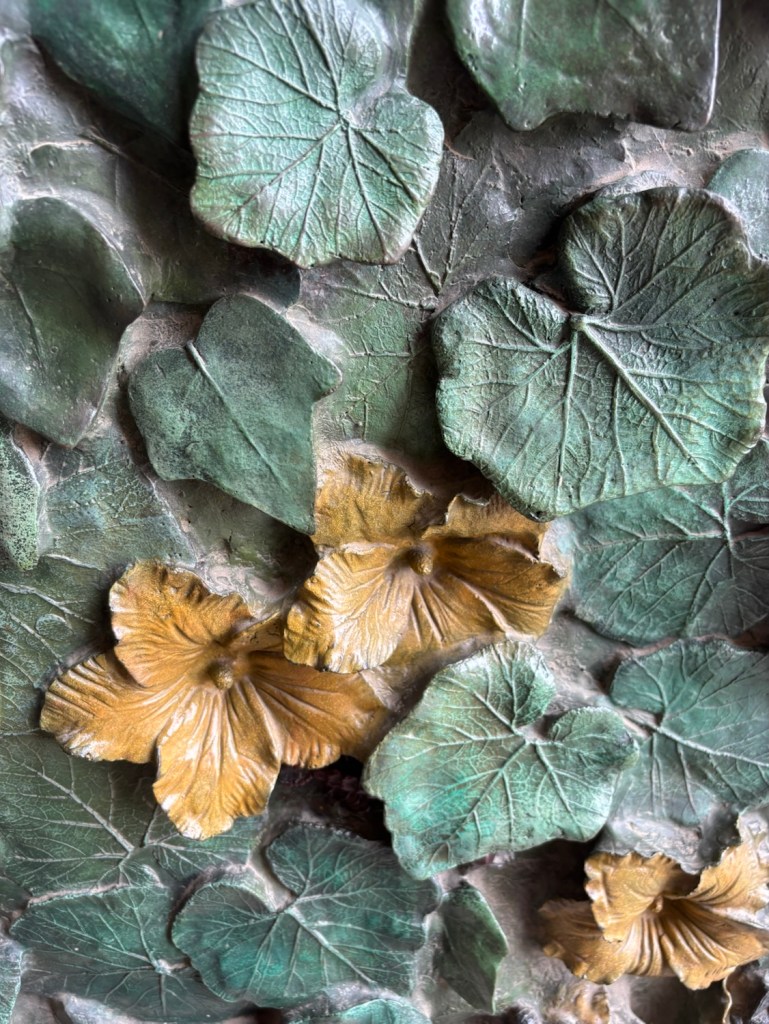
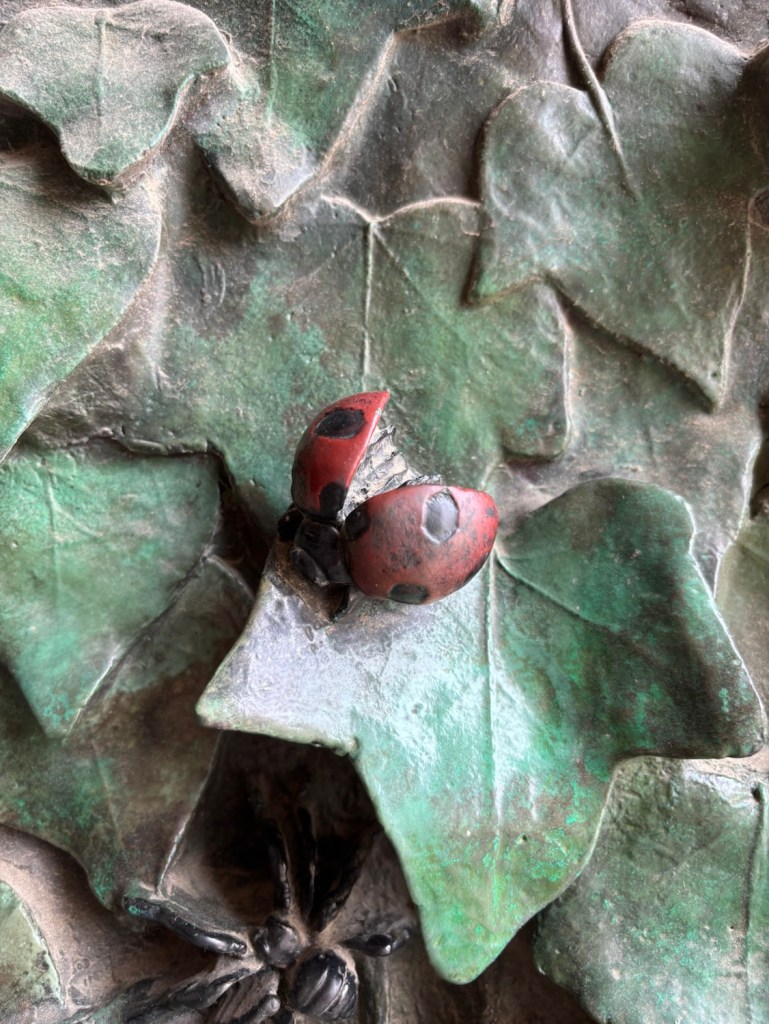
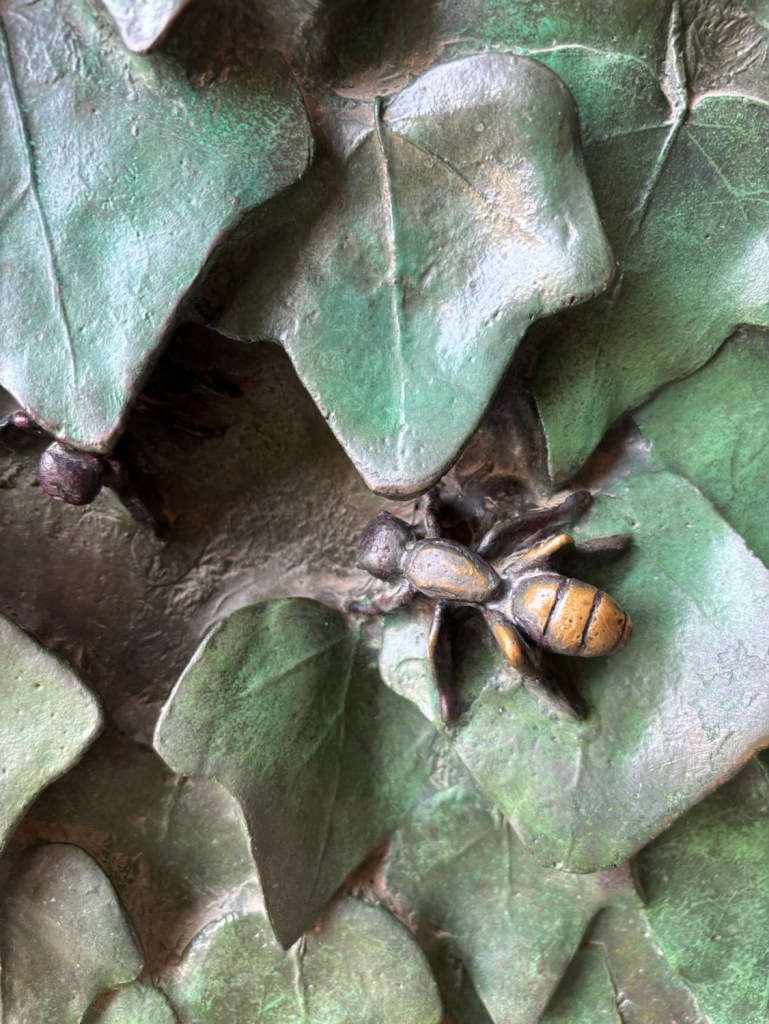

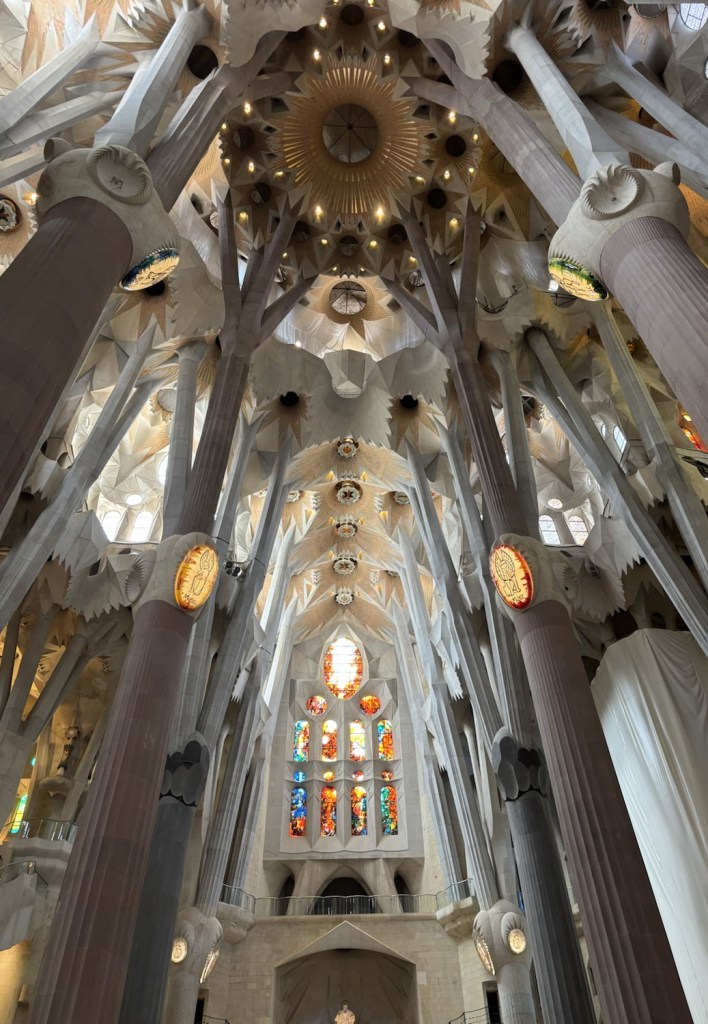
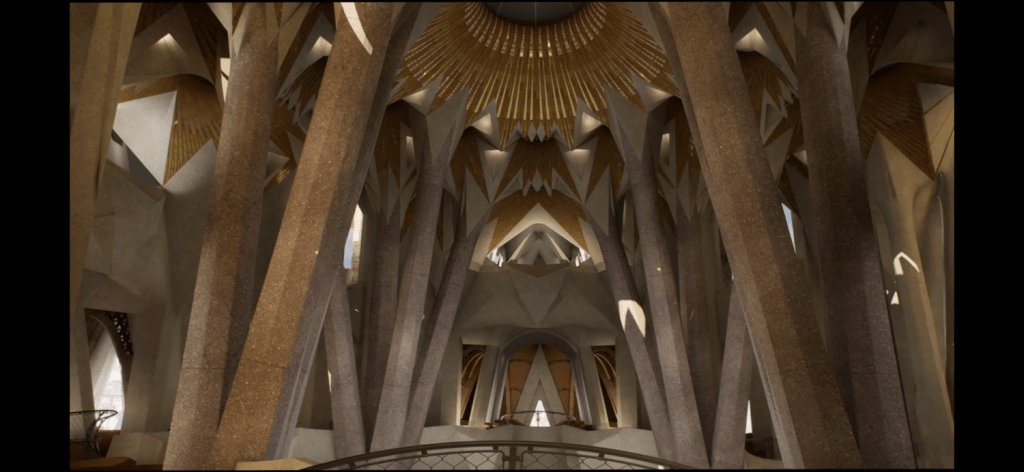
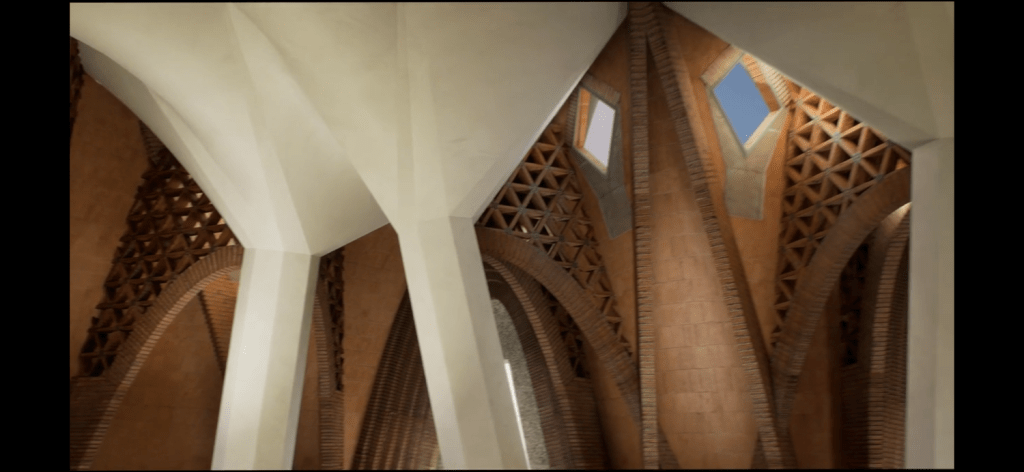
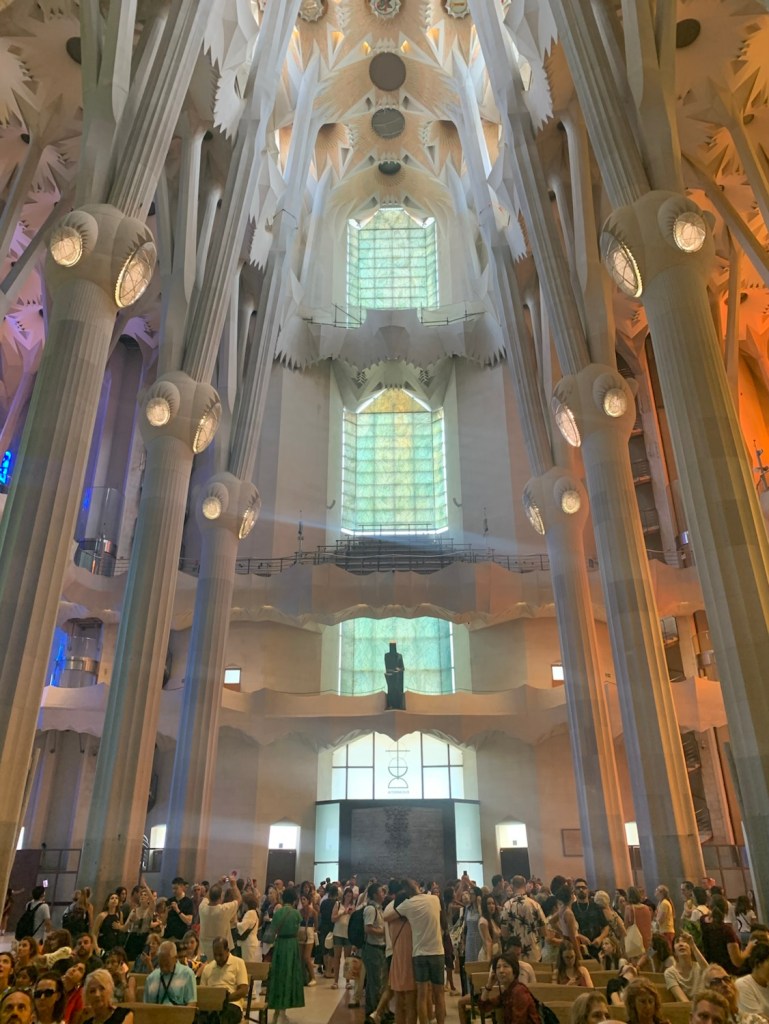
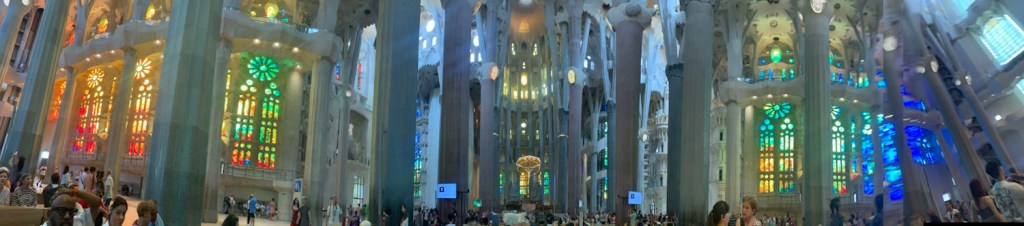
The light was an incredibly important detail of Gaudí’s design, with one side of the church having winter hues and the other summer ones.
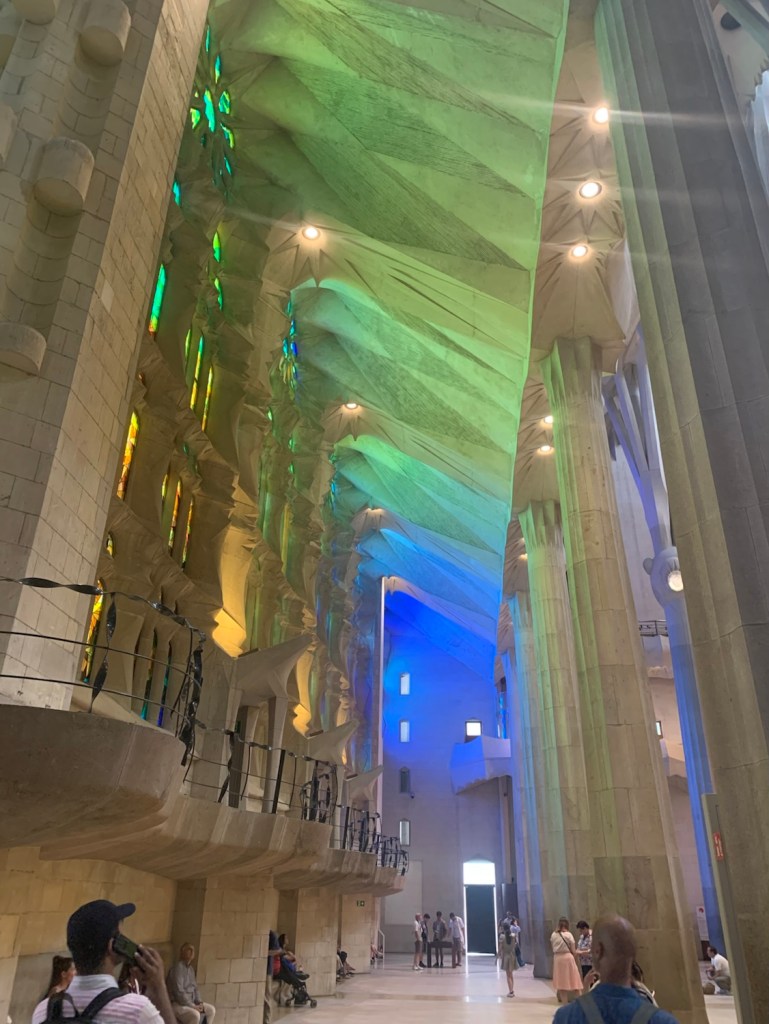
Creating an overall magical light show as the colours bounce on the angled ceiling.
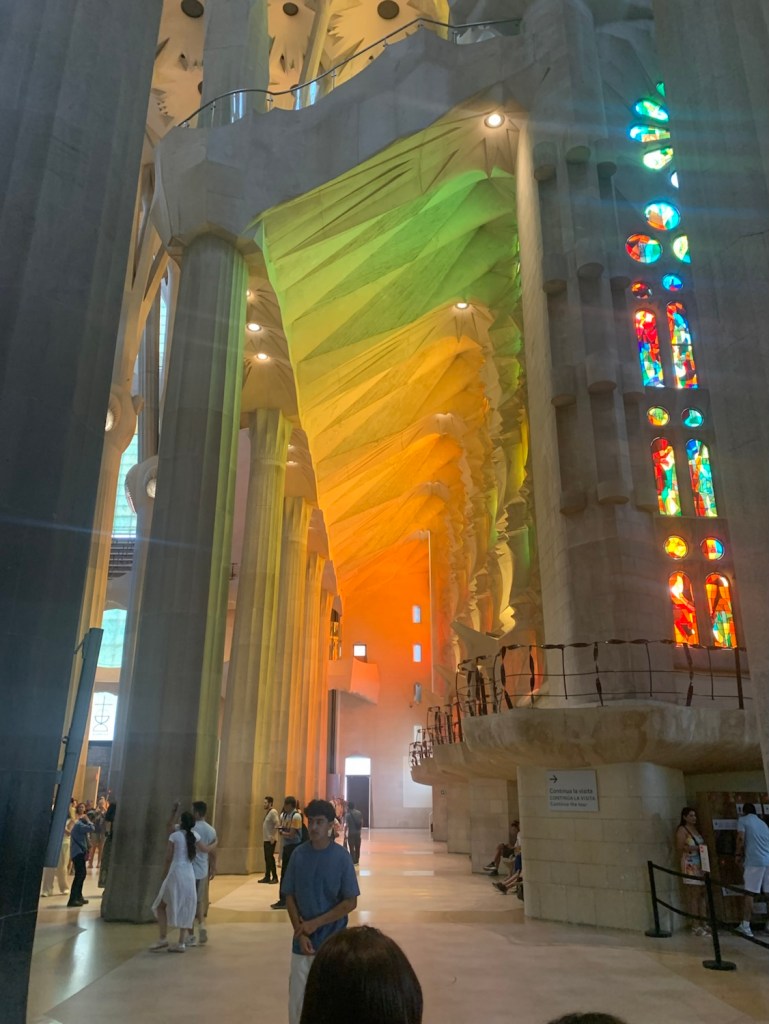
Life is love, and love is sacrifice
To do things right, first you need love, then technique
Antoni Gaudí
Really a jaw-dropping afternoon!
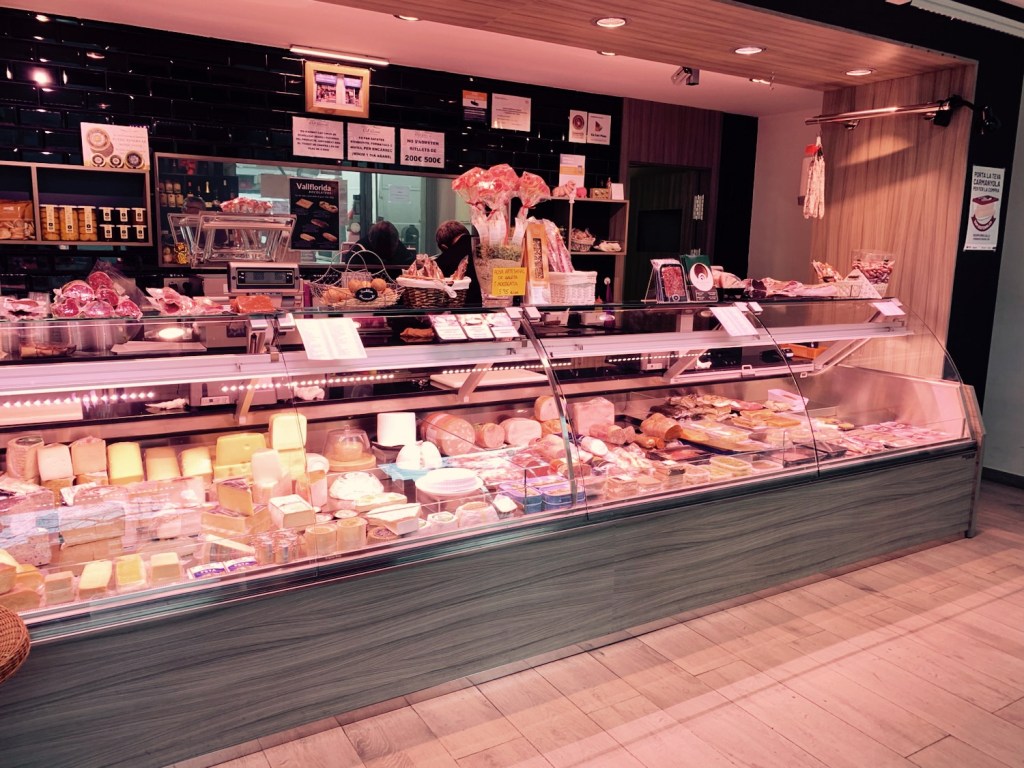
Food in Barcelona (and Spain in general) is so well celebrated: the proprietor of the local xarcuteria served us with devout attention, clearly having great respect for the food he sold, local supermarket (Ametller Origen) had great products and beautiful fruit & vegetables, and the superb panaderia a few doors down, Turris, was visited way too often.
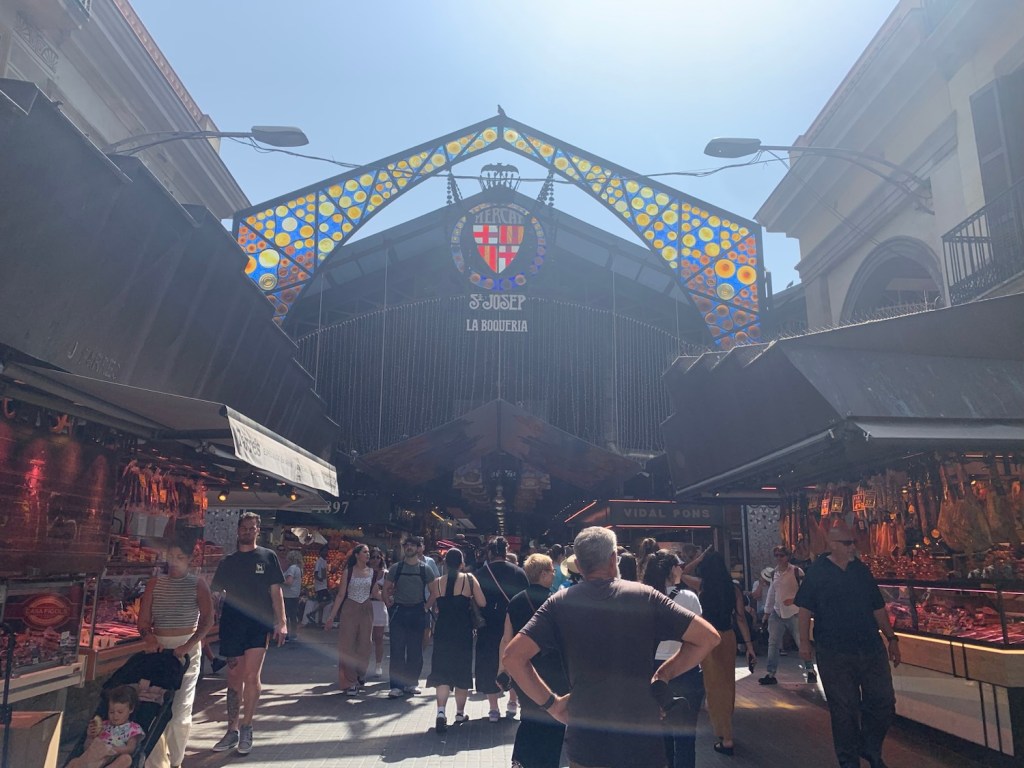
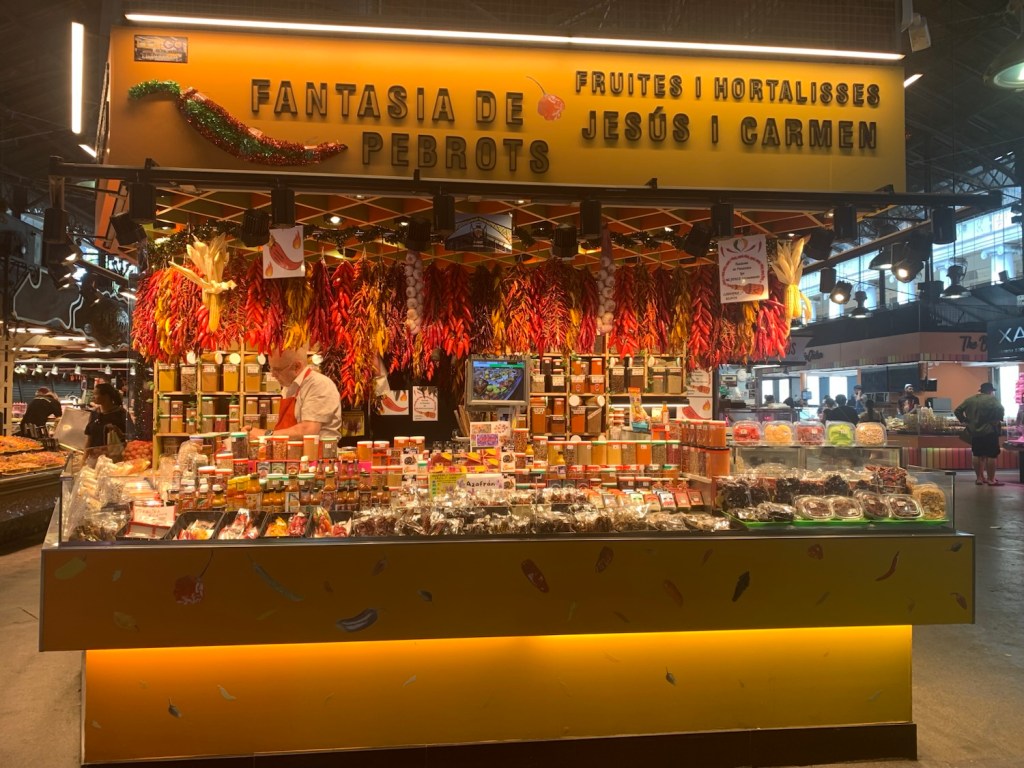
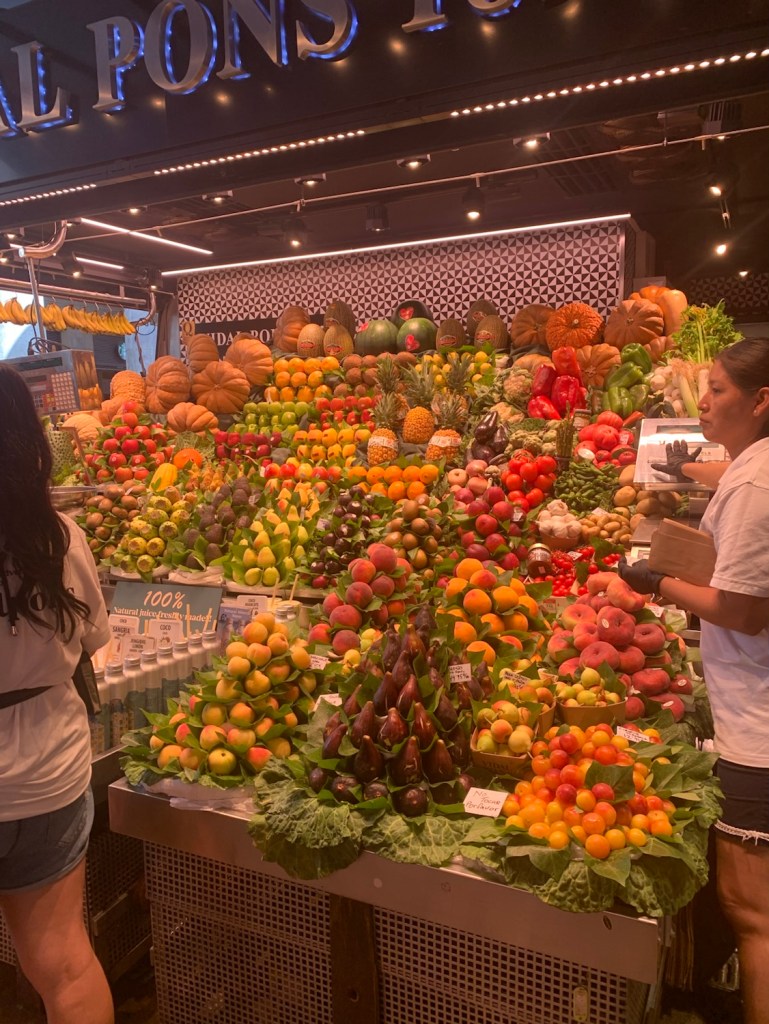
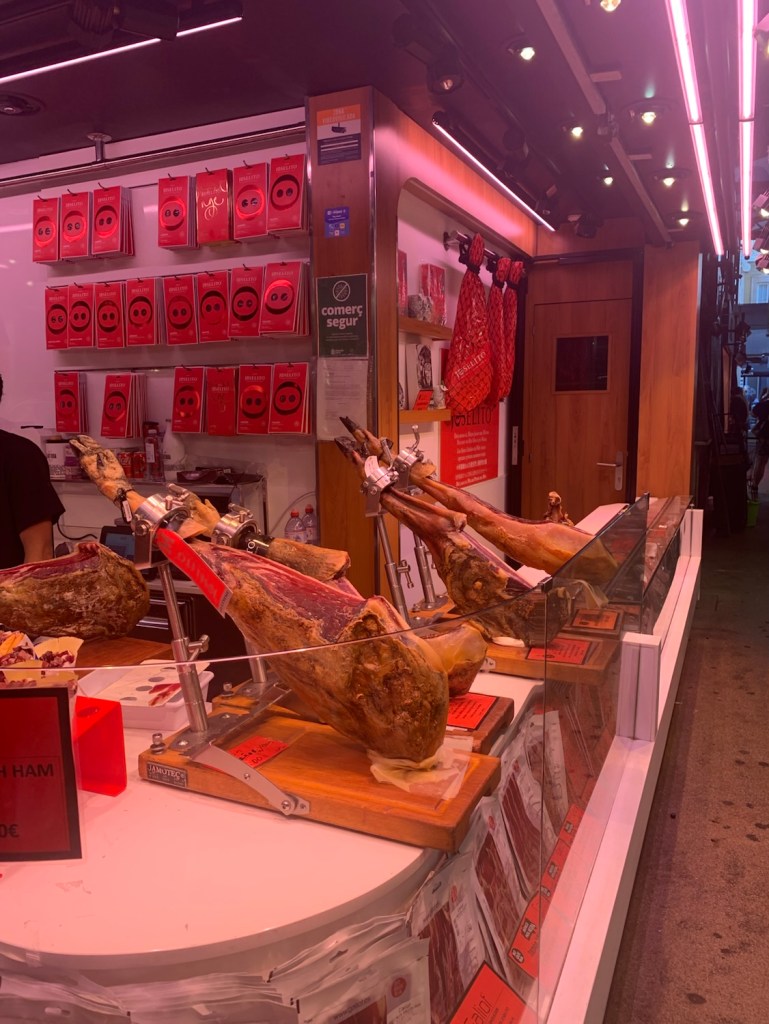
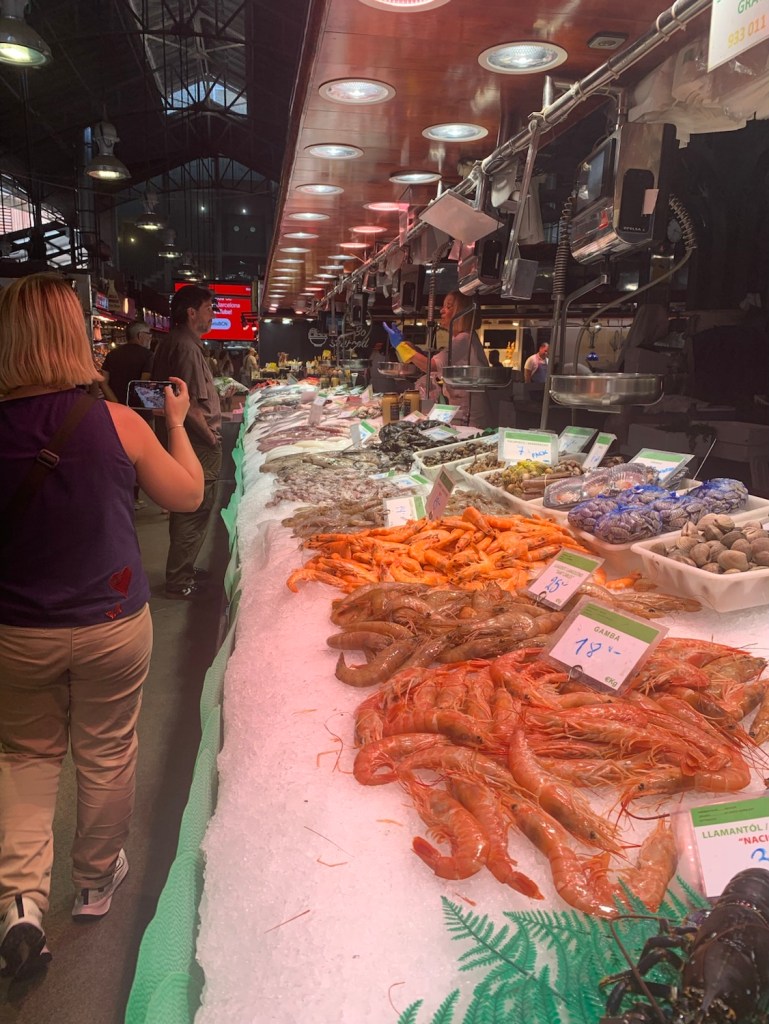
Barcelona’s Mercat de la Boqueria also has a wonderful array of foods on offer.
We were oh so lucky to meet Enric at the camping ground we stayed at in L’Hospitalet de L’Infant who offered to show us some of Barcelona if he could be available.
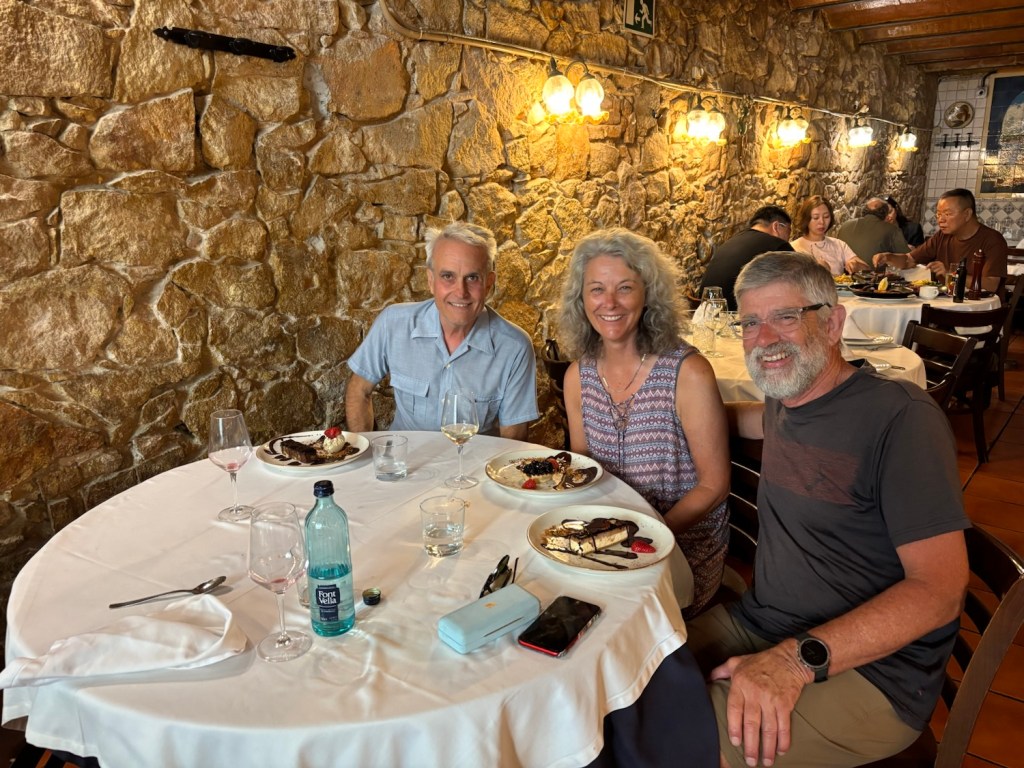
He was, and after treating us to a magnificent lunch in a very traditional restaurant near his office we headed down to the waterfront and to the old fishing quarter, La Barceloneta.

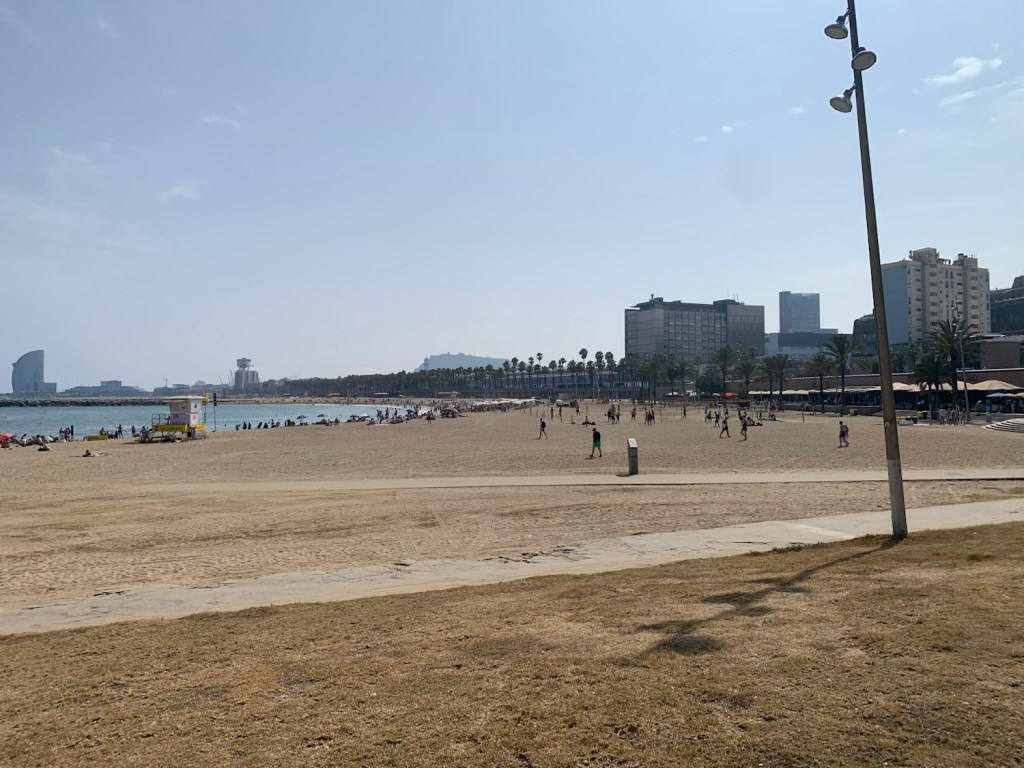
Barceloni are rightfully proud of the transformation of the waterfront area in preparation for the 1992 Summer Olympics; the previously grimy industrial precinct being removed and replaced with apartment blocks, restaurants and sweeping sandy beaches, being very much enjoyed on the very warm Friday afternoon we visited (the antipodean custom of POETS day being alive and well here)
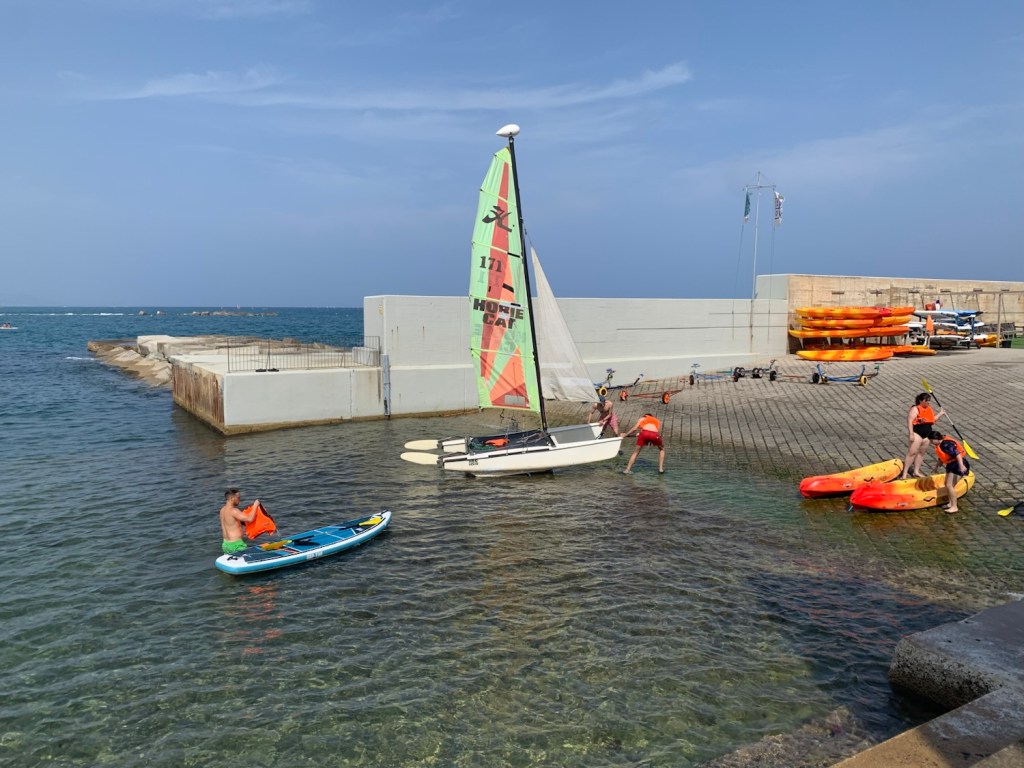
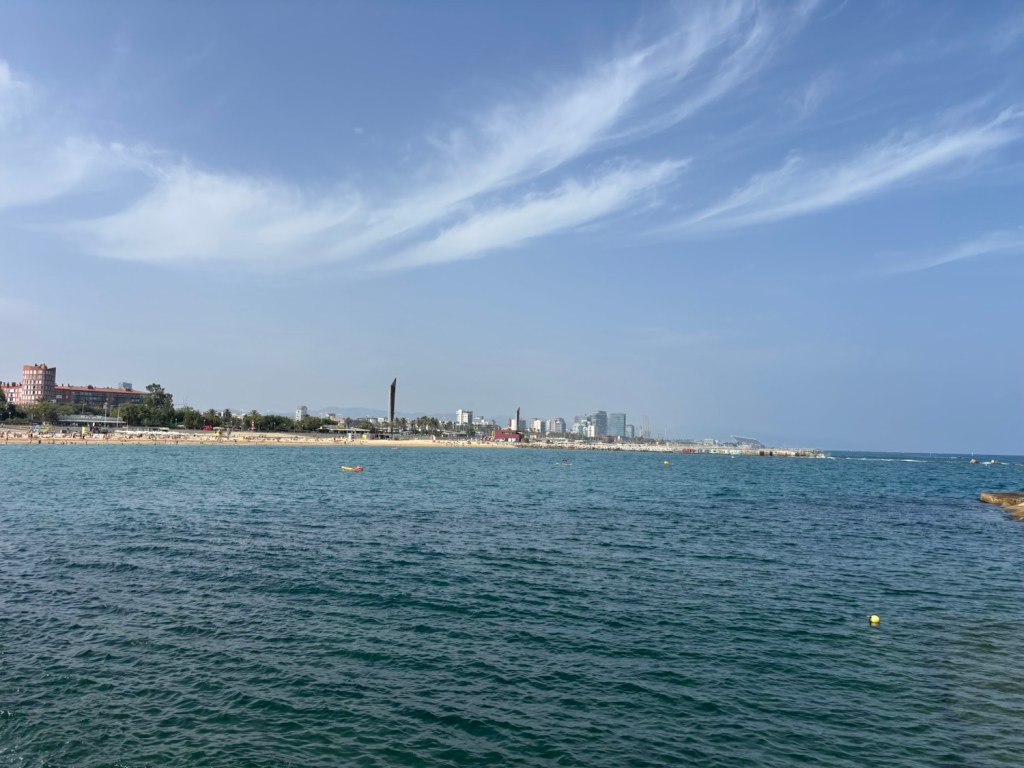
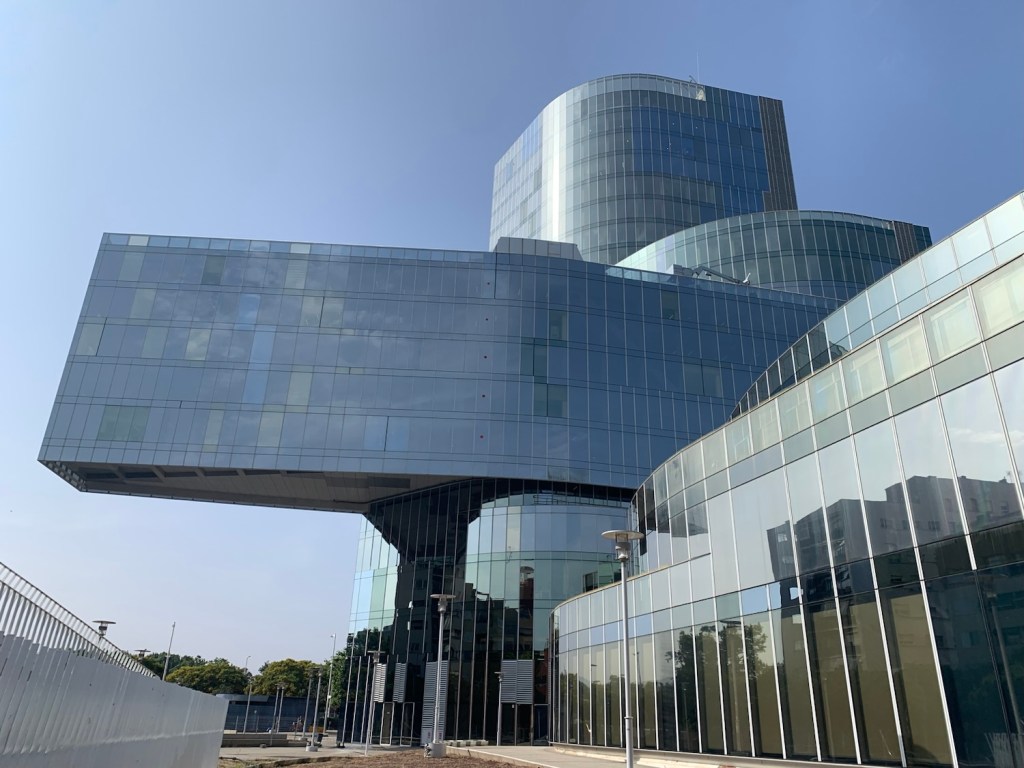
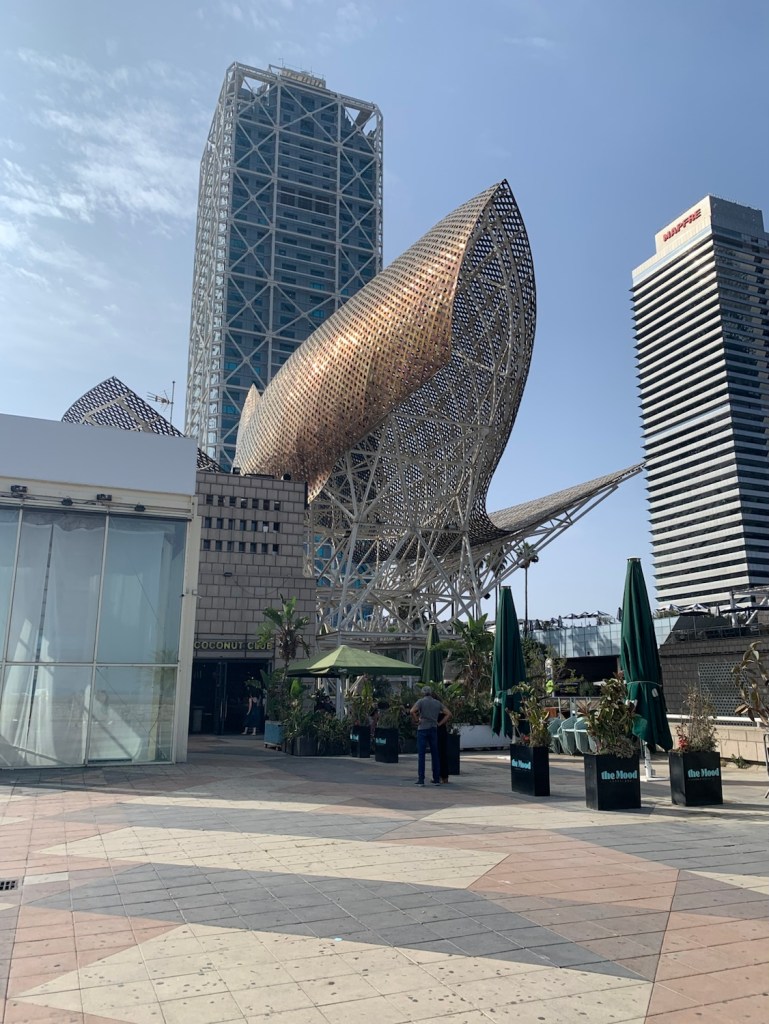
La Barceloneta was a step back in time, both in terms of architecture and for Enric, who lived here in his student days.
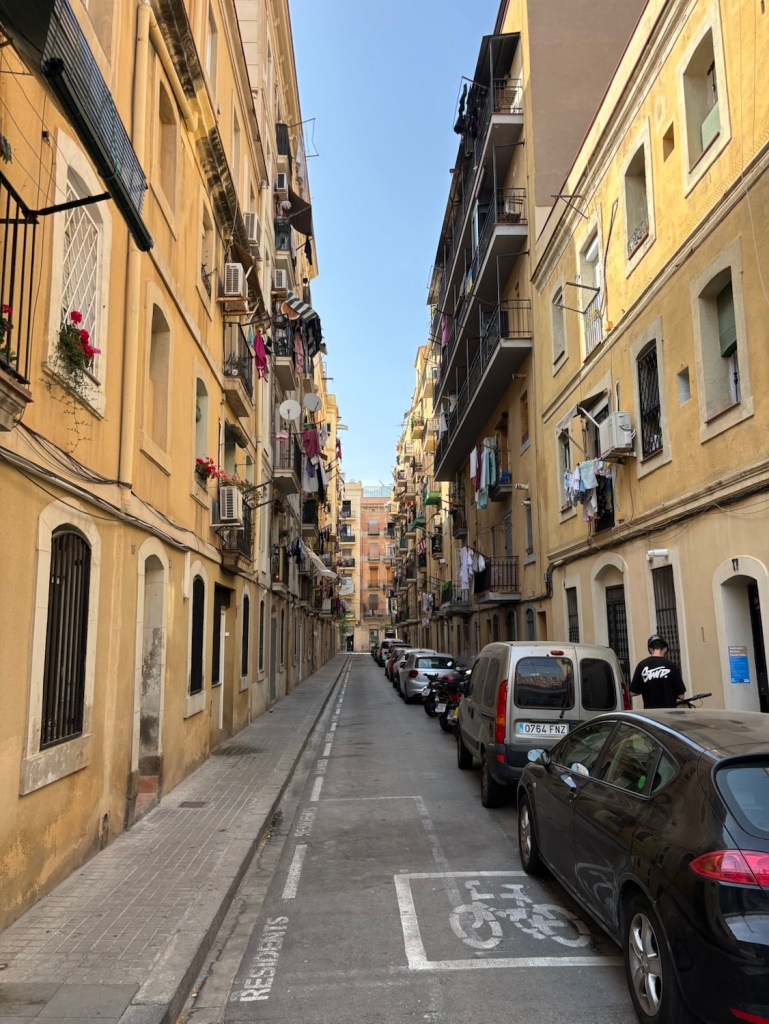
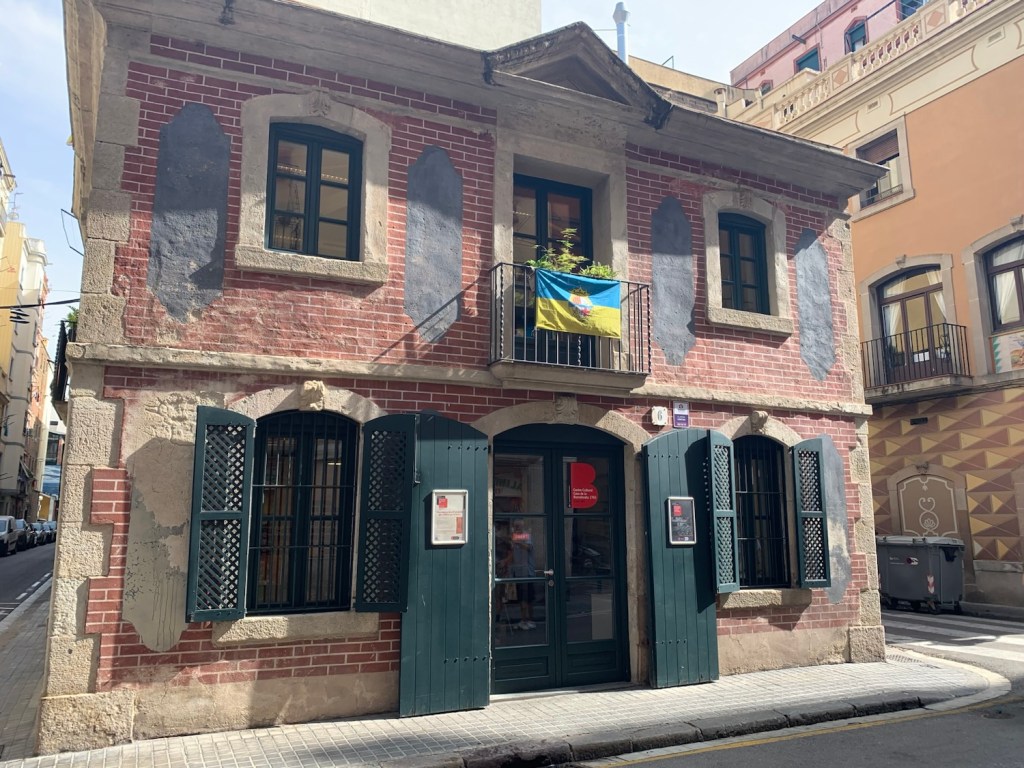

He also had been lucky enough to study at La Pedrera – he said the experience was unforgettable.
We decided to replace our bike tyres in Barcelona after my puncture heading into Peñíscola. They were certainly due for replacement having been on the bikes since 2019 and were now looking decidedly on the smooth side.
The Schwable Mondial tyre is known for its puncture resistance and longevity (and ours had certainly lived up to their reputation) so that’s what we wanted again as replacements.
Hunting them down wasn’t straightforward (“sorry we don’t have them and our supplier is out-of-stock”). Each bike shop we visited suggested another store and on the fourth try Pau from Castells Bicicletes said “yes, I can get them and, no problem if they don’t turn up before you leave, I can put them into stock” – just wonderful service!
The tyres arrived with impeccable timing and I was able to change all four outside the store the day before we departed for Narbonne, with Pau helpfully inflating them for me (and taking the old tyres for recycling) – it would have been a big job with our trusty wee pump in 30°C+ heat. Thanks Pau!
We completed our Barcelona experience with an evening stroll back to Sagrada Familia to see it under lights.

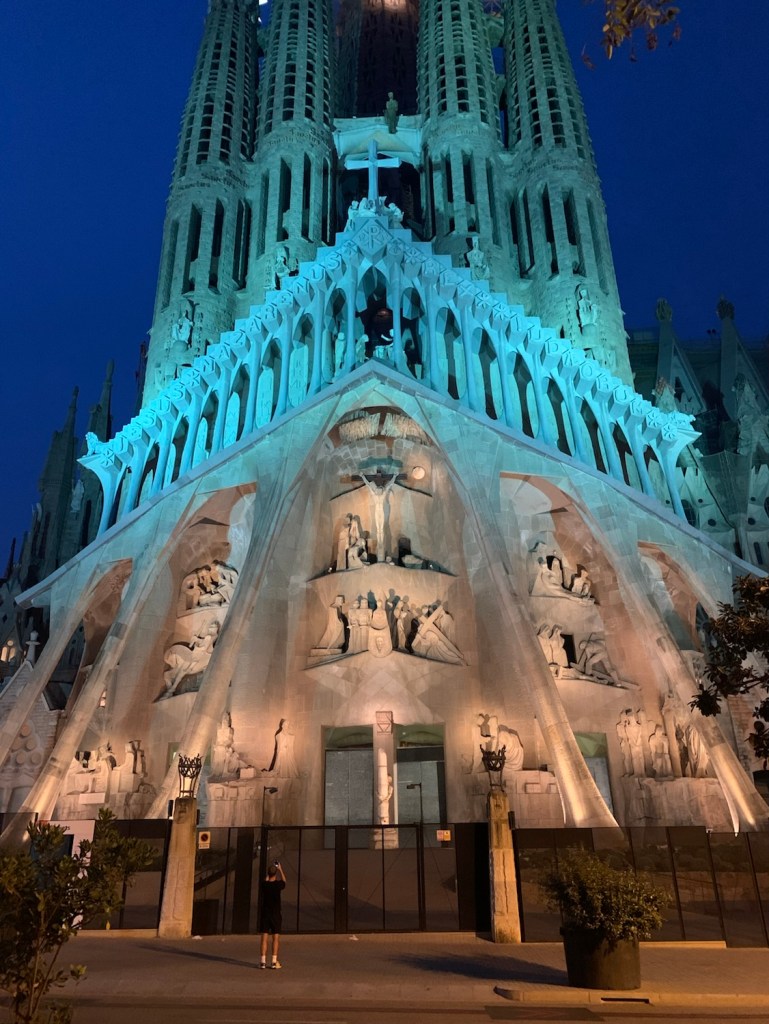
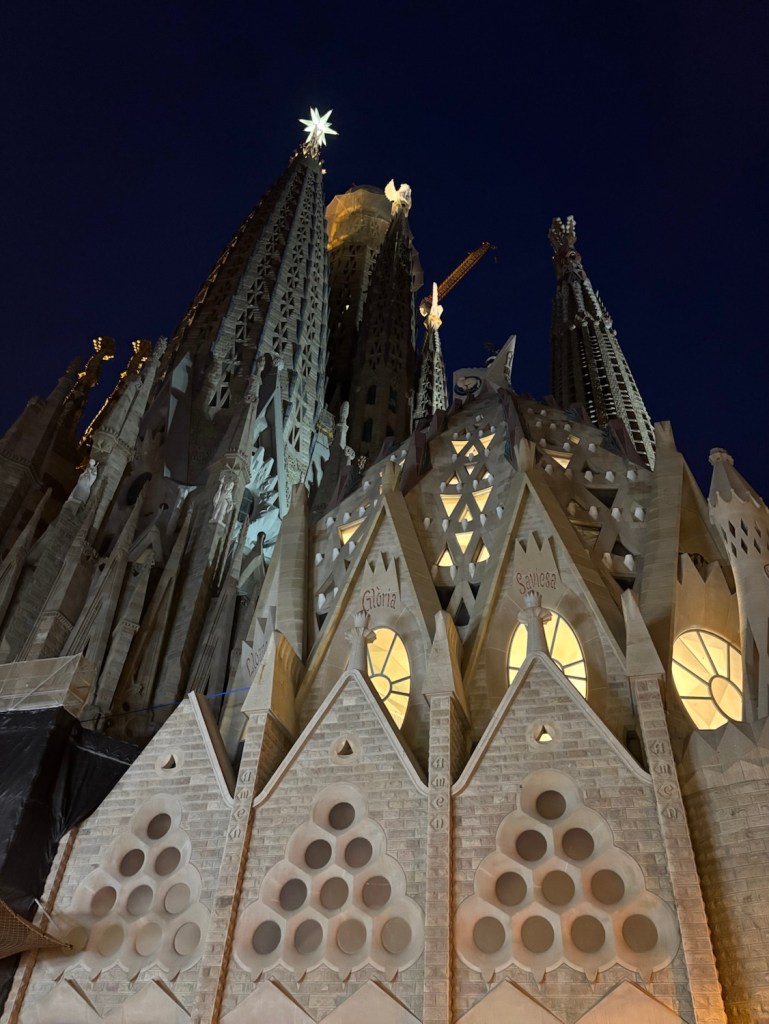
The following day, Friday, saw us bikes packed and on the bus to Narbonne; we were down to the wire, day 89 of the 90 days we are allowed to stay in Europe’s Schengen zone before being able to take advantage of the separate agreement (from 1947) that Aotearoa NZ has with France that allows an additional 90 days in that wonderful country – just so lucky!
Our bus was stopped at the border and identity documents checked. It was another sobering moment as the entitled privilege I take as of right becomes visible for a fleeting moment. A number of people were taken from the bus as they didn’t (at face value at least) have the documentation required. These folks have lives so much tougher and more complicated than ours. Utterly unearned good fortune on our part and so quickly forgotten.
So, a very grateful adiós from two kiwis to wonderful España and bienvenue France!
Our arrival in Narbonne was not quite what we expected, deposited as we were at a bus-stop at the rear of a cinema complex about 8km outside the city itself. The heat was a shock after nearly five hours in our air-conditioned cocoon!
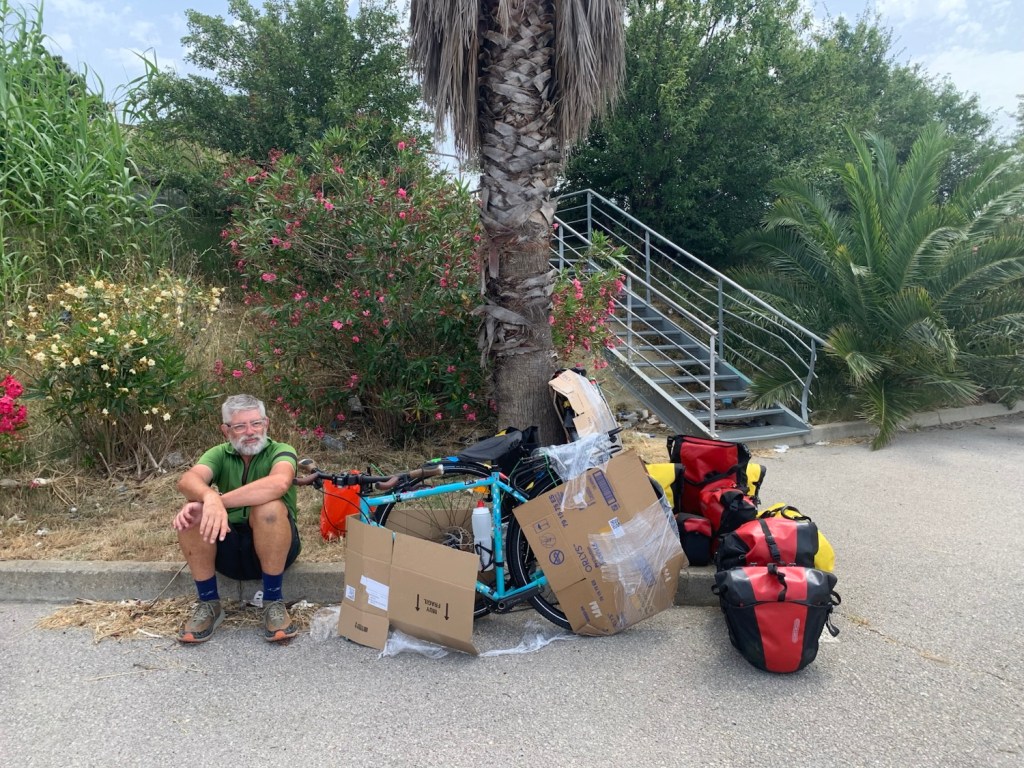

We soon had bikes reassembled in the desolation of the empty cinema carpark and were on our way into town, arriving in a small leafy square complete with fountain and a café – sweet relief! We were soon in our accommodation and ready to explore.
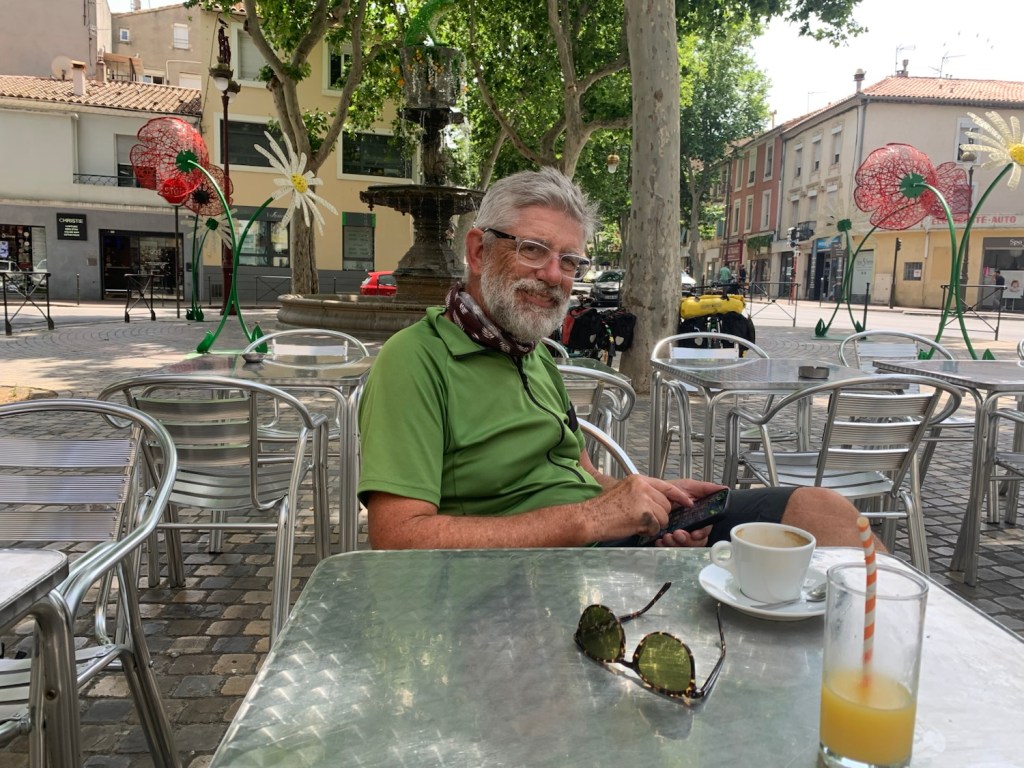

We’d arranged to meet my son John here and had a bit of time to explore before he arrived the following day.
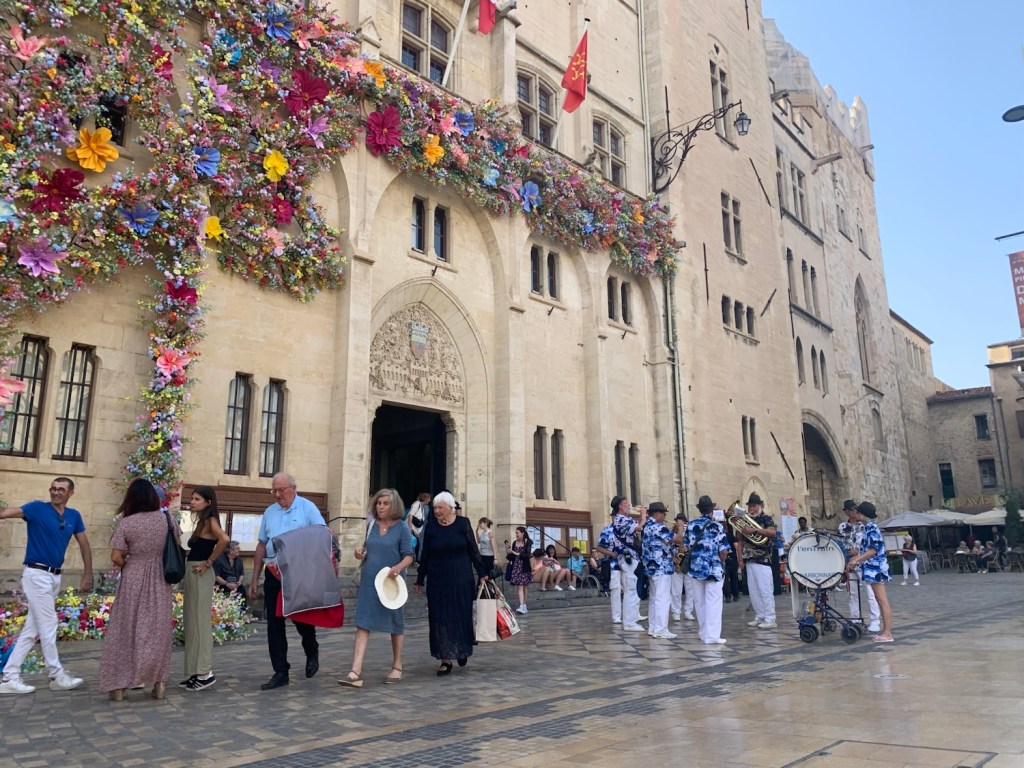
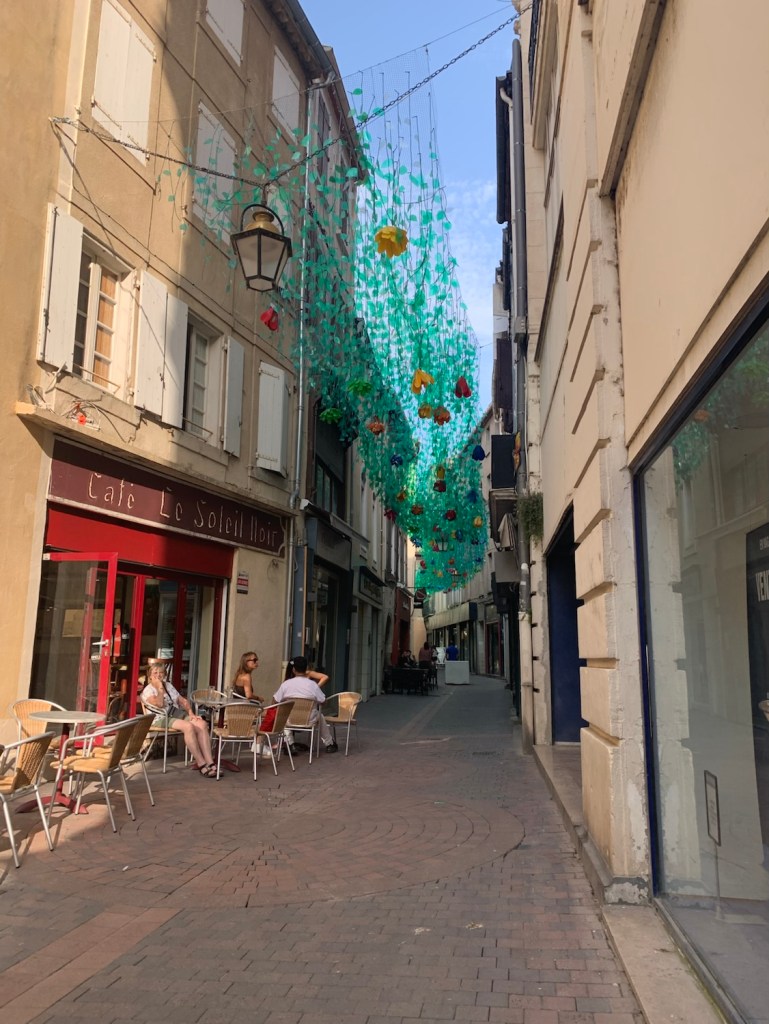


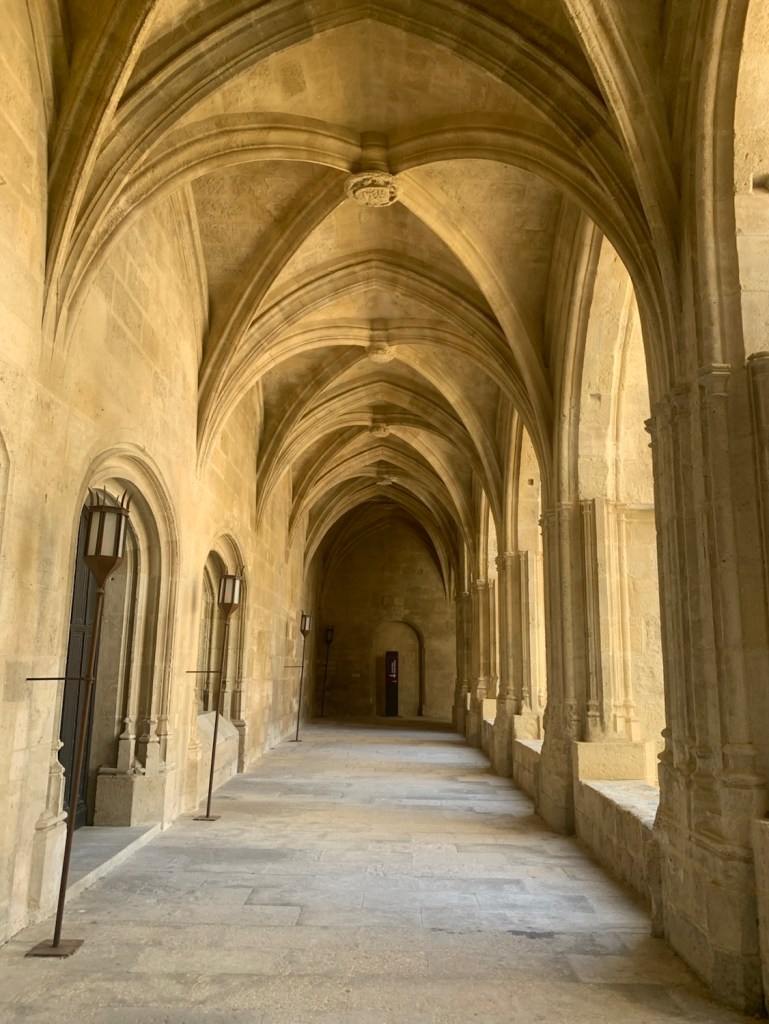
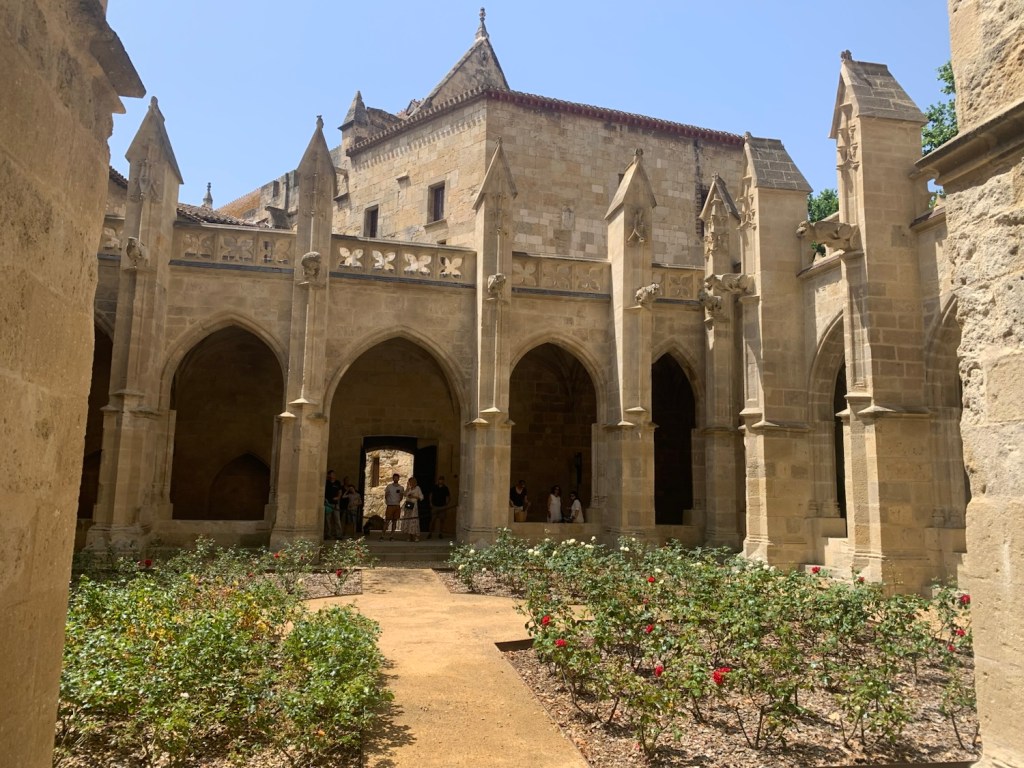
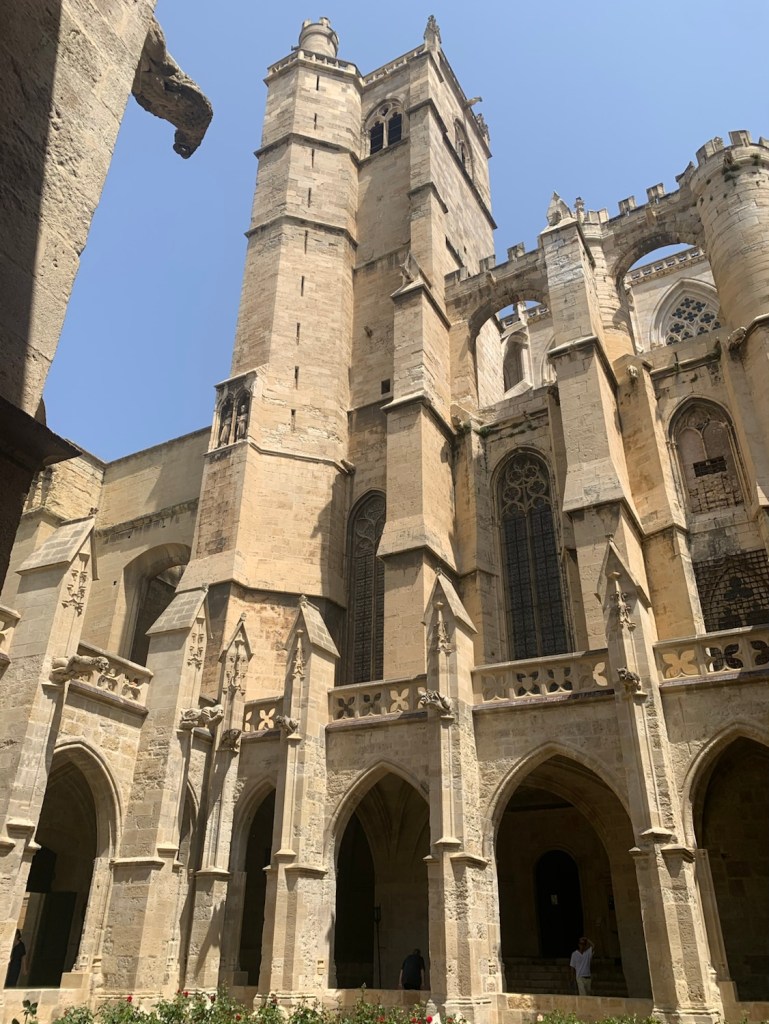
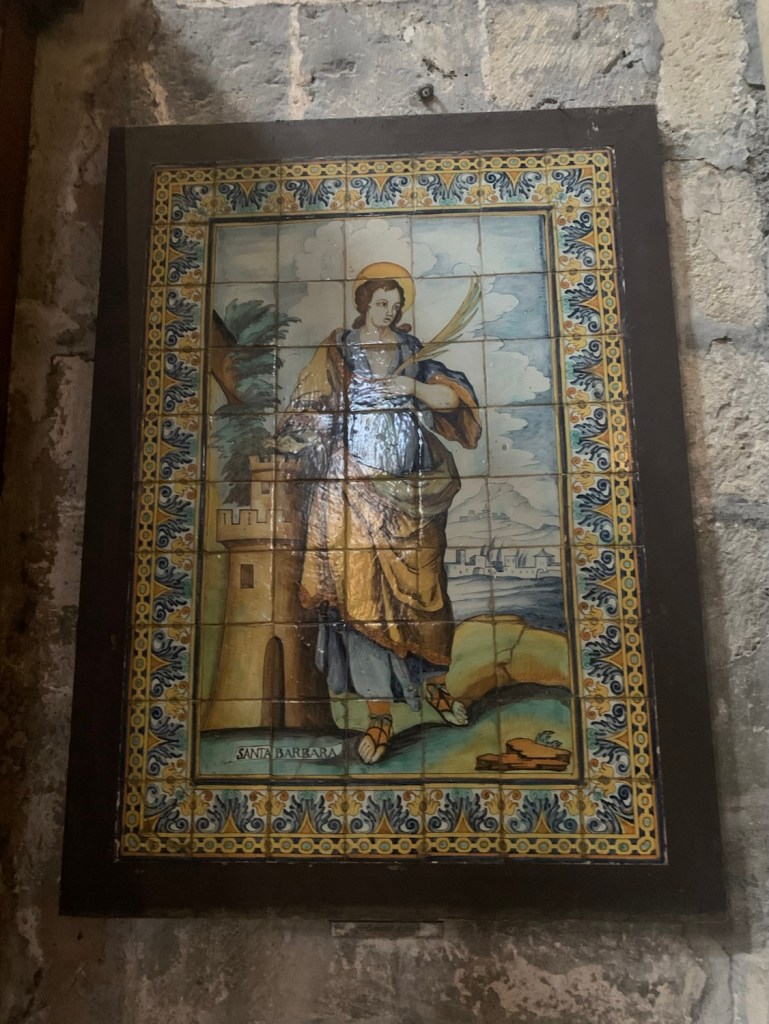

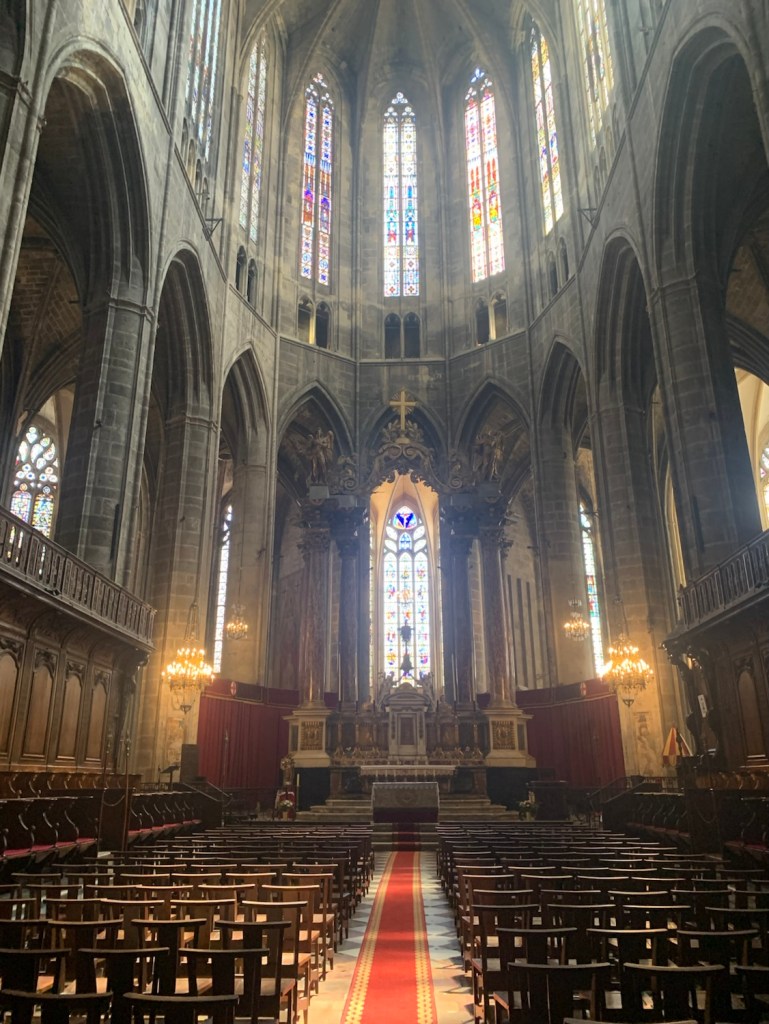
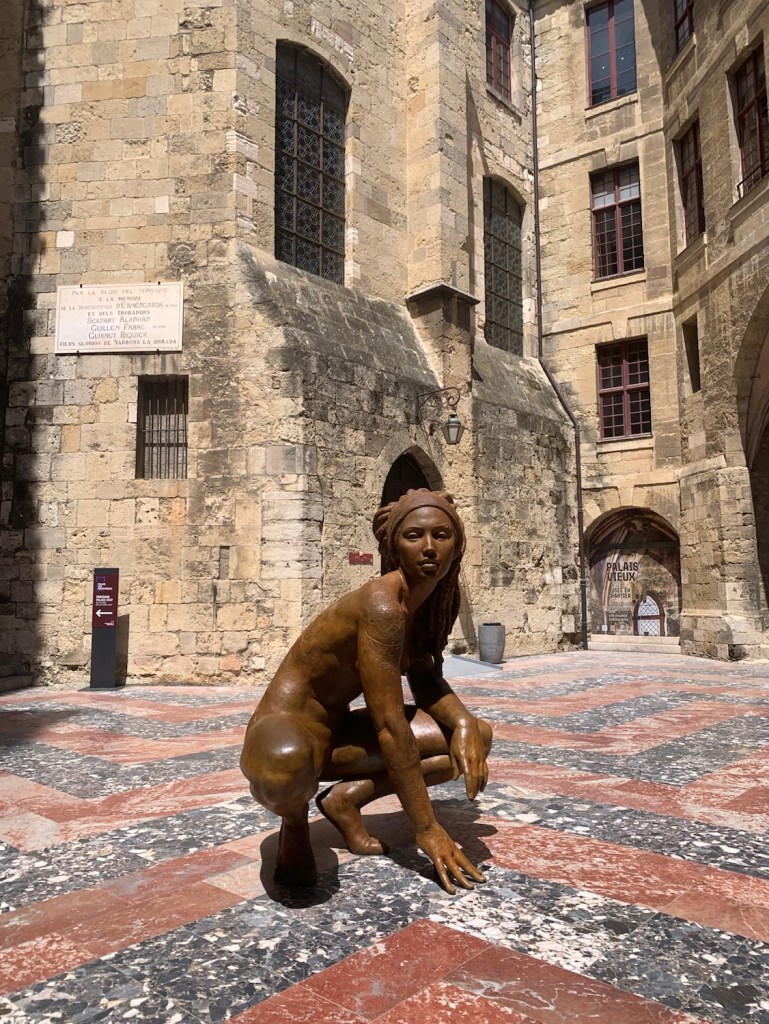
It was so good to see him again after two years whilst he was living in Bristol, and to spend a few together.
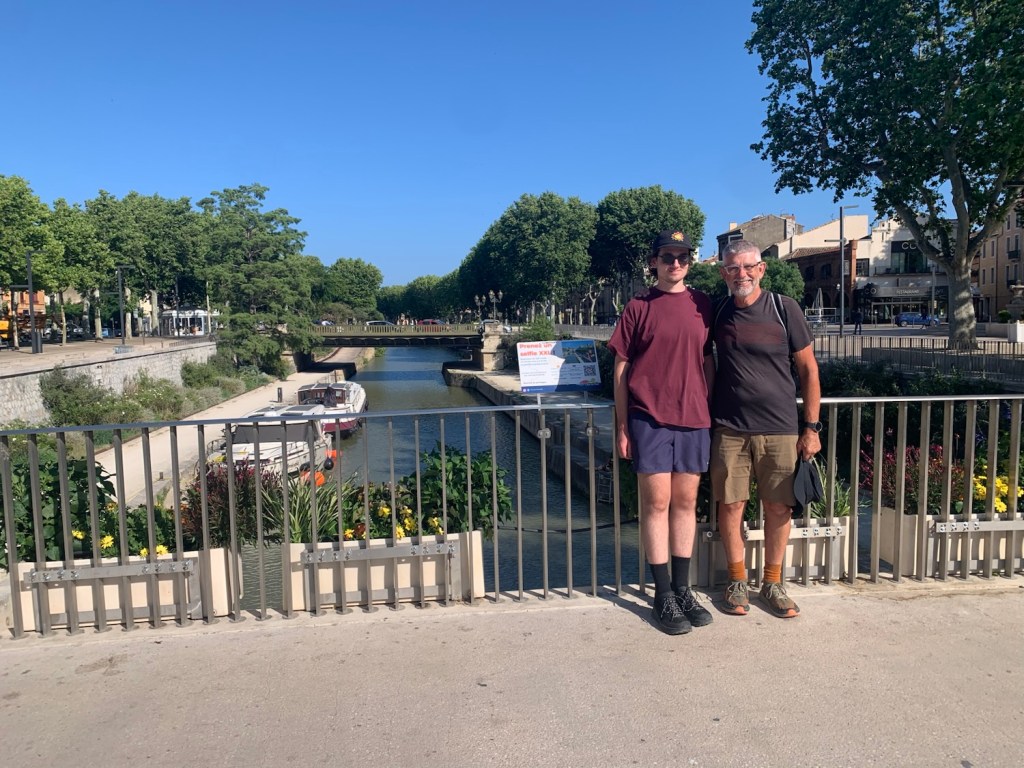
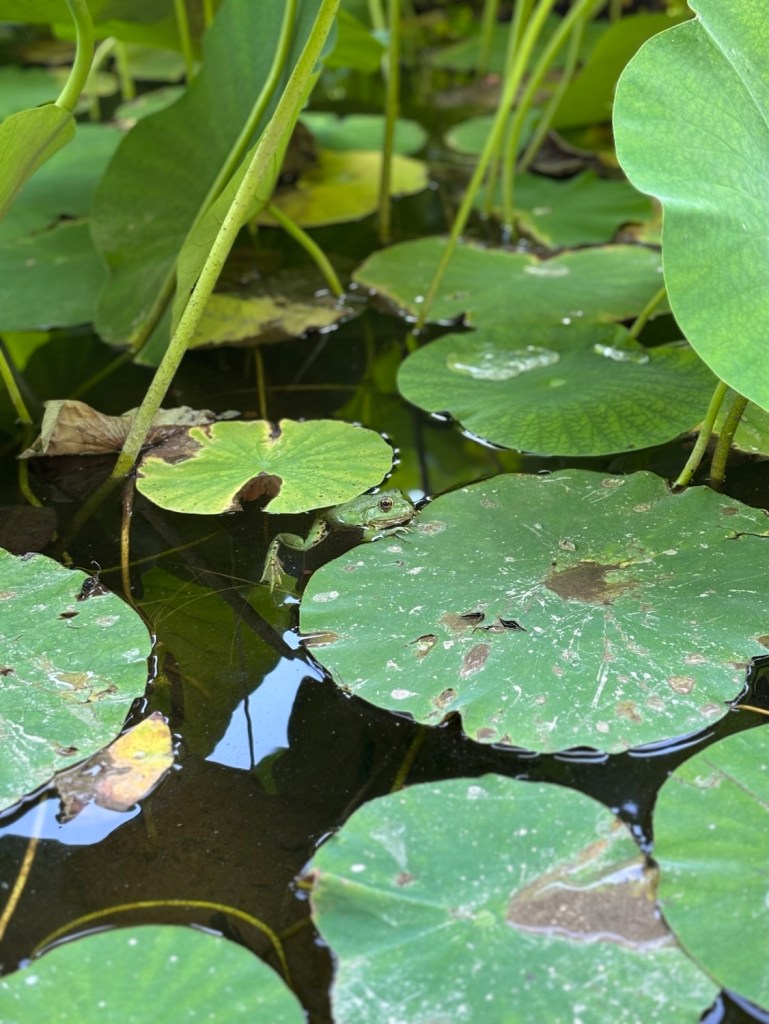
With a bit more exploring in Narbonne, we now understood the many frog references around town from our visit to Basilique Saint-Paul.
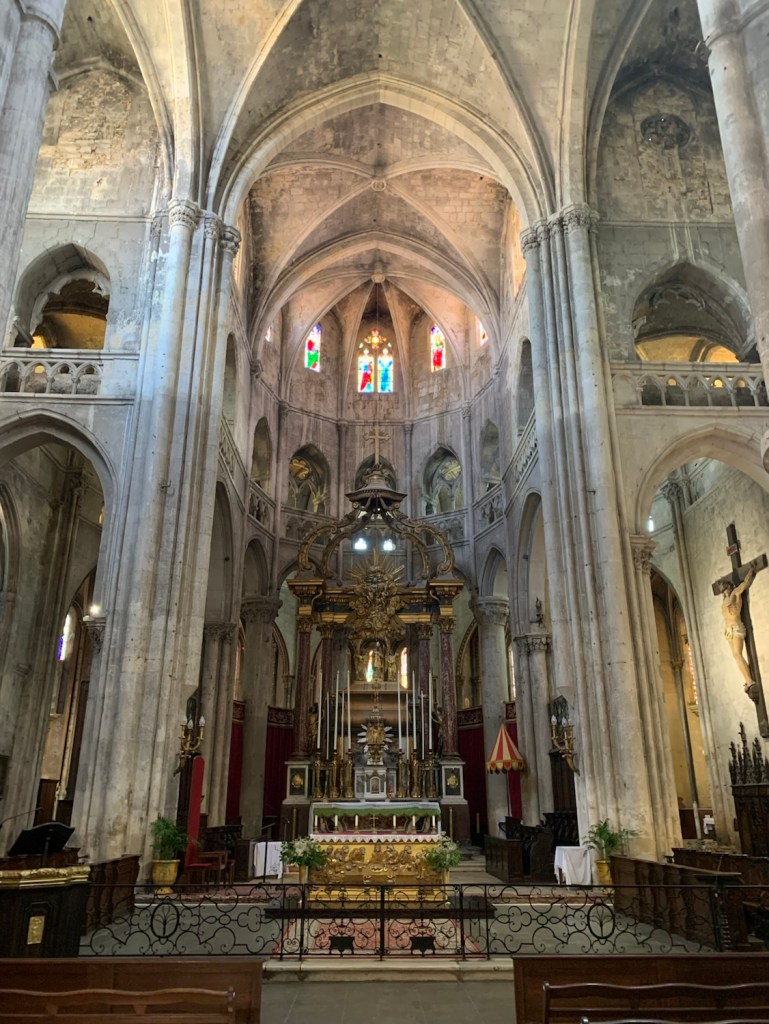

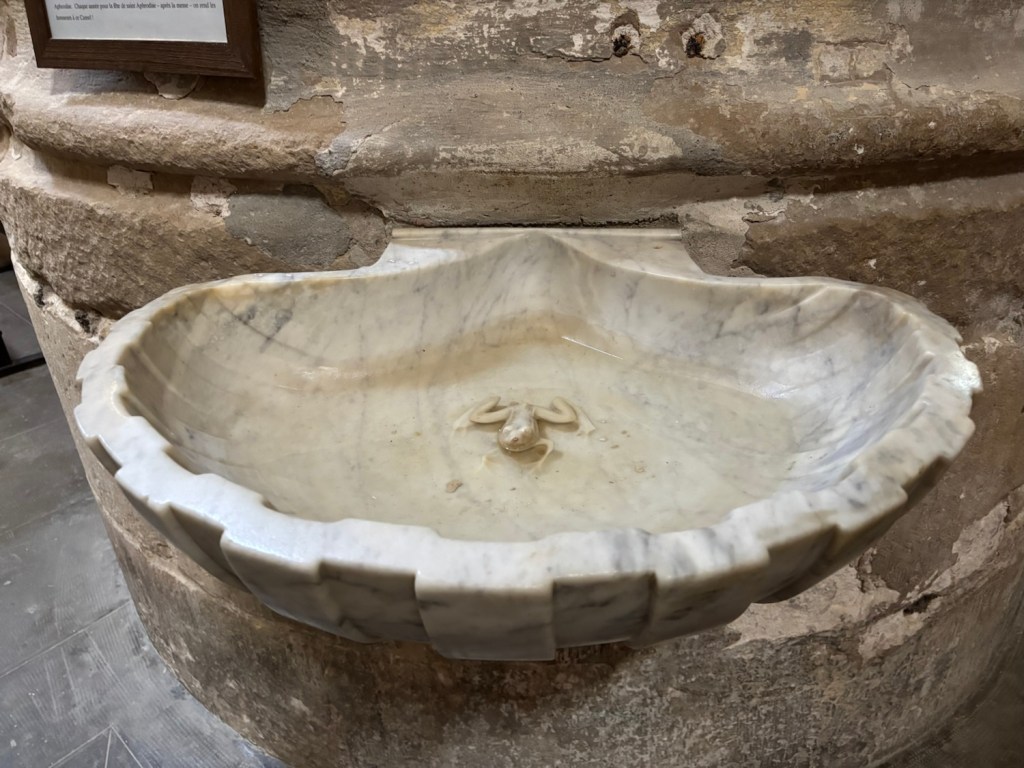
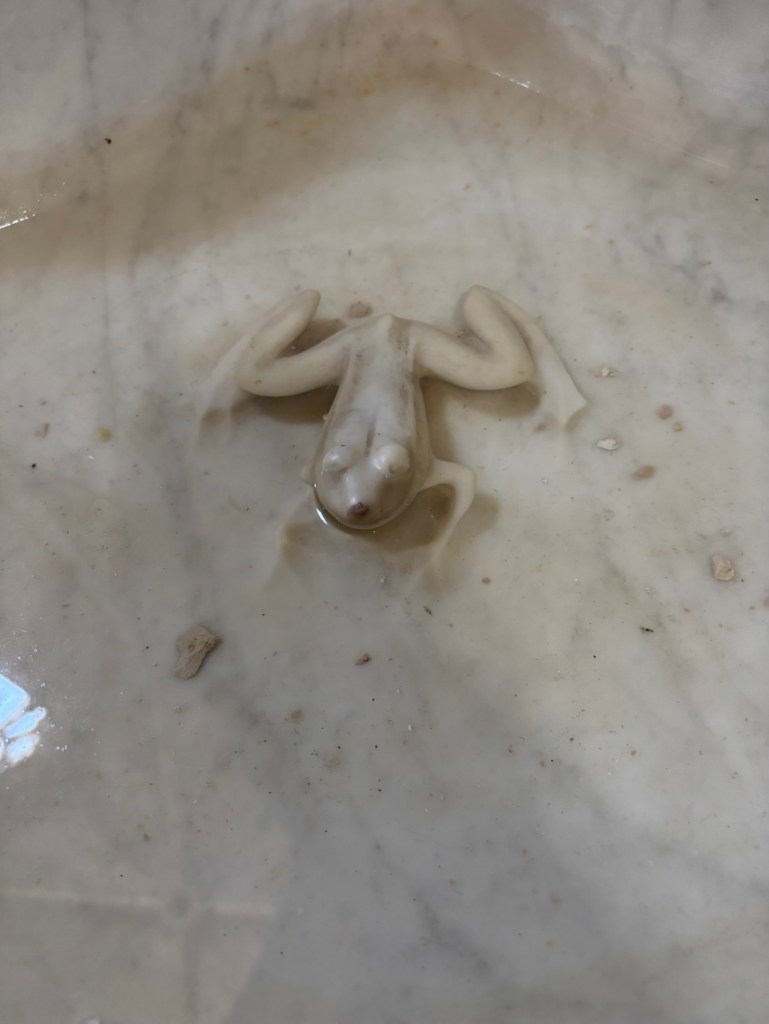
The legend has it that the frog was petrified as it was disturbing mass. Pretty harsh outcome!
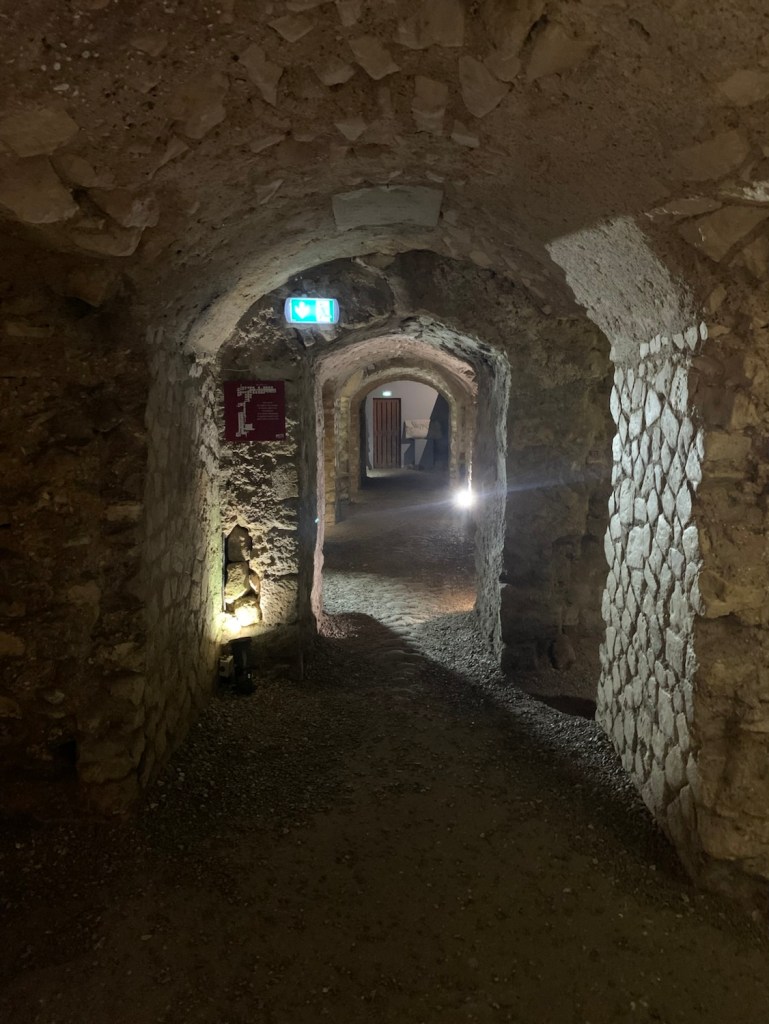
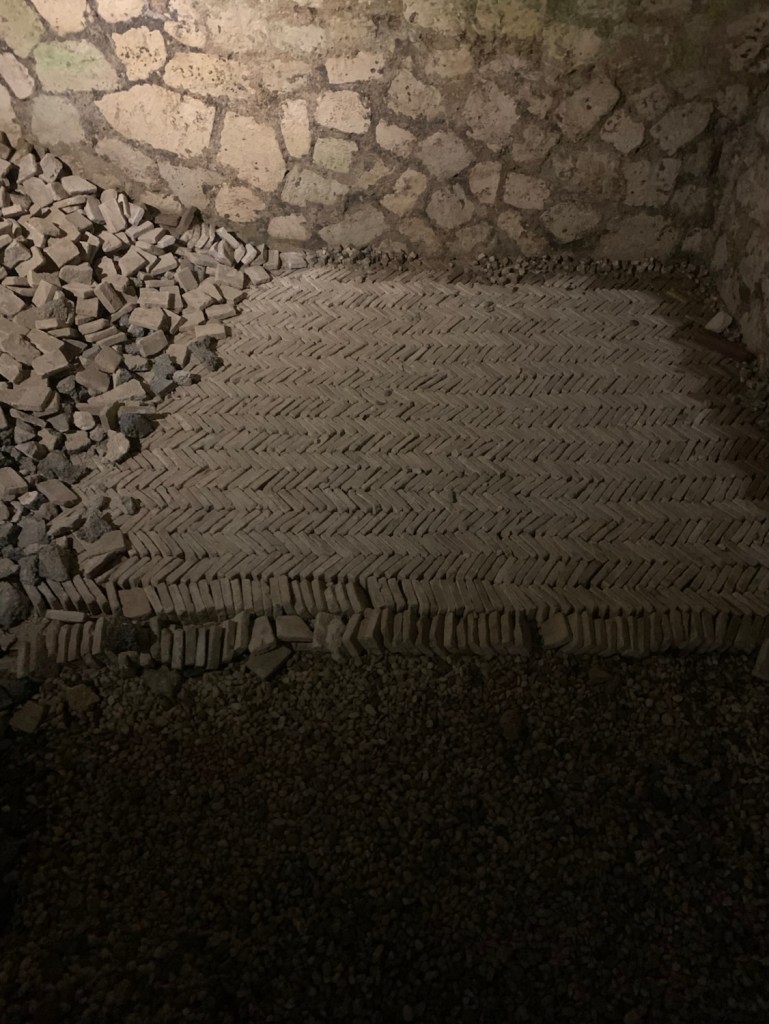
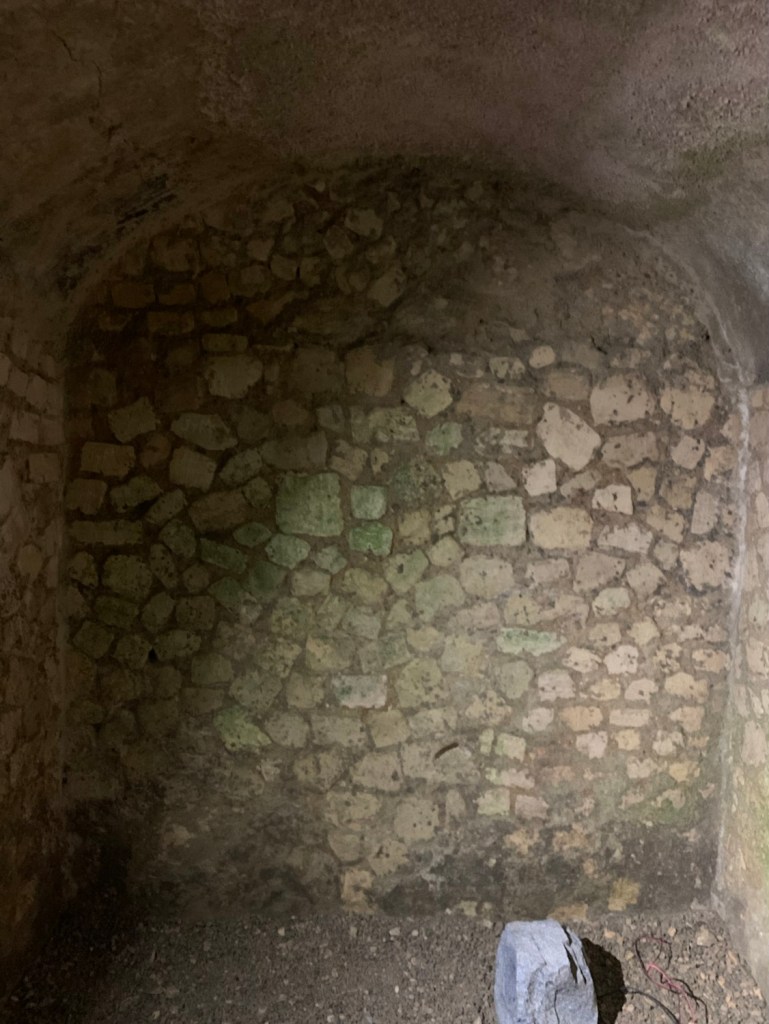
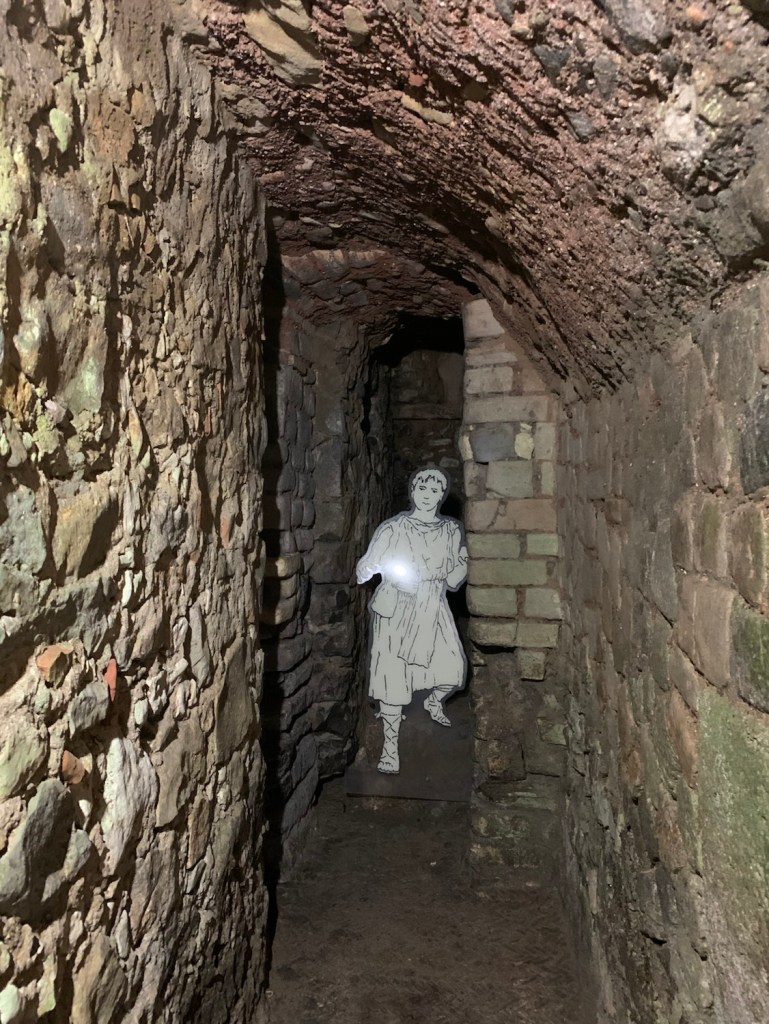
Narbonne has an underground Horreum dating back to 1st century BC. They were probably part of a market, as horreum means warehouse.
Although they would have been built at surface level, they are situated 5 metres below the modern ground level.
And enjoying the Jardin des Martyrs de la Résistance for our lunch stop, complete with its own composting system.
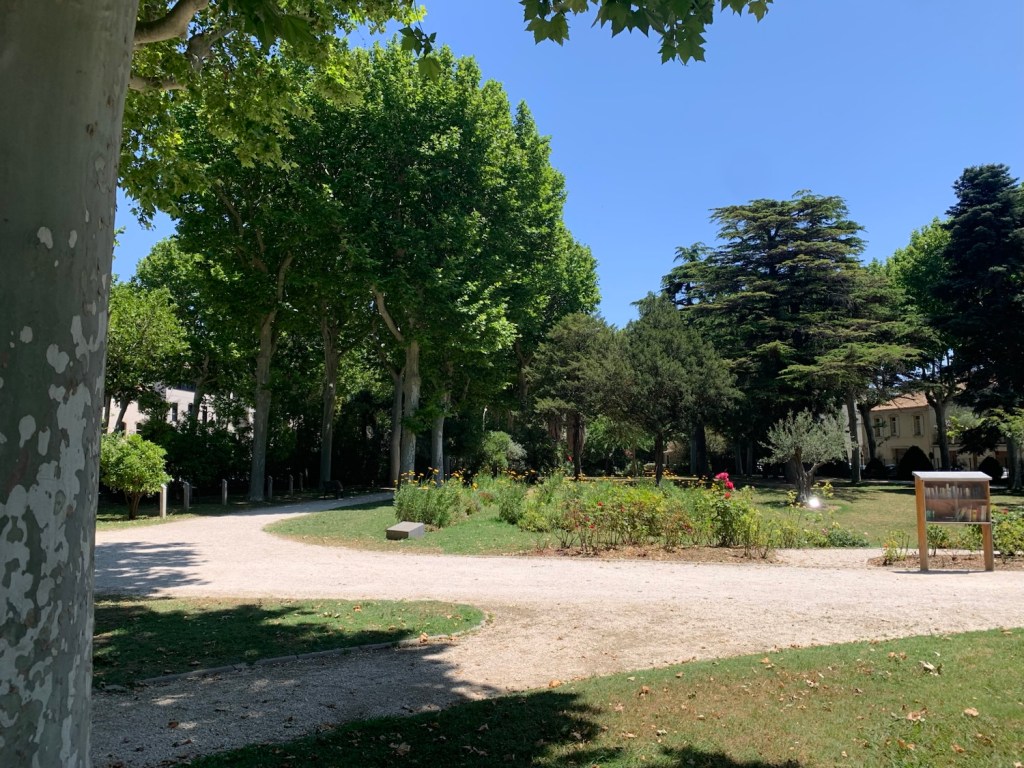

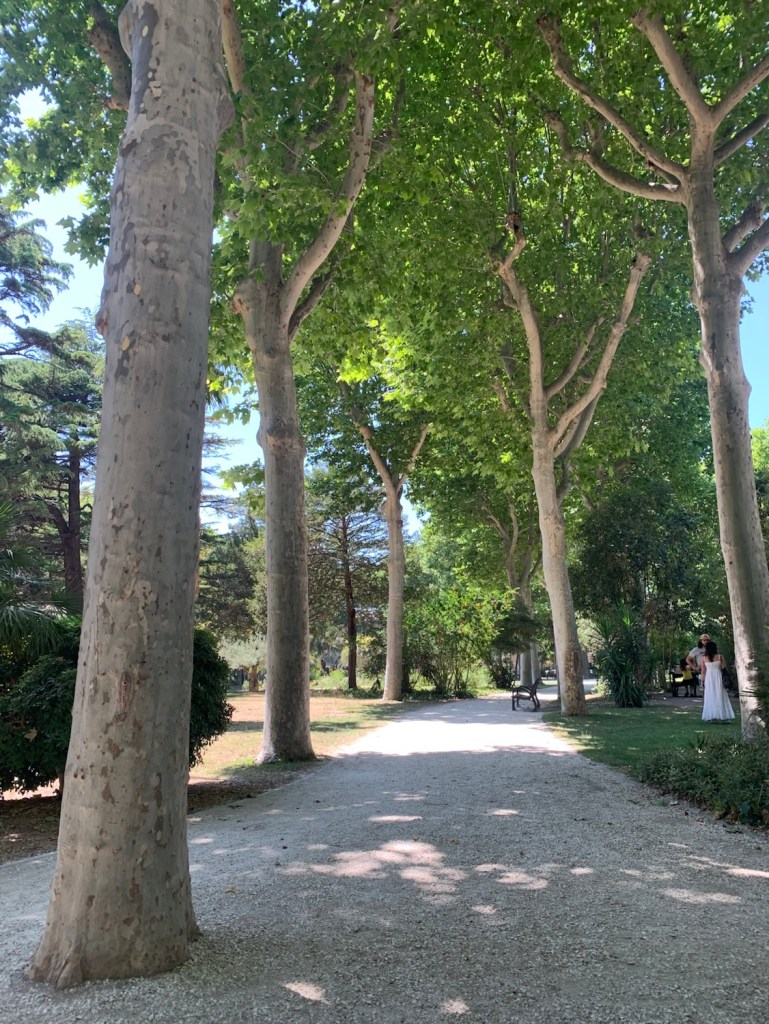
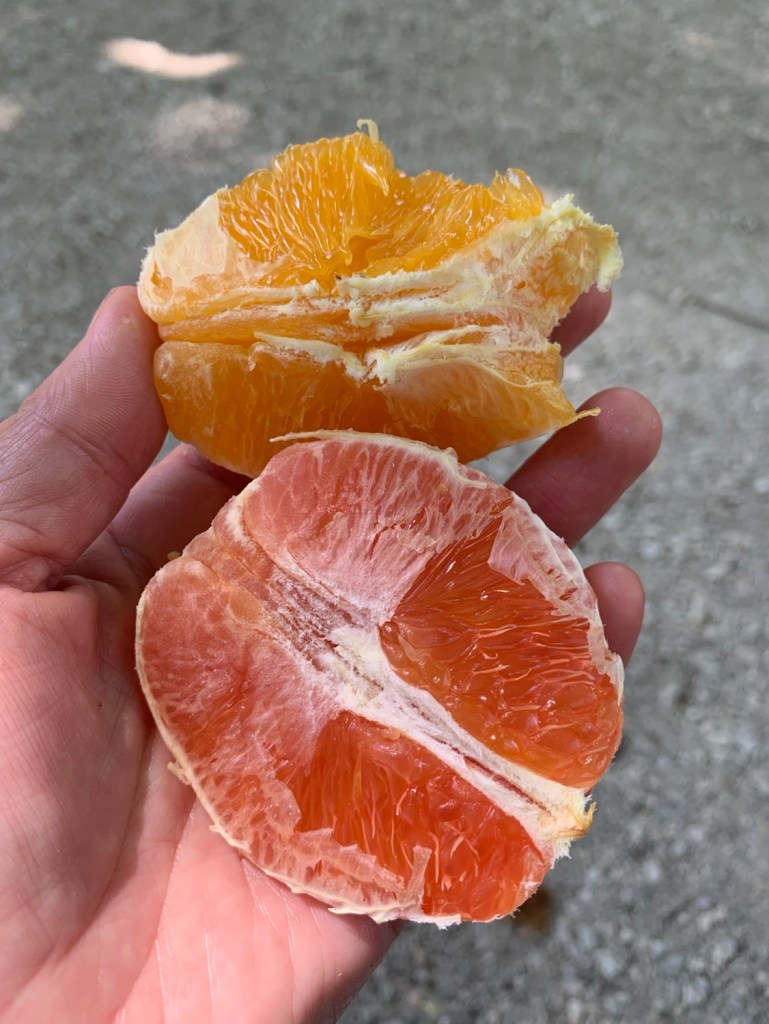
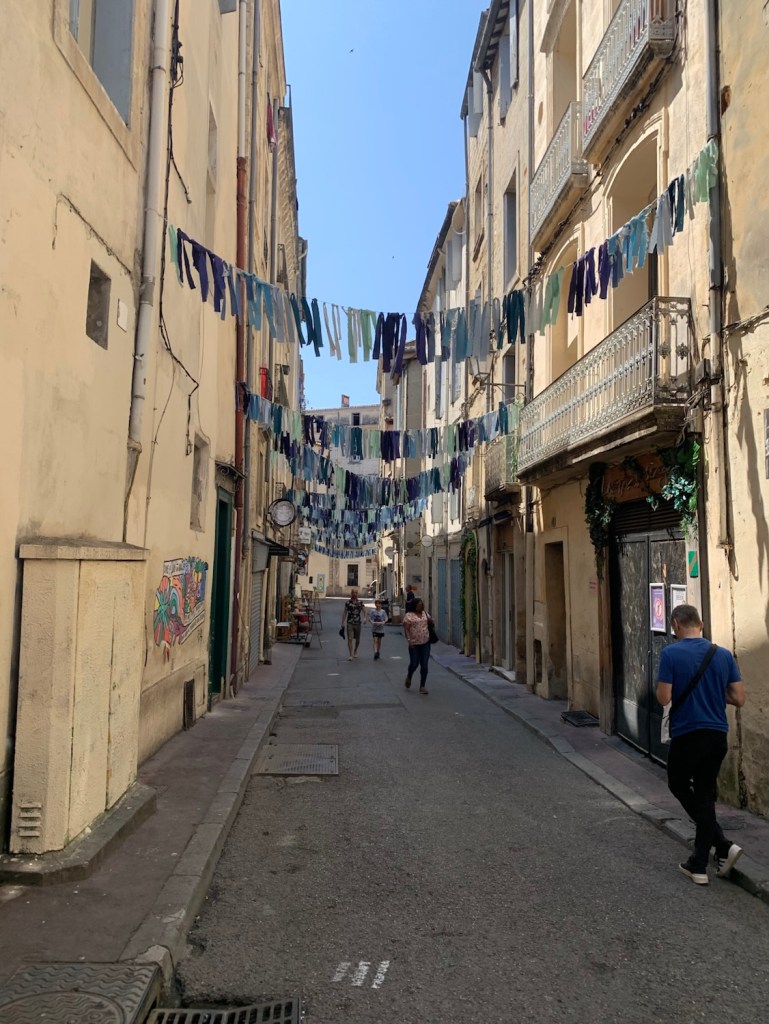
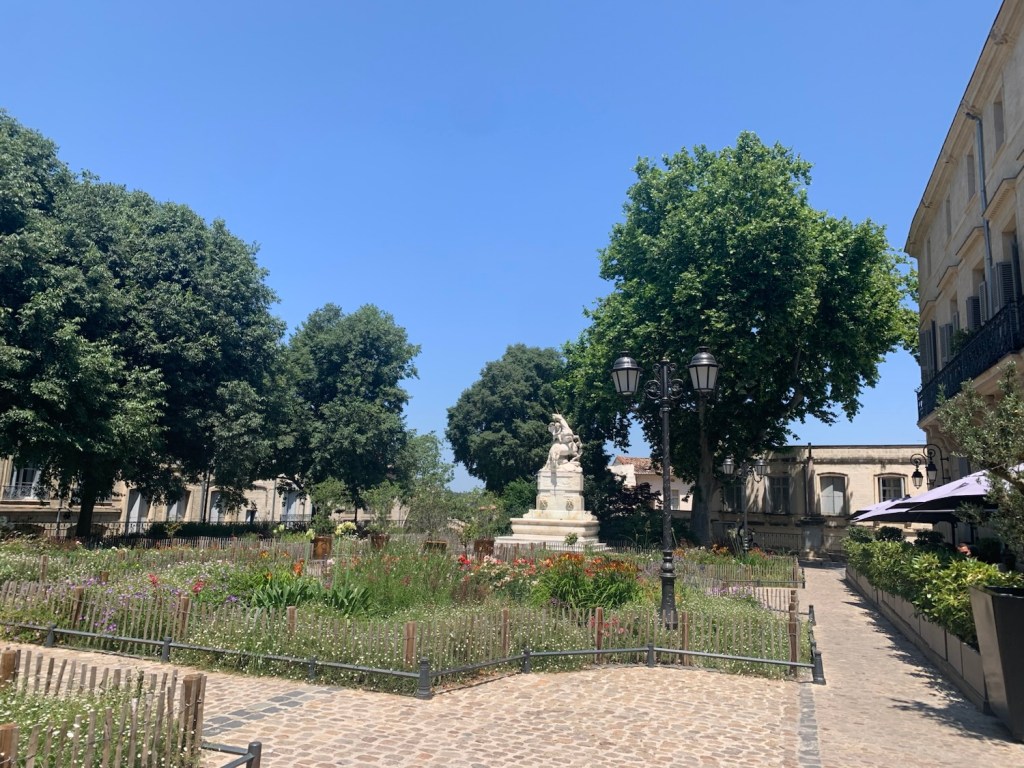
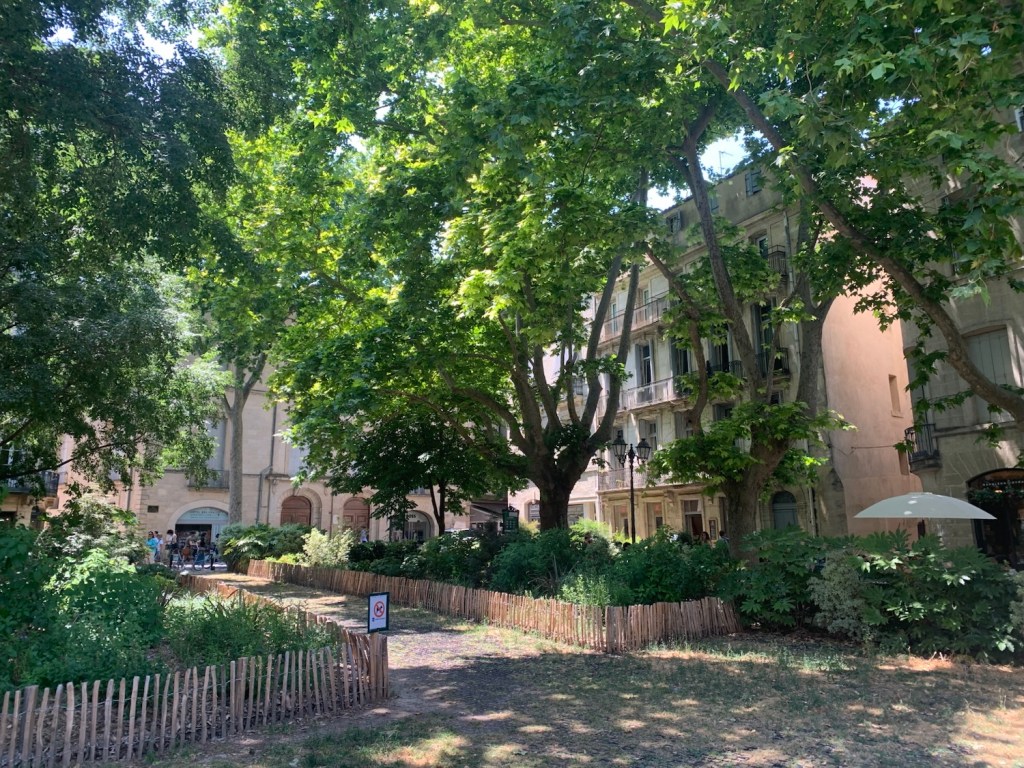
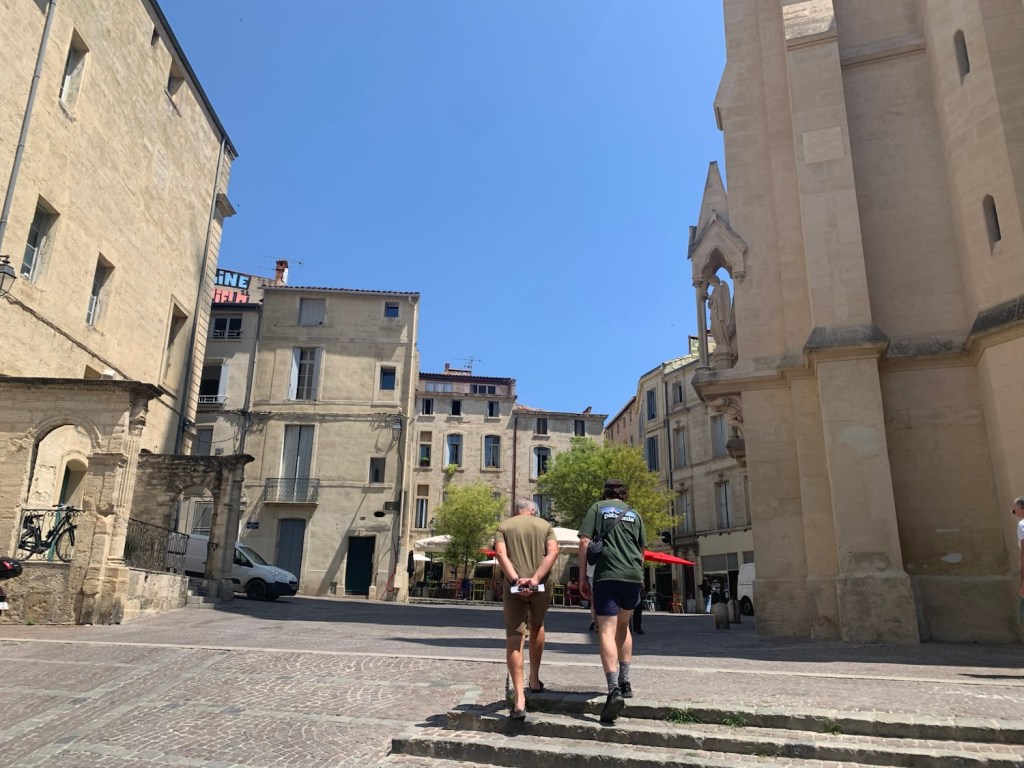
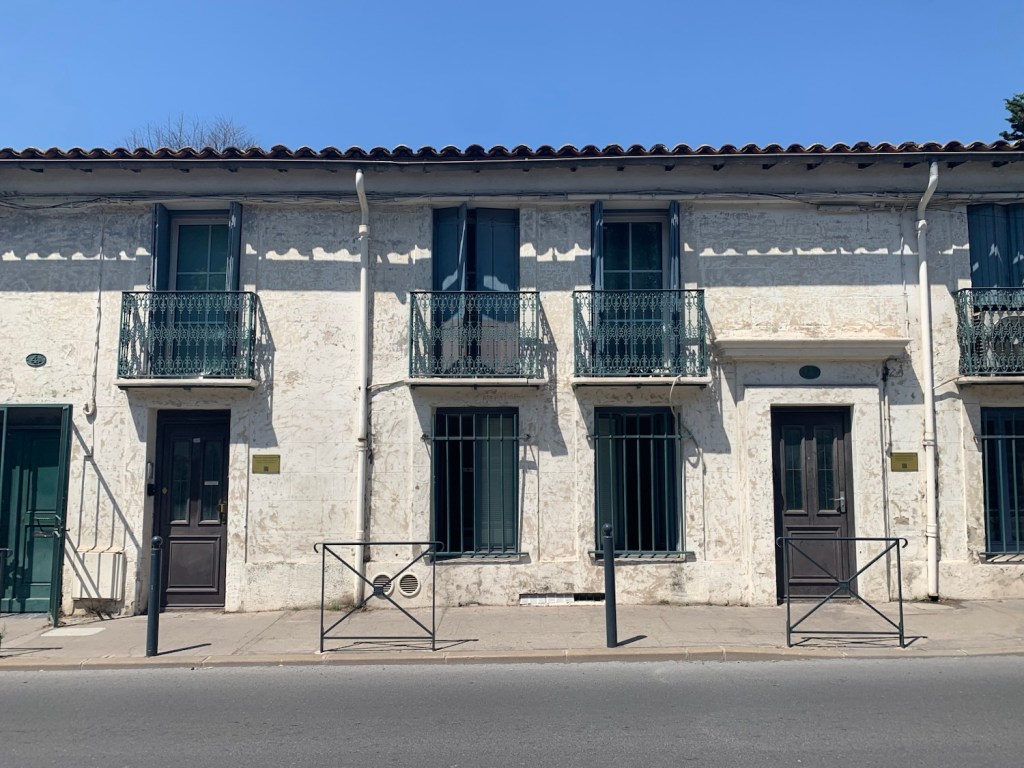
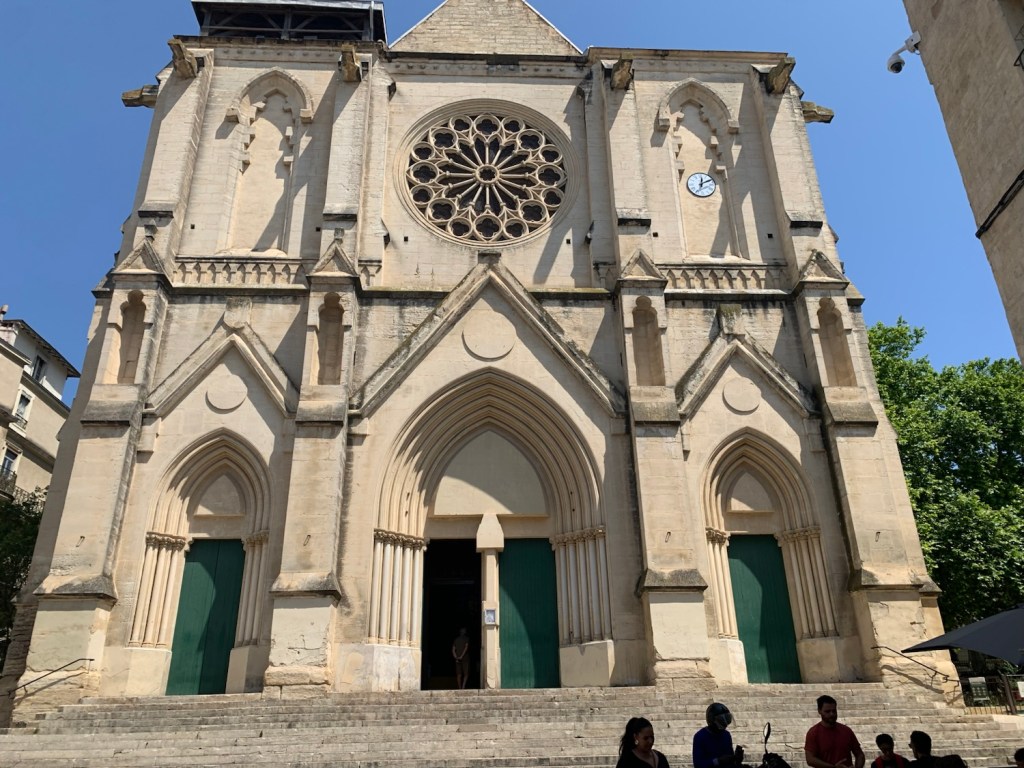
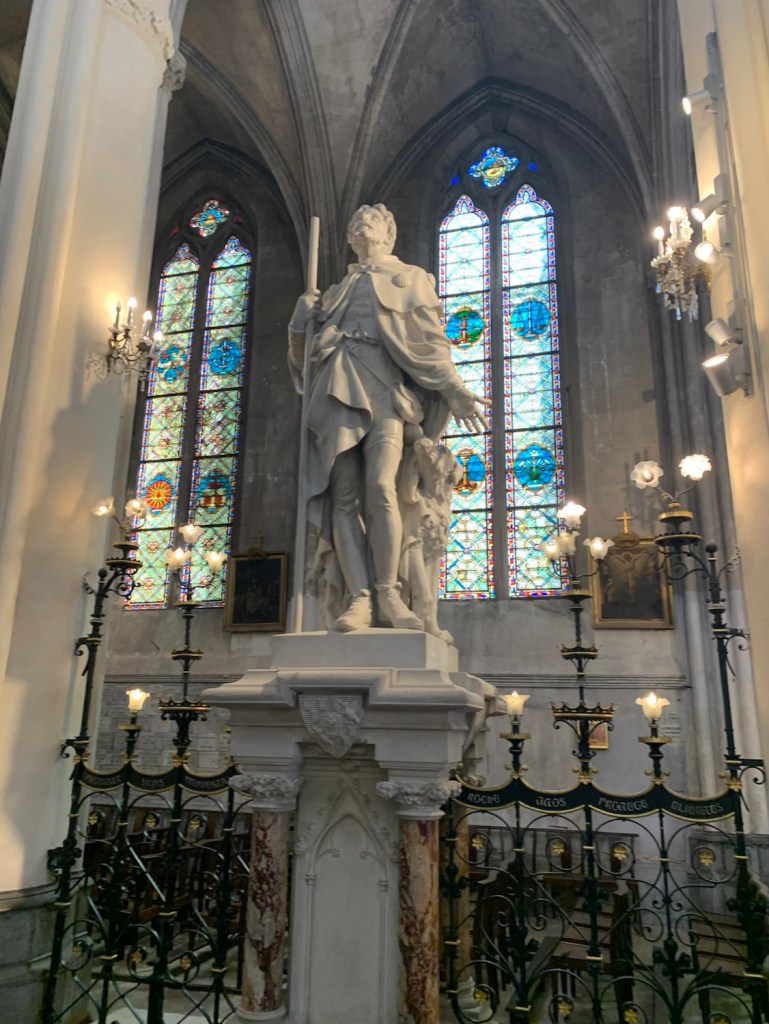
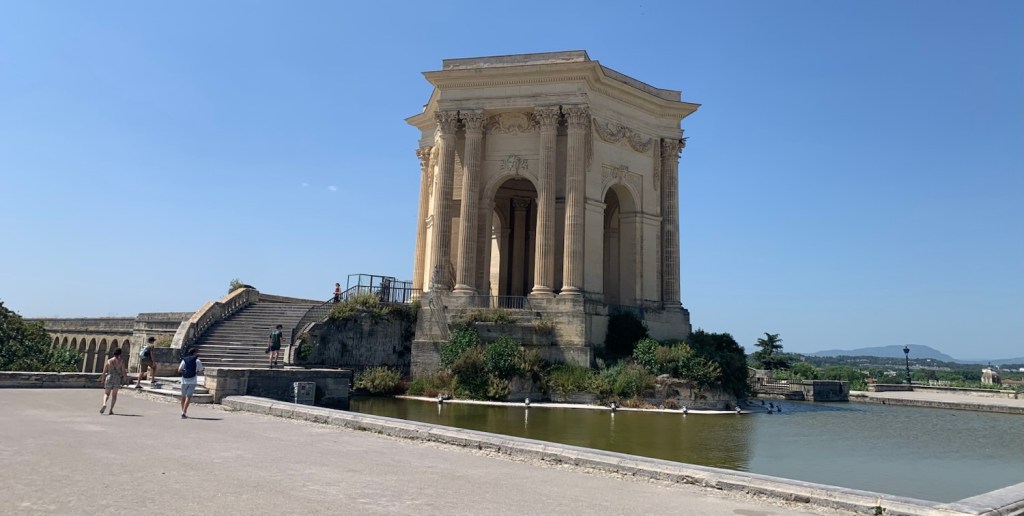
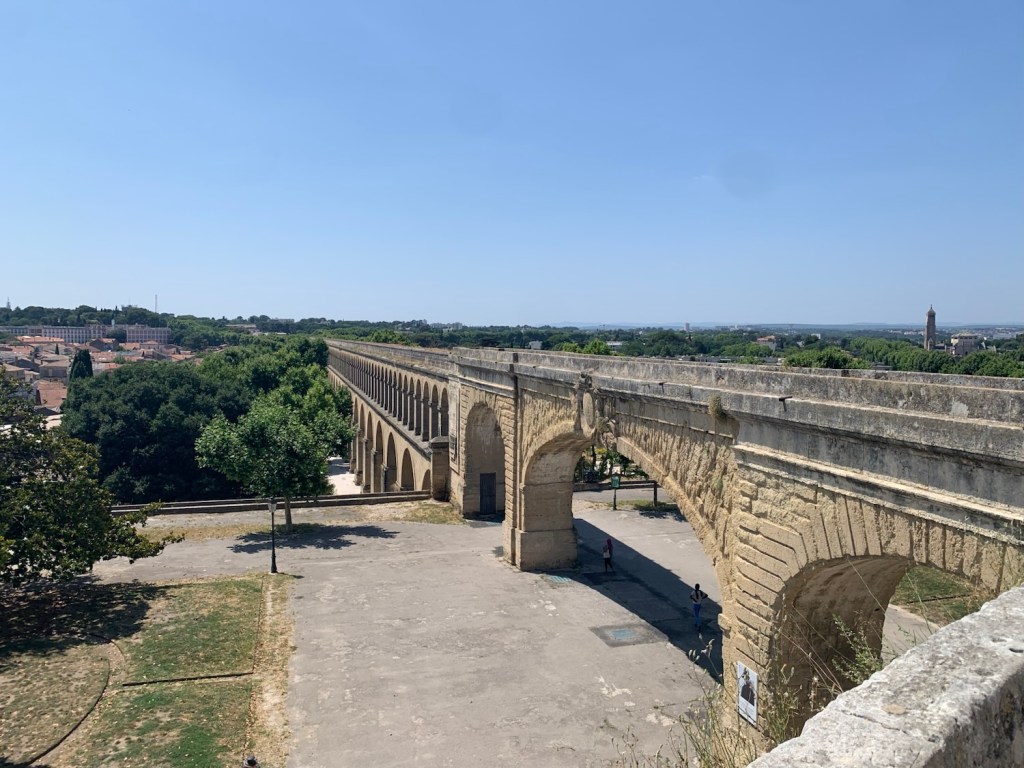
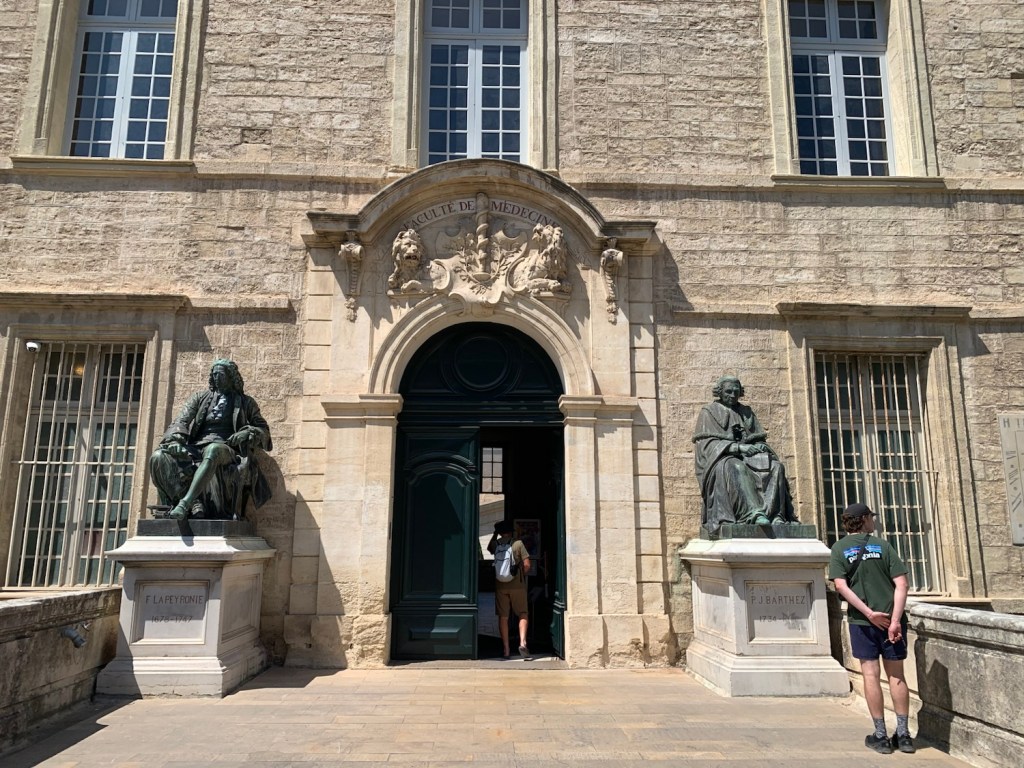
Taking the train we had a day out exploring the nearby (and much larger) city of Montpellier.
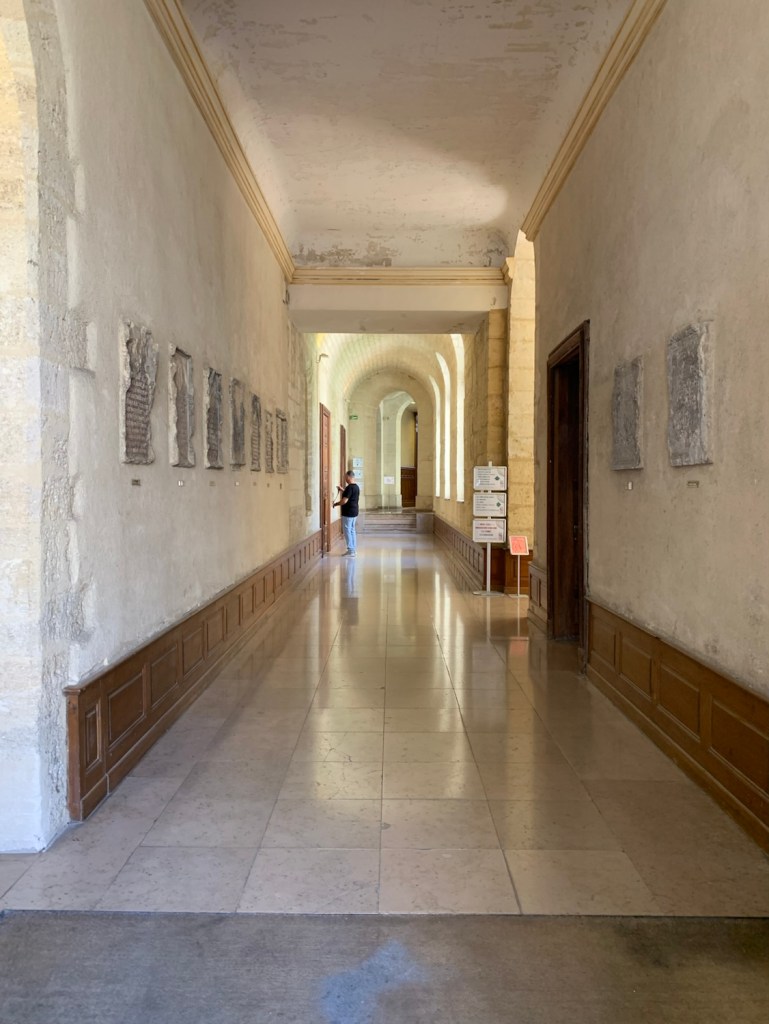
Montpellier is the 7th largest city in France, is home to some Europe’s oldest universities and its oldest continuously operating medical school (Nostradamus was an alumnus). Truly a university city, it hosts 70,000 students – around a quarter of the city’s population.
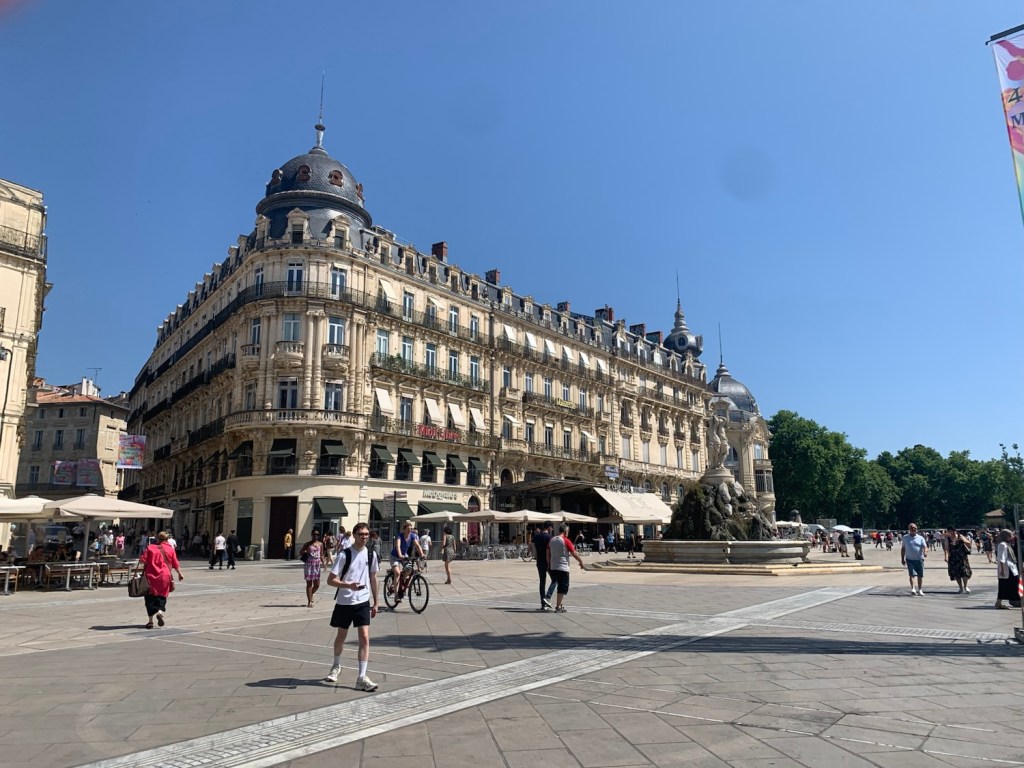





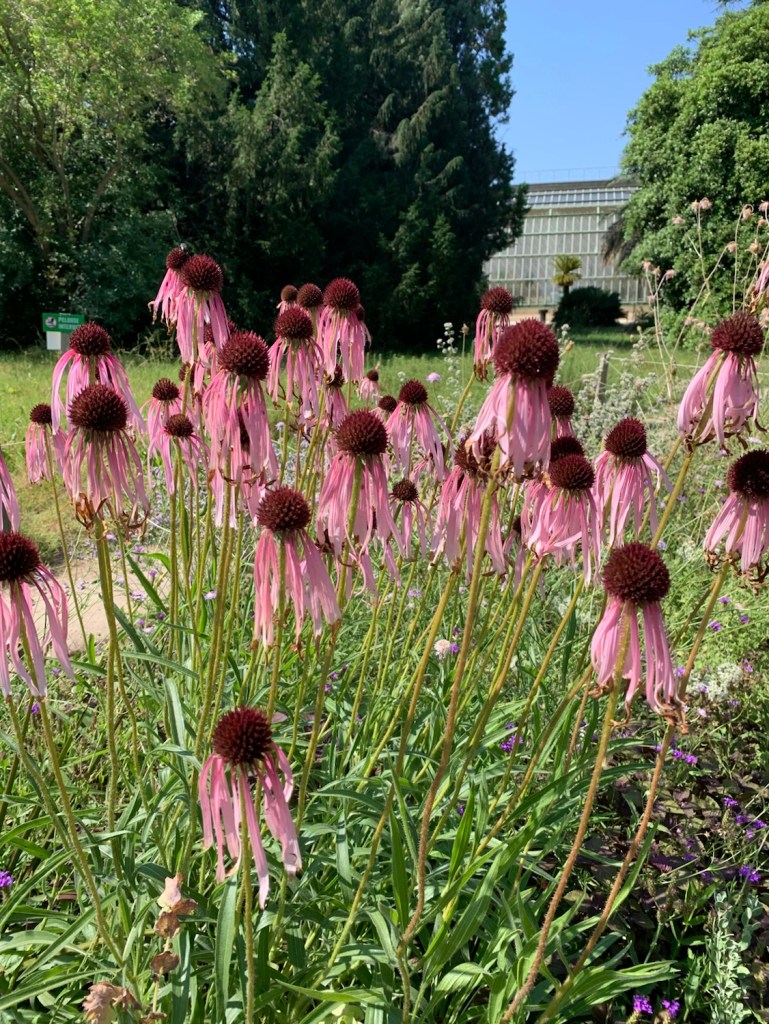
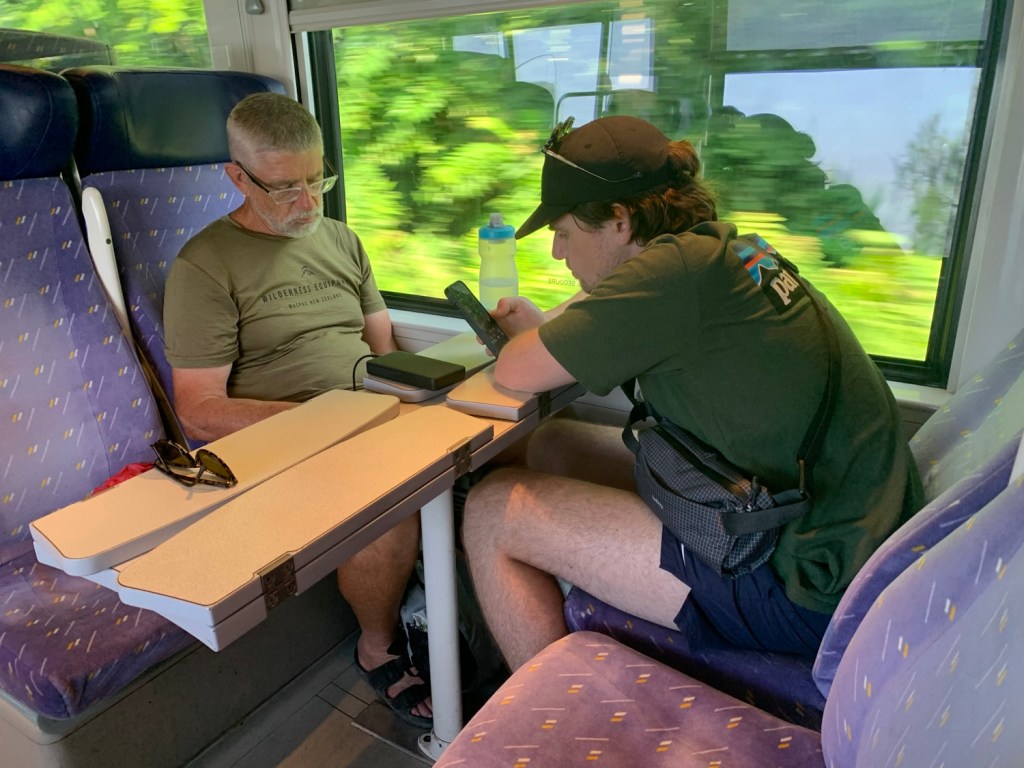
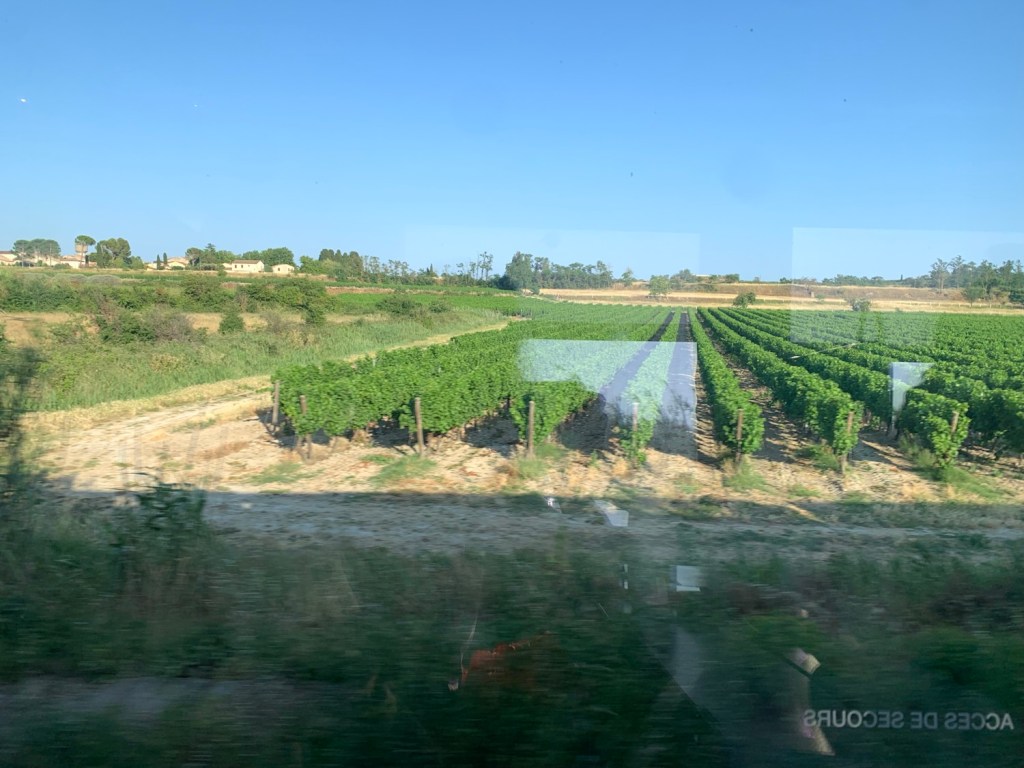
So so good to see you John.
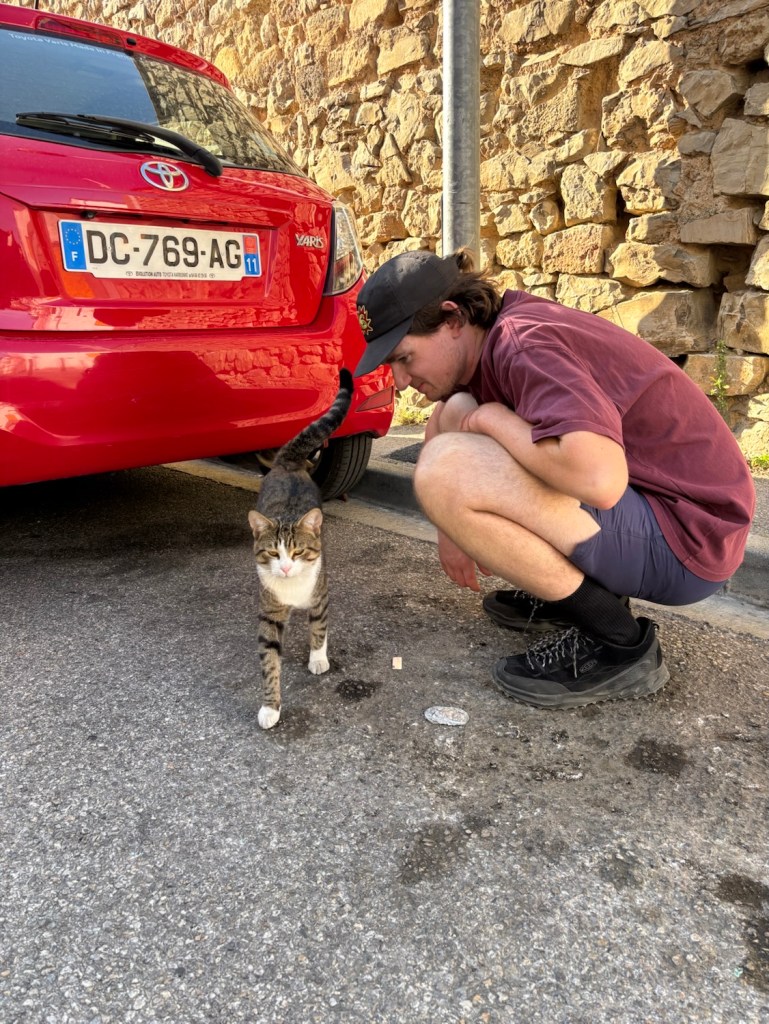
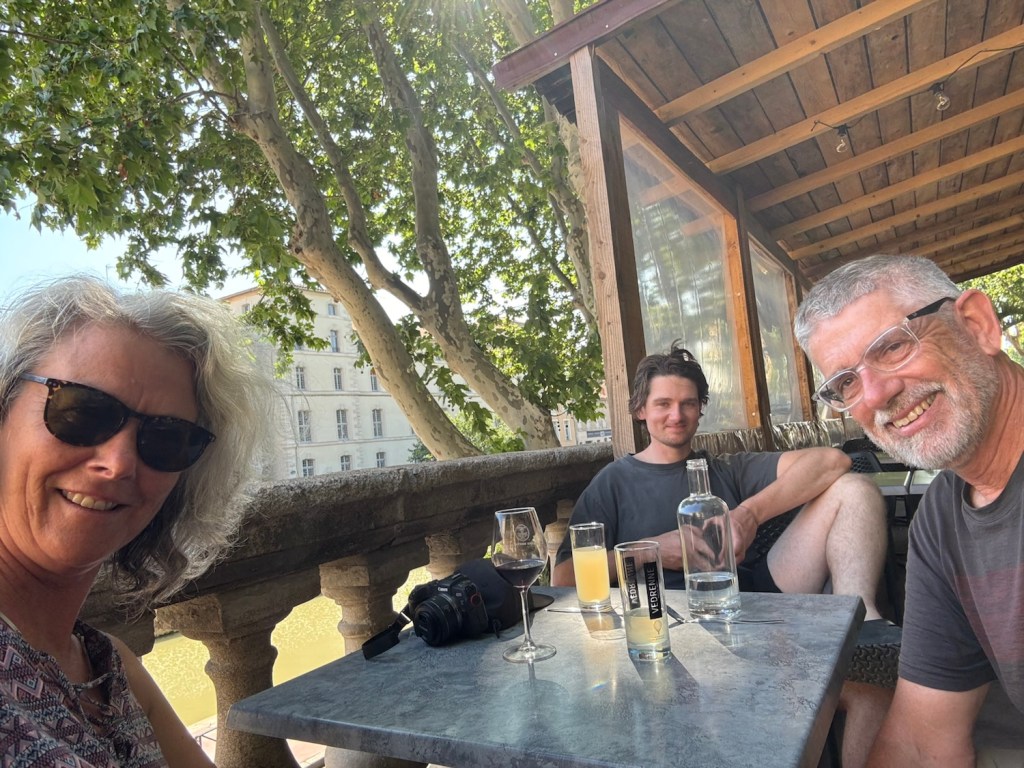
After 5 nights in Narbonne it was time to get back on our bikes and start following the Canal du Midi to Bordeaux. We are on our way to Paris!
 JG on balance
Awesome photos. Thank you so much for taking these so we can enjoy your experience also.Da
LikeLiked by 1 person